

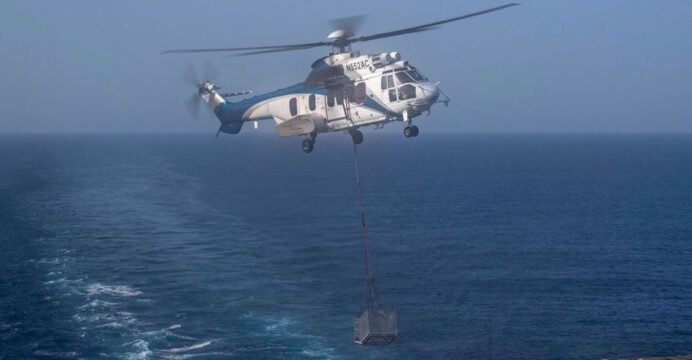
USS Abraham Lincoln enforcing naval blockade near Iranian ports; Receives supplies during vertical replenishment: CENTCOM
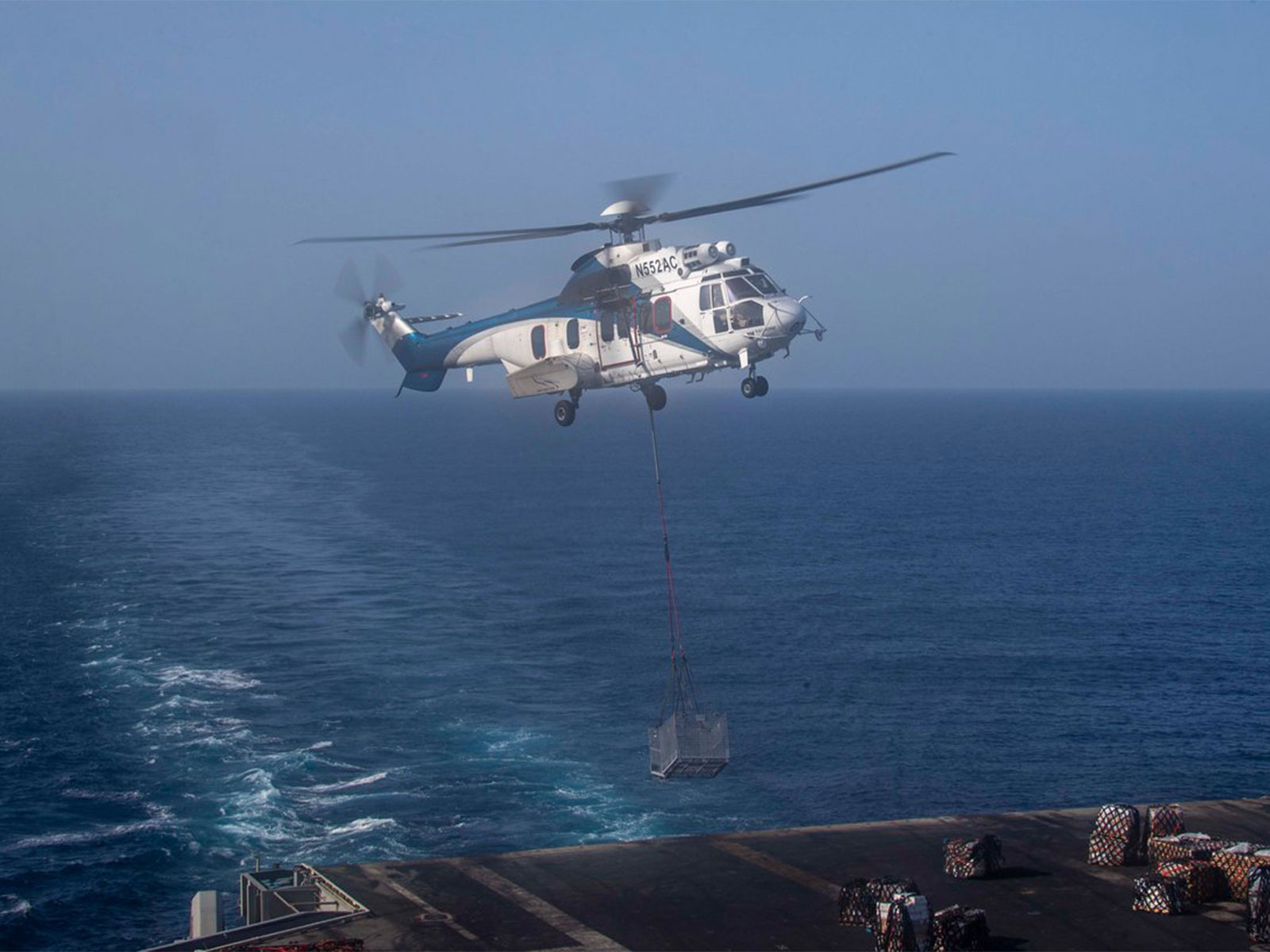
Washington DC [US], April 21 (ANI): The aircraft carrier USS Abraham Lincoln (CVN 72) is operating in West Asia, enforcing a US naval blockade on vessels attempting to enter and depart Iranian ports and also received supplies during a "vertical replenishment" in the Arabian Sea, according to the United States Central Command statement on Monday (local time).
In a post on X, CENTCOM said, "Aircraft carrier USS Abraham Lincoln (CVN 72) receives supplies during a vertical replenishment in the Arabian Sea with supply ship USNS Carl Brashear (T-AKE 7), April 18. Abraham Lincoln is currently operating in the Middle East enforcing the US naval blockade on vessels attempting to enter and depart Iranian ports."
Aircraft carrier USS Abraham Lincoln (CVN 72) receives supplies during a vertical replenishment in the Arabian Sea with supply ship USNS Carl Brashear (T-AKE 7), April 18. Abraham Lincoln is currently operating in the Middle East enforcing the U.S. naval blockade on vessels… pic.twitter.com/s0w7JqSXsm
— U.S. Central Command (@CENTCOM) April 21, 2026
The post highlighted the ongoing logistics operations in the Arabian Sea, where the carrier conducted a " vertical replenishment in the Arabian Sea with supply ship USNS Carl Brashear (T-AKE 7)" on April 18, which hints at sustained operational readiness.
The US blockade comes amid the ongoing tensions between the US and Iran. The deployment of the USS Abraham Lincoln (CVN 72) operating in the Arabian Sea highlights the scale of the US naval presence in the Iranian waters amid escalating tensions.
Earlier, US President Donald Trump claimed that the United States is in a strong position in its ongoing conflict with Iran, asserting that American military actions have weakened Tehran, even as fresh diplomatic talks are set to begin.
He said the US was "winning" and that Iran's military capabilities had been significantly reduced, while also criticising sections of the media for portraying the situation differently.
In a post on Truth Social, Trump wrote, "I'm winning a War, BY A LOT, things are going very well, our Military has been amazing and, if you read the Fake News, like The Failing New York Times, the absolutely horrendous and disgusting Wall Street Journal, or the now almost defunct, fortunately, Washington Post, you would actually think we are losing the War. The enemy is confused, because they get these same Media "reports," and yet they realize their Navy has been completely wiped out, their Air Force has gone onto darker runways, they have no Anti Missile or Anti Airplane Equipment, their former leaders are mostly gone (This has been, in addition to everything else, Regime Change!), and perhaps, most important of all, THE BLOCKADE, which we will not take off until there is a "DEAL," is absolutely destroying Iran."
Meanwhile, tensions between Tehran and Washington have reached a critical flashpoint as the April 22 ceasefire deadline approaches. Iran's top negotiator and parliamentary speaker, Mohammad Baqer Ghalibaf, has lashed out at Donald Trump, accusing the US president of sabotaging diplomatic channels through aggressive rhetoric and alleged truce violations.
Ghalibaf stated that the Iranian leadership refuses to engage in dialogue while under duress. In a public statement on X, he argued that the American administration is attempting to transform the diplomatic arena into a "table of surrender". He further cautioned that Tehran is prepared to reveal "new cards on the battlefield" should the current friction lead to a military escalation.
The diplomatic deadlock is rooted in long-standing disputes over the Iranian nuclear programme and the security of the Strait of Hormuz, a vital artery for global energy supplies. While the current 14-day truce has managed to pause active combat, the atmosphere remains poisoned by mutual suspicion.
In a further sign of deteriorating relations, Iranian state media has hinted that Tehran may boycott the Islamabad summit. The reports cite Washington's "excessive demands and inconsistent positions" as primary reasons for the potential withdrawal from the talks.
The Iranian foreign ministry has also questioned the legitimacy of the American-led process. In a high-level discussion with Pakistani Foreign Minister Ishaq Dar, Iranian Foreign Minister Abbas Araghchi claimed that "provocative actions and repeated ceasefire violations" by the US have become the main barriers to peace.
As the clock runs down on the fragile ceasefire, both capitals remain entrenched in a dangerous standoff. With the threat of renewed hostilities hanging over the region, the success of the Islamabad talks appears increasingly uncertain. (ANI)
