

U.S. trade deal finalised, removes uncertainty; details awaited on farm access: DEA Secy
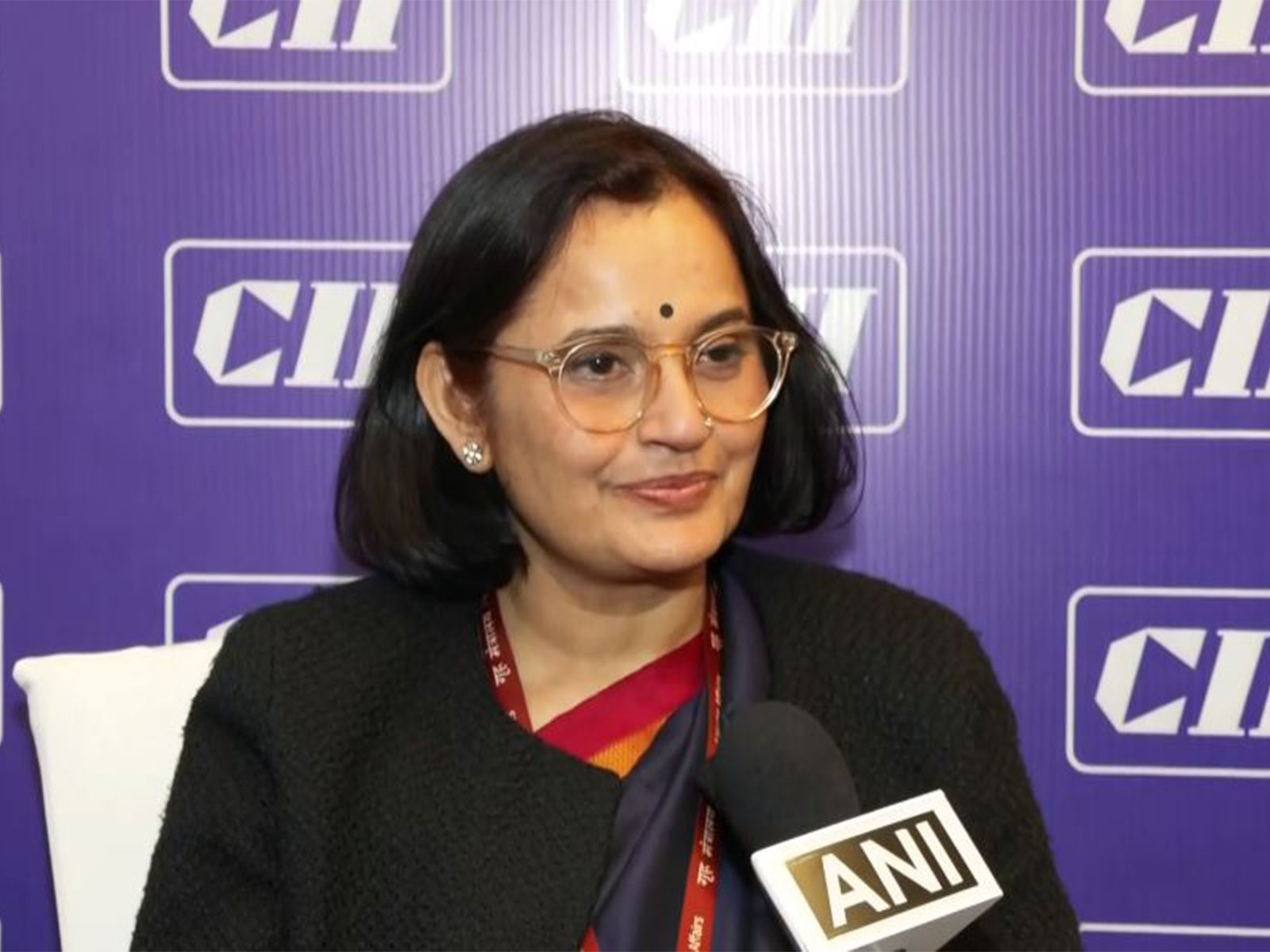
New Delhi [India], February 3 (ANI): India is happy that a trade deal with the United States has been finalised, it removes uncertainty and creates investment opportunities between the world's two largest democracies, noted Anuradha Thakur, Secretary in the Department of Economic Affairs.
"We are happy that the trade deal has got finalized, removes uncertainty in that space, and is providing opportunity for two of the largest democracies in the world, for instance, to take this kind of investment," Thakur said this on the sidelines of Federation of Indian Chambers of Commerce and Industry (FICCI) Conference on the Union Budget 2026-27 in New Delhi.
Asked whether India would open its market to U.S. agricultural products, Thakur said: "There is no clarity as of now on the Indian market opening up to U.S. agricultural products. Clarity will emerge in due course."
On whether the deal could lift growth beyond the Economic Survey's 6.8 per cent to 7.2 per cent projection, she said it was too early to quantify the upside as the agreement was not factored into earlier estimates. "I will wait for things to, first to get the details," she said.
The country continues to show robust macroeconomic resilience amid global uncertainty, as the government reaffirmed its commitment to fiscal discipline and outlined Union Budget 2026-27 priorities including manufacturing, infrastructure expansion and technology-led growth, Thakur.
"Today, our Indian economy continues to demonstrate strong macroeconomic resilience, despite a global environment which has uncertainty," Thakur said while addressing the Industry chamber post budget event.
Thakur said stable macroeconomic fundamentals, calibrated economic management and a stable financial system have enabled India to sustain growth and support long-term investment decisions. She said the government remained committed to maintaining fiscal discipline without compromising social and developmental priorities.
She cited a decline in the debt-to-gross domestic product (GDP) ratio from 56.1 per cent last year to an expected 55.6 per cent, which she said would gradually free up resources for priority sector expenditure by reducing interest outgo.
Thakur highlighted the government's focus on strengthening the financial sector as a key enabler of growth, and leveraging emerging technologies. She pointed to initiatives such as the Artificial Intelligence mission and the quantum mission aimed at enhancing compute capacity and supporting public service delivery and economic scaling.
Manufacturing remained the backbone of India's growth strategy, she said, with the budget identifying strategic and frontier sectors requiring close partnership with industry. She singled out biopharma as an area needing government support due to long discovery and development cycles.
Other sectors highlighted included chemicals and labour-intensive textile manufacturing. She said 200 legacy industrial clusters had been identified for technology and infrastructure upgrades to boost competitiveness and productivity.
Among new measures, Thakur cited the Infrastructure Risk Guarantee Fund, aimed at covering risks that arise pre-construction and pre-commissioning, to help lenders and participants in infrastructure projects proceed with greater confidence.
For micro, small and medium enterprises (MSMEs), Thakur said support for micro enterprises would continue, while small and medium enterprises would receive targeted assistance through a 10,000 crore rupee fund, alongside equity and professional support and measures on the Trade Receivables Discounting System (TReDS) platform to address settlement of pending bills.
She also flagged large infrastructure initiatives, including 20 new national waterways over five years, as well as seven high-speed rail projects announced in the budget. She referred to a dedicated freight corridor (DFC) planned from east to west, which she said would help cut logistics costs and improve mobility.
Thakur urged the industry to take advantage of budget openings and maintain strong dialogue with government, saying communication channels must remain open to support India's growth agenda. (ANI)
