


Sandesh Jhingan speaks on FIFA WC 2026 hydration breaks, expansion of tournament
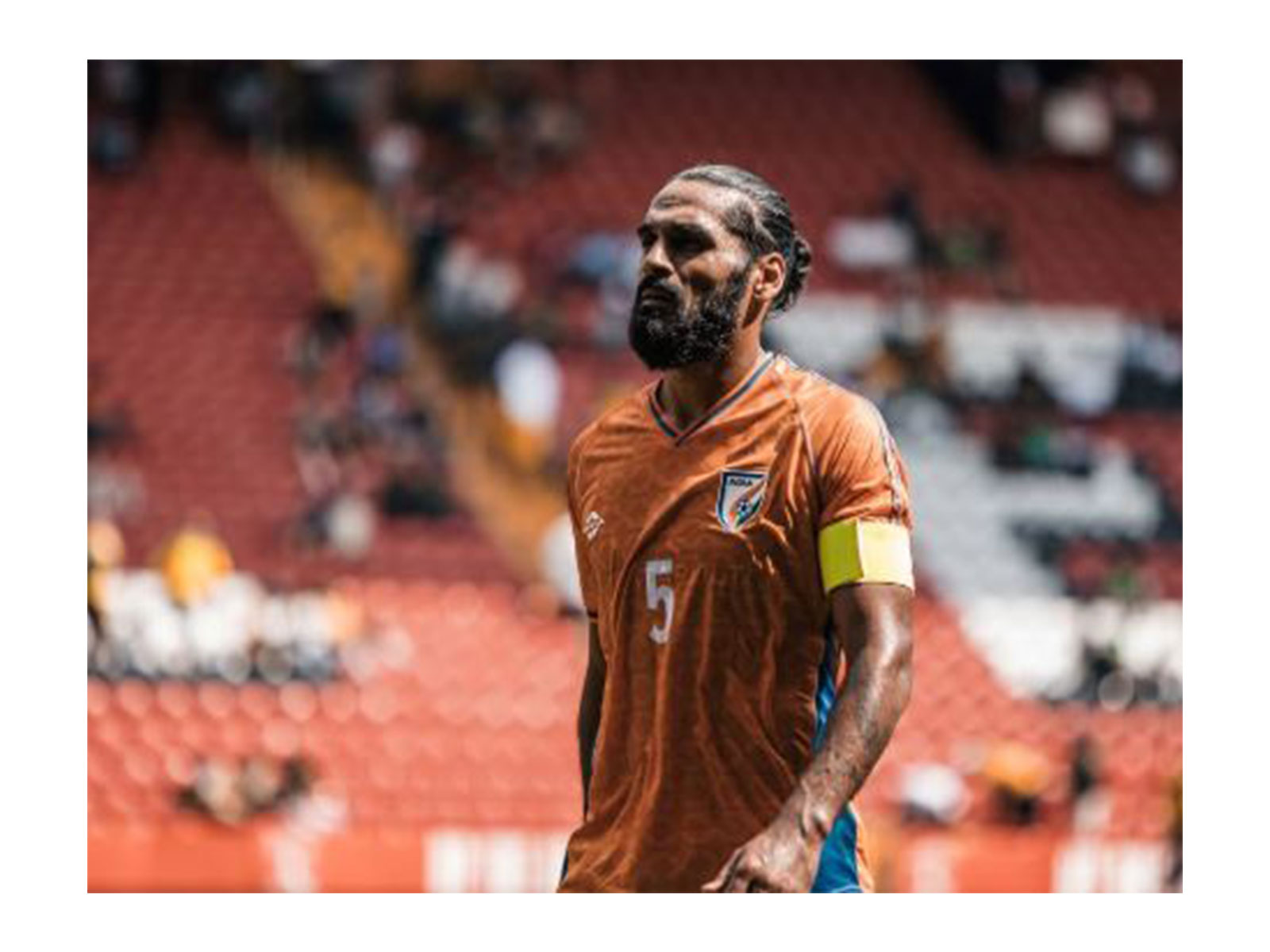
By Sahil Kohli
Mumbai (Maharashtra) [India], June 24 (ANI): Indian footballer Sandesh Jhingan spoke on the introduction of the hydration breaks in the ongoing FIFA World Cup, saying that some regulations should be introduced to reduce their impact on a match.
Since the start of the tournament, viewers and players have been experiencing a new normal during the tournament, three minutes hydration breaks in each half, with the first break in the 22nd minute and the second in the 67th minute of the match. The breaks have been introduced to help players cope with extreme heat across North America.
However, it has opened up a slot for advertisements for the broadcasters, with many critics slamming it as a commercial move. Coaches and experts have also complained about changes in tactics and game momentum after these breaks, pointing out that the match is essentially divided into four quarters.
Speaking to ANI about the hydration breaks, Sandesh said, "Initially, when the World Cup started, and I started watching on the TV, I felt it was a little bit longer. Then I kind of confirmed it. It was three minutes, I think. In India, we used to have it in the ISL. Sometimes, when there are national team matches, I think it is not three minutes. I think it is a little bit less. Having said that, the reason why we love the sport, why we love football, is because it is relentless. It is fast-paced. Even for 10 seconds, you move somewhere, and a goal can happen in 10 seconds. And that's why we love the sport because it's so fast-paced."
The ace Indian footballer said that the hydration breaks have essentially made a World Cup game "feel like it is four quarters" and pointed out how tactical changes are often made during these breaks, which change the momentum of the game out of nowhere.
"Now, it kind of feels like four quarters. More than the three-minute break, it is like when you make tactical changes in the three-minute break, because then you can see everything on the board. Then you again nullify each other in a way," he said.
"Why we as fans, if I will look only as a fan, the sport, you want that when the player's heart rate is at 180, and then when you see them saying, you see them in the game, distances open up, games get exciting. That happens in exhaustion. Otherwise, everyone is in that nice heart rate of 120, 150, 125. Kind of keep on nullifying each other. I think a stat was also proved, that after every water break, the momentum chart goes down. So, it is quite evident," he added.
He laid down what could be some regulations made for hydration breaks, which should happen if the temperature/humidity crosses a certain level for less than three minutes. He also called for players not to go outside the touchline.
"If the hydration break happens, at least there should be a set rule that if the temperature crosses 35 degrees, or there is so much humidity, only then can you have a hydration break. Plus, it is a little bit less than three minutes. Or the players, and also, the players are not allowed to go outside the touchline. It is only the guy with the water, he comes (to the pitch), and just the players. Otherwise, it is like four quarters," he said.
However, Jhingan hailed the expansion of the FIFA World Cup to 48 teams from 32 teams, hailing countries like Cape Verde (who played out a 0-0 draw against Euro Champions Spain) for proving themselves and erasing any scepticism surrounding the expansion of the tournament.
He also pointed out that the debutants have qualified for the World Cup based on merit, by playing a long series of matches in the qualifiers.
"I think till now it has turned out really well (WC expansion). Initially, a lot of people were sceptical about how it was going to pan out. You know, it might be a whitewash. For example, Spain against Cape Verde or even games like that. But those countries, credit to them, they have proven themselves. A lot of times, people kind of forget that. For example, Argentina is there, France is there, Spain is there. But the other ones, they also have qualified on merits," he said.
"It is not like they ring the bell at your house and say, okay, we are Spain's team, you come and play. So they had to go and play around 18 to 24 matches to get to the World Cup. So they are also on merit there. And what they have done, Cape Verde, if I specifically talk about them, after the draw which they had against Spain, the next game, a lot of people might have thought, it is going to be a whitewash with Uruguay. Because they had their best game. Now, they want to have a sit-back kind of performance. But till the last, they could have won the game against Uruguay (which ended in a 2-2 draw) with Marco Biesla as the coach," he added.
Sandesh also said that the success of the tournament with its expansion shows how much love the sport gets and why "football is the greatest sport in the world".
"You are never guaranteed, no matter how many big players you have, how many big stars you have. On a given day, if you do not perform to your best potential, anyone can beat you on any given day. So till now, I think this 48 teams' performance has been good. It's brought more excitement and more surprises. So that was good. But there always has to be a fine line (for further expansion). But I think the ones at FIFA will be the best ones, whether to expand more or it is good enough till 48," he signed off. (ANI)
