

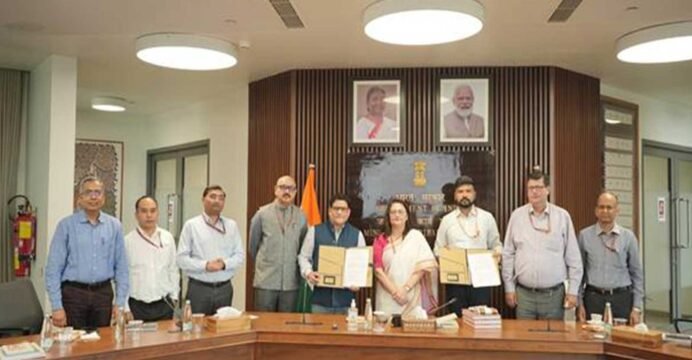
Ministry of Tribal Affairs and IGNCA sign MoU for preservation, documentation and promotion of tribal cultural heritage
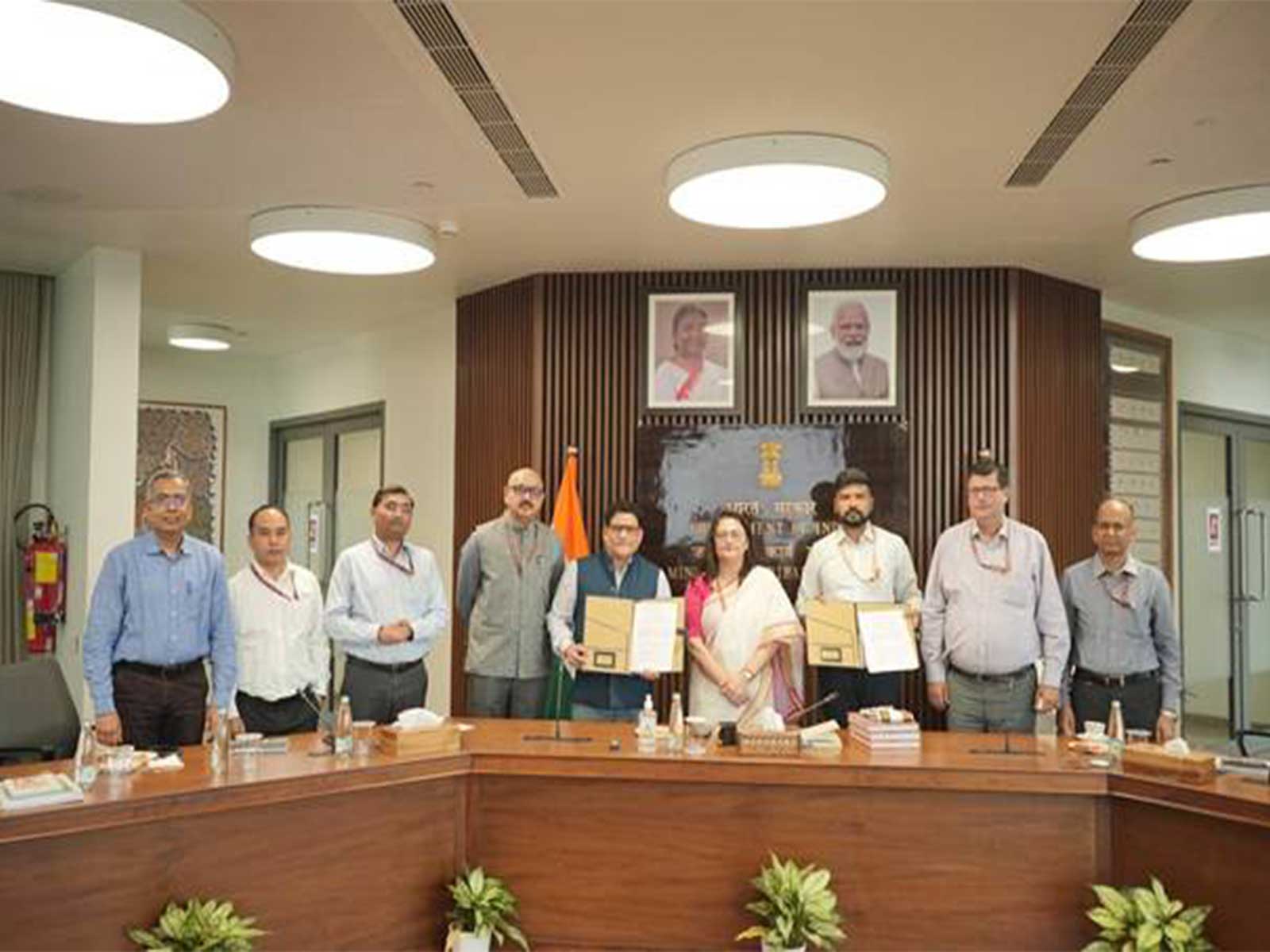
New Delhi [India], September 29 (ANI): The Ministry of Tribal Affairs (MoTA) and the Indira Gandhi National Centre for the Arts (IGNCA), an autonomous trust under the Ministry of Culture, Government of India, signed a Memorandum of Understanding (MoU) on September 28 for the preservation, documentation, digitisation, research and promotion of India’s diverse tribal cultural heritage.
The MoU was signed in New Delhi in the presence of Ranjana Chopra, Secretary, Ministry of Tribal Affairs, and other senior officials of the Ministry. K. Anil Kumar, HoD, IGNCA and other senior officials of IGNCA were also present on the occasion. The partnership brings together the Ministry’s tribal research ecosystem and network of Tribal Research Institutes (TRIs) with IGNCA’s academic, archival, research and curatorial expertise.
The MoU aims to establish an institutional framework for collaboration between MoTA and IGNCA for the systematic preservation, documentation, digitisation, research and promotion of India’s diverse tribal tangible and intangible cultural heritage. It seeks to leverage the expertise and resources of both institutions to document, protect and disseminate tribal arts, music, languages, oral traditions, folklore, crafts, customary practices and traditional knowledge, while creating wider platforms for their recognition and promotion.
Ranjana Chopra, Secretary, Ministry of Tribal Affairs, appreciated the initiative to preserve and promote India’s rich tribal cultural heritage, and underlined the importance and significance of the collaboration. She highlighted that the partnership would contribute significantly to tribal empowerment and the wider promotion and recognition of India’s diverse tribal cultural traditions.
Speaking on the occasion, Ganesh Nagarajan, Deputy Secretary, Ministry of Tribal Affairs, said, “This MoU provides an important institutional framework for bringing together the strengths of MoTA and IGNCA to preserve and promote India’s rich and diverse tribal cultural heritage.”
India’s tribal communities have a rich diversity of arts, music, musical instruments, crafts, cuisines, languages, oral traditions, folklore, customary practices and traditional ecological knowledge. Much of this heritage is living and community-based. The collaboration will provide an institutional framework for the systematic identification, documentation, digitisation, publication and dissemination of vanishing tribal arts, music, musical instruments, tribal cuisines and other cultural traditions.
The partnership will also support the identification, protection and promotion of endangered tribal languages, oral traditions, indigenous art forms and folklore. Another key area of cooperation will be the development of dedicated galleries and digital museums showcasing tribal arts, artefacts and the historical contributions of tribal communities to India’s freedom struggle.
Youth camps in educational institutions and other centres of learning will be supported to promote awareness of tribal cultural values, sustainable conservation practices and the diversity of tribal customary practices and culture.
K. Anil Kumar, HoD, IGNCA, said, “This is a crucial collaboration between MoTA and IGNCA to preserve, document, and promote India's rich and diverse tribal tangible and intangible cultural heritage. The partnership will also support the establishment of digital archives and the design of state-of-the-art interactive tribal museum galleries, including dedicated showcases highlighting the contributions of tribal communities to India’s freedom struggle.”
The collaboration will facilitate wider dissemination of tribal cultural heritage through exhibitions, museums, publications, digital platforms, cultural festivals and knowledge-sharing initiatives, while creating greater visibility for tribal scholars, artists, artisans, performers and traditional knowledge holders at national and international platforms. (ANI)
