

India-Germany climate talk sees discussions on strengthening resilience and adaptation
New Delhi [India], February 26 (ANI): India and Germany reaffirmed their commitment to strengthening adaptation and resilience at a high-level climate talk hosted at the German Embassy in New Delhi on Wednesday evening.
The dialogue titled "From Risk to Resilience: Advancing Adaptation Policy Pathways," brought together policymakers, climate experts, think tanks and development partners to discuss governance frameworks, policy priorities and practical pathways to advance resilience.
As per an official statement, it was noted that a key focus of the evening was India's forthcoming National Adaptation Plan (NAP), currently being finalised under the leadership of the Ministry of Environment, Forest and Climate Change. Germany and India are deepening cooperation to support the implementation of the NAP, particularly in strengthening climate resilience in forests, ecosystems and biodiversity.
Under the International Climate Initiative (IKI), Germany has launched a new Large Grant project for India with a funding volume up to EUR 20 million. The project aims to enhance resilience in high-risk ecosystems across priority regions, including the Himalayas, island regions, the Western Ghats, the North-East and the Lower Gangetic floodplains, the statement noted.
It added that the initiative will support ecosystem-based approaches (EbA) such as forest restoration, biodiversity corridor connectivity, flood and erosion control, groundwater recharge and community-led natural resource management. It will also strengthen monitoring, evaluation and learning frameworks linked to the NAP and explore innovative financing mechanisms, including blended finance, biodiversity credits and insurance schemes "Ecosystem-based approaches create multiple wins," Flasbarth noted. "They not only reduce climate risks but strengthen livelihoods, enhance biodiversity and are often more cost-effective than purely technical solutions."
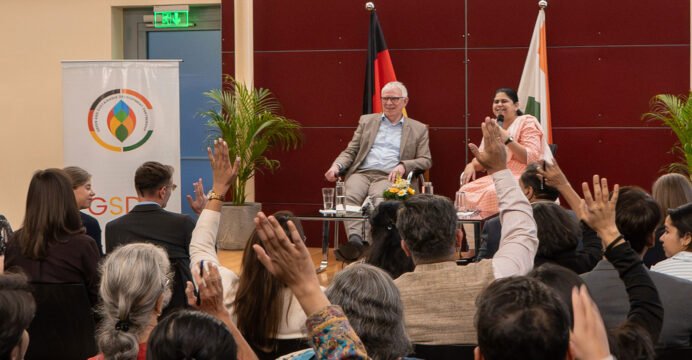
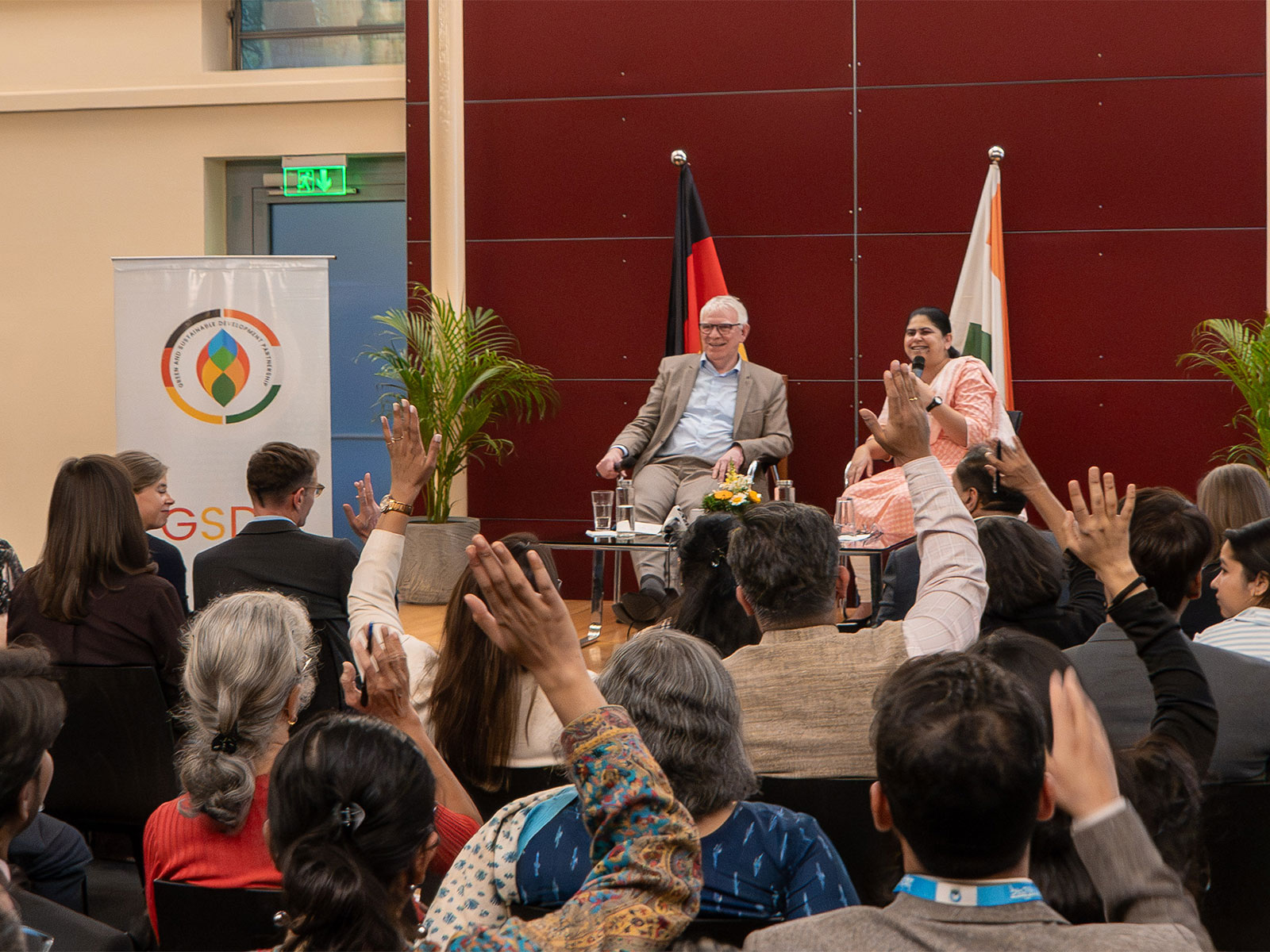
As per an official statement, the discussion featured Jochen Flasbarth, State Secretary at the German Federal Ministry for the Environment, Climate Action, Nature Conservation and Nuclear Safety (BMUKN), in conversation with Ulka Kelkar, Executive Director (Climate, Economics & Finance) at WRI India. The event was opened by Philipp Ackermann, Ambassador of Germany to India and Bhutan.
In his remark, State Secretary Flasbarth underlined that adaptation is now a central pillar of climate policy globally. "We no longer have the privilege of choosing between mitigation and adaptation. The less we reduce emissions, the more we must invest in adaptation, and ultimately someone will pay the cost, either today through planned action or tomorrow through climate impacts".
Highlighting the importance of international partnerships, Flasbarth emphasized that adaptation must be rooted in mutual learning. "Germany and India already share a strong foundation of cooperation on climate and environment. The next step is translating adaptation strategies into practical solutions that strengthen resilience on the ground".
Speaking at the dialogue, Ulka Kelkar, Executive Director (Climate, Economics & Finance), WRI India, emphasised that adaptation must now move from strategy documents to budget lines and implementation frameworks. "Adaptation cannot be assumed to happen automatically through development. Climate-resilient growth requires deliberate upfront investment, otherwise societies end up paying far higher costs later through climate impacts," she said, adding, "The climate risks scientists warned about decades ago are now unfolding in real time. This makes precautionary adaptation planning essential for countries like India as growth and climate resilience must advance together," as per the statement.
The statement further observed how Germany continues to prioritise adaptation finance globally and mentioned that in 2024, Germany's international climate finance contribution amounted to EUR 11.8 billion, of which nearly half of public budget resources supported adaptation measures. This reflects Germany's commitment to scaling up adaptation finance while mobilising private sector investment.
The conversation also highlighted the need to integrate mitigation and adaptation. While adaptation is critical, reducing emissions remains the most fundamental step to avoid reaching hard adaptation limits. India's progress in renewable energy expansion was acknowledged as an important mitigation achievement, the statement highlighted. (ANI)
