

From Relief to Livelihood: Tripura drives skill development for Bru youth, CM distributes toolkits
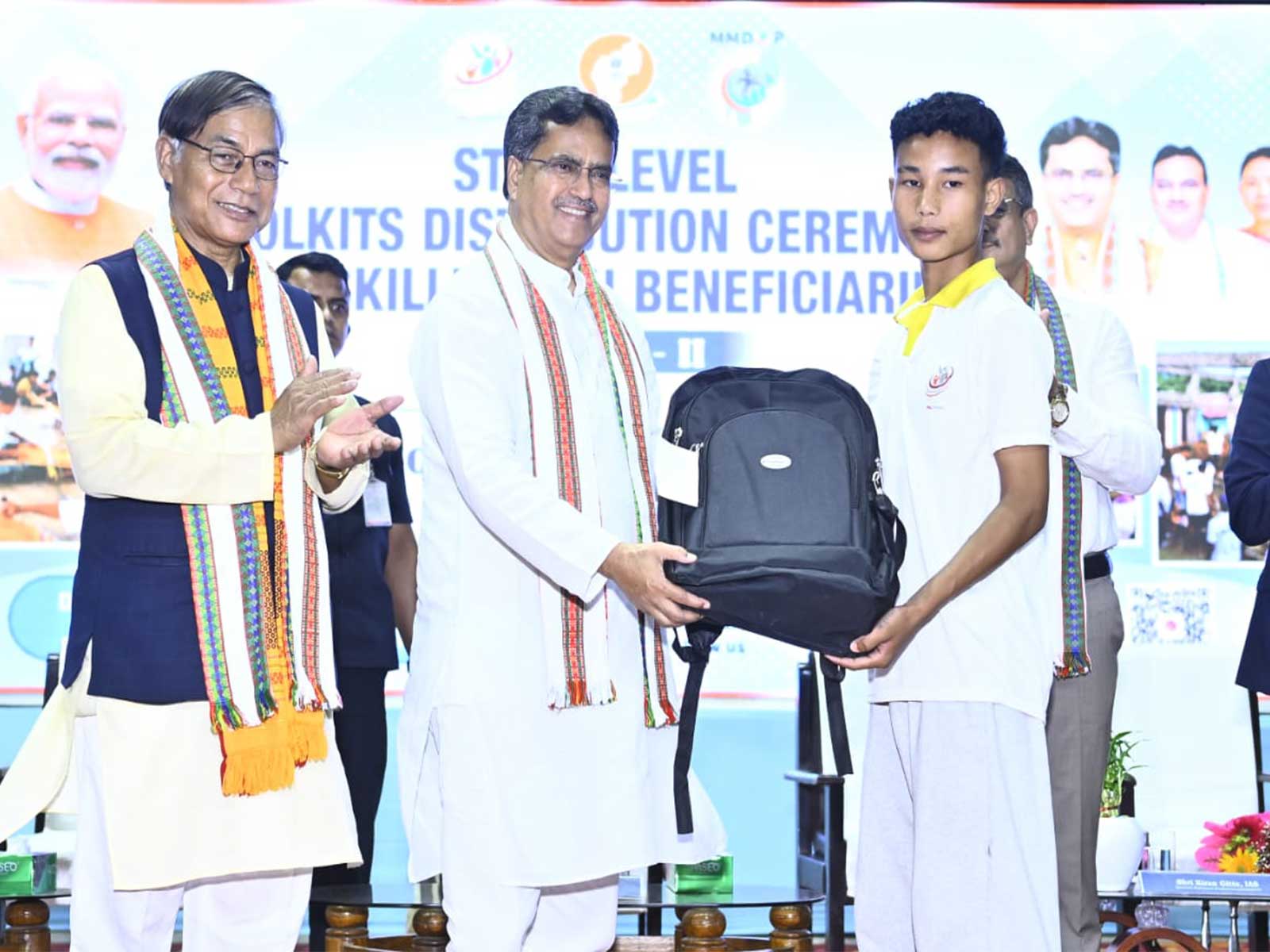
Amarpur (Tripura) [India], August 24 (ANI): In a major push to transform rehabilitation into sustainable livelihood opportunities, Tripura Chief Minister Prof. (Dr.) Manik Saha on Sunday distributed toolkits to skilled Bru youth at a state-level ceremony in Amarpur, underlining the State Government's focus on making rehabilitated Bru families economically self-reliant through skill development.
At the programme held at Anandadhara Town Hall in Gomati district, the Chief Minister also initiated the release of stipends to trained Bru candidates and unveiled a booklet of the Directorate of Skill Development, Department of Industries and Commerce.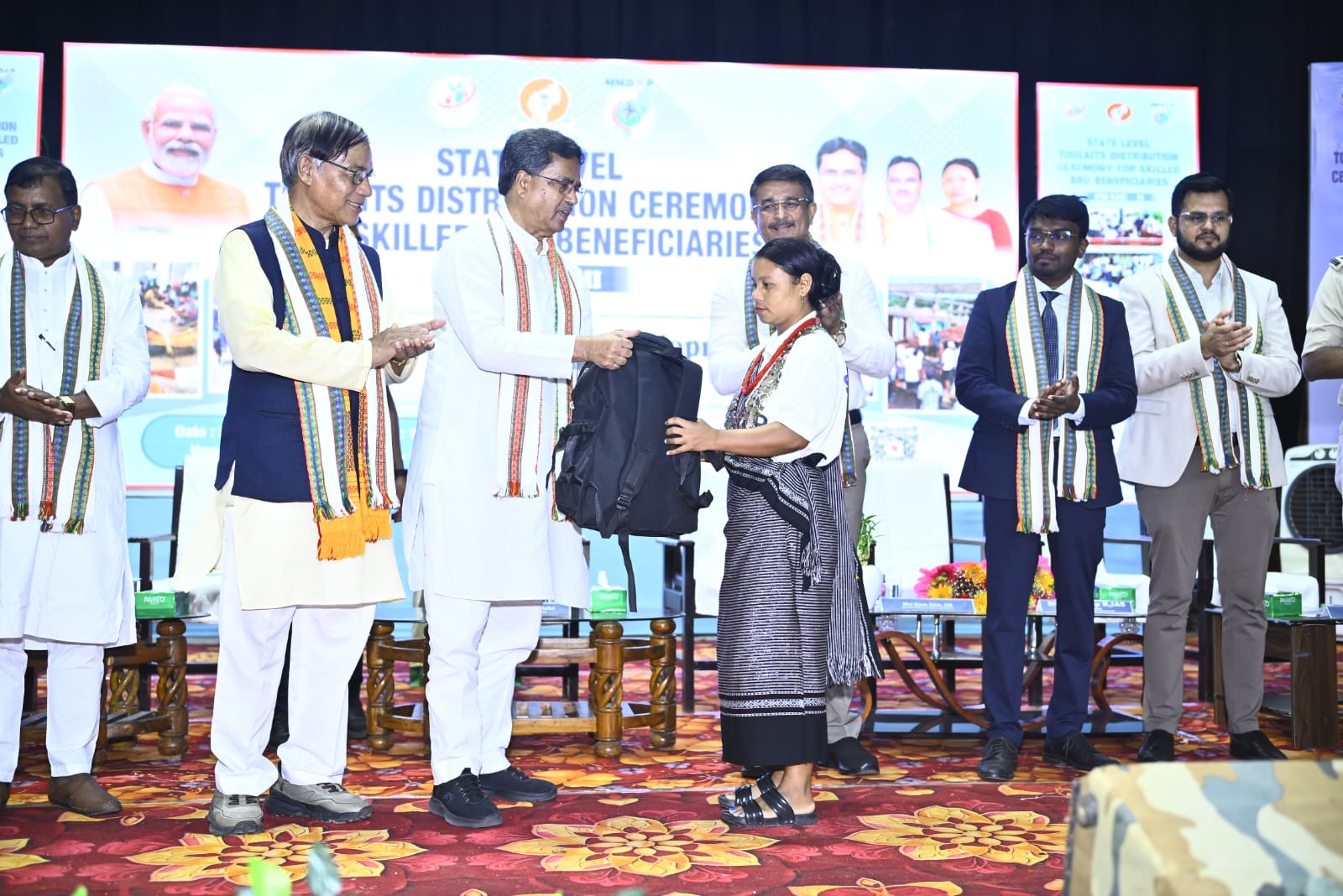
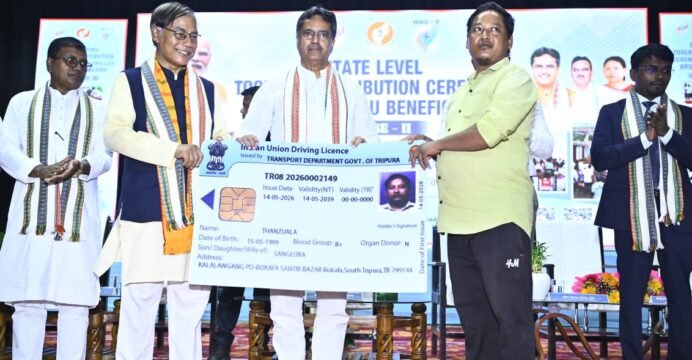
According to the release, a total of 1,877 tool kits and 255 driving licences were distributed, while ₹91.08 lakh was released as a stipend of ₹2,000 each to 4,554 trained Bru candidates.
The initiative reflects the Directorate of Skill Development's sustained drive to take vocational training directly to Bru resettlement colonies and connect rehabilitation with employment, self-employment and entrepreneurship, according to the release.
Since 2024, the Directorate has trained 5,121 Bru youth from 4,288 families through two phases covering 41 trade interventions, with a total committed expenditure of ₹16.25 crore. The programme has been designed around the principle that at least one member of every rehabilitated Bru family should acquire a skill that enables the household to generate income.
Unlike conventional training programmes, the Directorate has taken the training facilities to the beneficiaries, providing free training inside or close to the resettlement colonies. The approach is aimed at ensuring that geographical or family constraints do not prevent Bru youth from acquiring employable skills.
The training covers a wide range of livelihood-oriented trades, including livestock and agriculture, construction, textiles and handloom, transport, renewable energy, personal services and small food businesses. Women have also participated significantly in trades such as tailoring, handloom, mushroom cultivation, beekeeping and pickle making, thereby creating additional income opportunities for families.
Speaking at the ceremony, Chief Minister Saha stressed that rehabilitation could be considered truly complete only when every rehabilitated family is able to stand on its own feet and earn a livelihood with dignity.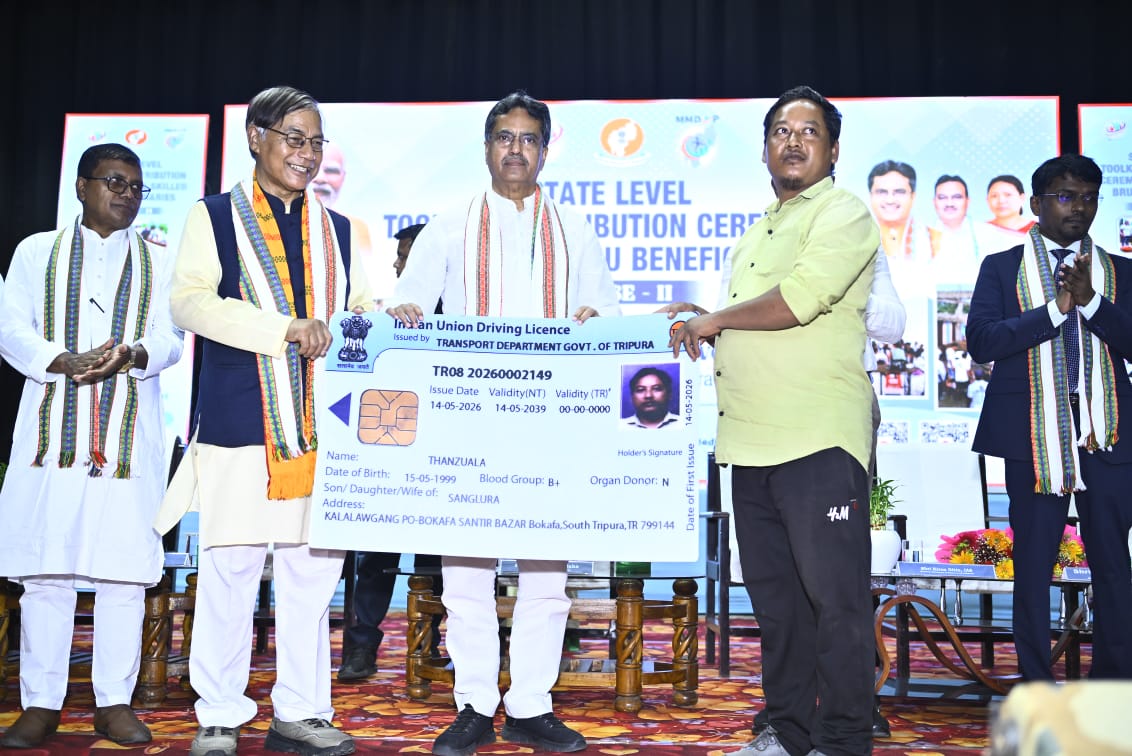
He said the toolkits would provide beneficiaries with the immediate means to convert their newly acquired skills into income-generating activities. The Chief Minister also highlighted the importance of linking skill training with sustainable livelihoods, referring to the guidance of Union Home Minister Amit Shah on empowering youth through training and economic opportunities.
The Chief Minister said the Centre and the State Government were working together to ensure that beneficiaries receive appropriate training under government schemes and emerge not merely as job seekers but as self-employable and self-reliant citizens capable of supporting their families.
The tool kits distributed under Phase II covered trades including tailoring, mushroom cultivation, bee-keeping, masonry, carpentry, electrical work, solar LED and solar photovoltaic systems, two-wheeler servicing, barbering, traditional handloom, bamboo utility products, street food vending and roadside food services.
In addition, 255 trained LMV drivers received driving licences, enabling them to seek driving employment or operate their own vehicles. The release of ₹91.08 lakh in stipends to 4,554 beneficiaries from both phases has also cleared the stipend liability for the two phases.
The Chief Minister further said that the Directorate of Skill Development, in collaboration with the Ramakrishna Mission, has initiated foreign-language training, opening up new avenues for Tripura's youth in hospitality, tourism, translation, business process services and overseas employment.
He urged the youth of Gomati district and the State to make full use of the training facilities being provided by the government and assured continued support from the training stage to placement and enterprise development.
The programme also featured an exhibition of products and livelihood activities undertaken by trained Bru beneficiaries. A trained candidate shared his experience of the skill-development programme, while a video showcasing success stories from the Bru training initiative was screened.
The initiative marks a significant shift in Tripura's Bru rehabilitation approach--from providing basic relief and resettlement support to creating long-term economic independence through skills, tools and livelihood opportunities.
With training, toolkits, licences and financial support being provided as an integrated package, the Directorate of Skill Development is seeking to ensure that rehabilitation translates into sustainable income and dignity for Bru-Reang families across the State. (ANI)
