

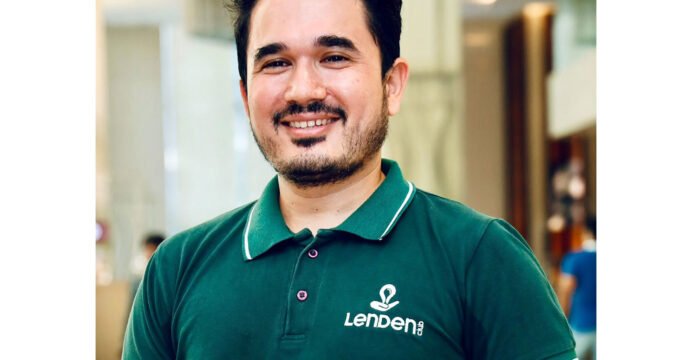
From Kathmandu to Mumbai: Dipesh Karki champions robust India-Nepal growth corridor

Kathmandu [Nepal], July 7 (ANI): Dipesh Karki, the Nepal-born co-founder of Mumbai-based peer-to-peer lending platform LenDenClub, spoke about the state of talks with Nepal Rastra Bank (NRB) on a P2P pilot, whether remittances can become cross-border credit, and where the two countries' human ties translate into real economic trust and where they don't.
In an exclusive interview with ANI, Karki confirmed discussions with NRB on bringing a P2P model to Nepal and said the holdup isn't political will.
"What I realised is the blocker is definitely not the intent. NRB has already released a white paper on what could be the potential way of achieving P2P lending in the country. The biggest blocker as of now is confidence, which I believe is valid for the regulators because P2P, among many other instruments, is the one that is supposed to reach to a mass, both on the lender side as well as on the borrower side. So, when it becomes a product of a mass, you have to be sensitive about the kind of irregularities that it may bring, the kind of confidence it may bring into the populace and the kind of challenges that it may bring during the operations."
Further adding, "the regulators are definitely doing their assessment. They are looking to build a framework in the near future wherein innovators would be encouraged to produce something or create a POC around the same. They may also release some sandboxes so that the innovators could come forward and build on top of those, try out in a selected control group and figure out whether this model would be viable or localised as per the need in this country. It may not be the same playbook as it is operating in India. There will definitely be some Nepali flavour added to it."
With millions of Nepali workers in India remitting money home, on being asked whether that flow could become productive credit and what it would require from regulators on both sides. Karki stressed more on utilising it in a more creative and modernised way.
"Of course, remittance has been a steady source of income for this country, and definitely it has contributed heavily over the last couple of decades. However, it has just been a simple source of cash flow for many families. It can definitely be used in a much more creative and modernised way. It can be used for borrowing, for agricultural needs, and to support educational loans. In fact, the government itself had proposed a diaspora bond," he added.
So, if a diaspora bond is launched, I am sure remittance can be a good source of funding for such kind of bond or purchasing it remotely, he said. "However, this would require a couple of stringent cross-border observations. For example, cross-border remittance checks and balances would be required. Regulatory evaluations on the use cases should be more stringent, and of course, the borrower's interest protection is equally important. Consent-based data sharing would be equally important because if such sources of income are tracked and absorbed, it could lead to a lot of social issues as well. There are a lot of opportunities to work."
Asked whether the everyday human connectivity between Nepali and Indians actually shapes how the two countries do business, or stays separate from diplomacy and trade figures.
"The cultural exchange, human exchange, has been before the political border era. The two countries share a relationship of bread and families wherein the two countries have been associated, be it for marriage or be it for small shop access, be it for access to the market, be it for tourism. Religious tourism is one of the prime reasons why both countries exchange a lot of population here and there. So, diplomacy happens at the top level. However, cultural exchange, trust, and the value that common people hold definitely is not blended with diplomacy, I suppose. That's the reason the two countries share a common border, an open border, much more lenient and much more accessible to both sides. It also helps shape the way we follow our trend, be it in terms of food culture or in terms of addressing styles. Cinema is definitely one of the biggest influences on the culture. Bollywood has shaped the way this country has uplifted itself in terms of cultural evolution. Businesses have been sharing or accessing cross-border since ages. Of course, a bit of diplomacy would definitely be required there, but beyond that, the businesses that are fostered in Nepal get a good market in India."
"India is one of the largest importers of Nepali goods and vice versa. Nepal's largest import comes from India. So, yes, diplomacy and border cultural value exchange are two different things, but yeah, they do work hand-in-hand," Karki said.
On being asked whether cultural and religious goodwill has translated into something concrete for him as a founder, or whether it's more sentiment than substance, the co-founder of one of the largest fintech in India said, "Cultural goodwill does start as a sentiment, but it can become substance. Cultural familiarity helps in first conversation. It does reduce distance. People are curious, warmer, and more often open, but it does not replace execution. Investors still ask for numbers. Regulators still ask for compliance. Customers still ask for value. So, goodwill may open the door, but performance keeps you inside the room. As a founder, being Nepali in India gave me both humanity and hunger. People respected the journey, but ultimately LenDen Club had to stand as a product, regulation, risk, and skill."
Asked for one concrete initiative, not a general call for "more cooperation", he'd push policymakers in Kathmandu and New Delhi to commit to this year, the entrepreneur stressed on more locally available ideas to work on.
"There is a lot of innovative stuff happening in Nepal, but they are not able to scale at the speed or pace at which Indian startups scale. Fortunately, among the thousands, one or two get exposure of American ecosystem, but I believe that the kind of cultural values that we share, the kind of ecosystem that we share, and the kind of familiarity that we have with the Indian market, there should be an open corridor for startups and innovation. This will help foster innovation on both sides of the border to work collaboratively and build a much bigger product at scale. Let's say India has the market, but Nepal definitely has a good number of strong innovators. Some of them have made it to the top. I mean, we do hear about the Achiever Indian CXOs around the world, but there are definitely a good number of Nepali CXOs as well. India has worked quite heavily in order to call their talents back to the country through their brain gain initiative, and Nepal is also looking to do the same," he said.
He added, "If this innovation corridor is open, then Nepal gets an opportunity of a 1.5 billion population with the fourth largest economy of the world. So, yeah, it would be a great opportunity for both countries to work hand-in-hand and grow together."
Karki closed with what he'd ask Indian institutions to do differently for the next Nepali founder like him.
"Don't just build for Nepal. Build from Nepal's inside, but for a larger market. Your background is not a weakness. It gives you a unique lens, but you need world-class execution, speed, regulatory understanding, and courage to compete outside of your comfort zone. To Indian institutions, I would say make it easier for serious Nepali students, founders, and entrepreneurs to access networks, internships, the startup ecosystem, and long-term professional pathways. Talent from Nepal should not only come to India for jobs, but they should also come to build companies there and build opportunities there. Tomorrow, when we talk about the LendDen Club kind of story, it should not come just as an exception, but it should come as a repeatable path and the journey for innovators in the future." (ANI)
