

Former Indian Ambassador lauds “proactive govt measures” as India navigates “disproportionate” LPG hit amid West Asia tensions
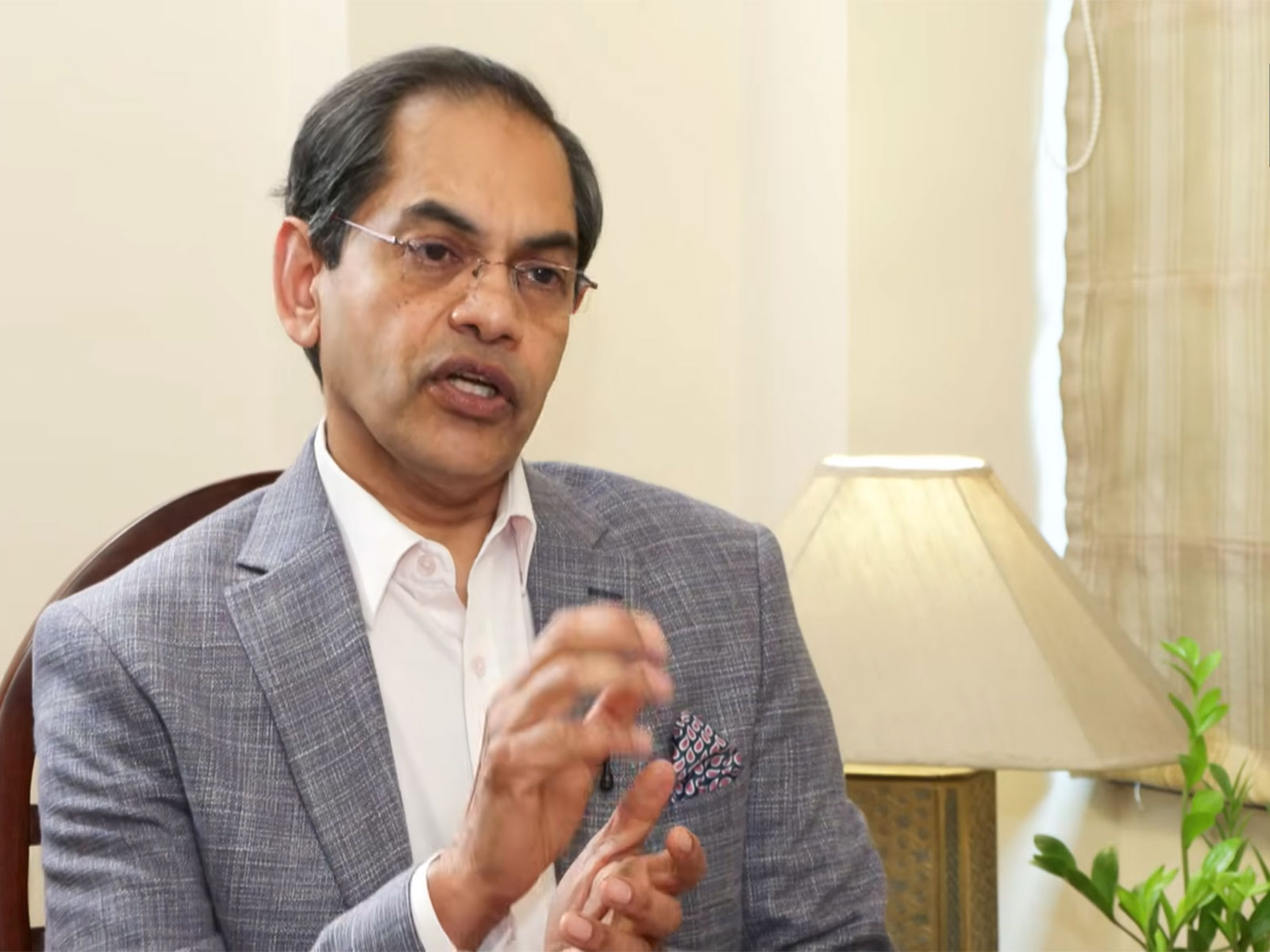
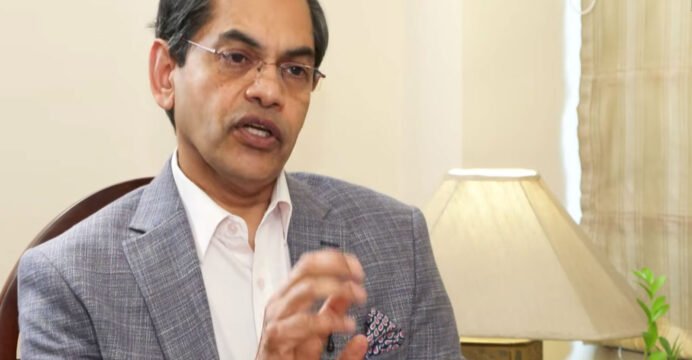
New Delhi [India], April 5 (ANI): Former Indian Ambassador to the UAE, Sanjay Sudhir, lauded "proactive government measures" as India navigates "disproportionate" LPG hit as the conflict in West Asia enters its second month.
Speaking with ANI, he sounded a clarion call regarding India's energy security and described the current geopolitical climate as one of total "uncertainty," warning that the effective closure of the Strait of Hormuz has placed one-sixth of humanity at a critical economic crossroads.
"I think if I were to use one word, that's uncertainty. And I think uncertainty prevails even now as much as it did in the first week of this war, which started on the 28th of February," he said.
While the entire hydrocarbon spectrum is reeling, Sudhir highlighted that Liquefied Petroleum Gas (LPG) is facing the most severe crisis. LPG fuels over 340 million Indian households, making it a matter of national survival rather than just industrial necessity. India relies on imports for 62% of its LPG needs. Crucially, 90% of those imports originate from the Gulf countries currently embroiled in or affected by the war.
"Well, I think that while our entire spectrum of hydrocarbons has been impacted, LPG has taken a disproportionate hit. And LPG is a very important fuel for the simple reason that LPG is actually fuel for more than 340 million households. And that makes it so critical in terms of its importance. Also, we have to keep in mind the fact that we are reliant on imports to the extent of 62% for LPG, and out of these 62%, 90% comes from Gulf countries," he said.
Despite the grim outlook, Sudhir noted that "proactive government measures" are currently keeping a total collapse at bay, highlighting the Centre's efforts to prioritise domestic cooking gas over industrial use and maximising refining. Domestic refineries have been ordered to push LPG production to absolute capacity.
"And due to the crisis which we all see in West Asia and also the effective closure of the Strait of Hormuz, this has been impacted very, very seriously. But the good thing is that because of the proactive government measures--like you'll recall the LPG Control Act and invoking it, and also asking our refineries to produce as much of LPG as they can, proactive diplomacy on our part to procure as much of LPG as is possible, also prioritizing LPG for domestic consumption as compared to, say, industrial consumption--I think this has had a good impact to just mitigate the situation," he said.
Sudhir said that India's situation becomes critically important because it has to sustain one-sixth of humanity.
"Well, to answer the first part of your question first, it's not just India, I think the entire world is quite dependent on the Gulf for its energy needs. India, in particular because of our geography, our proximity to the Gulf, and the fact that India is the world's third-largest energy consumer and also the third-largest energy importer. And that's also very obvious because, after all, we are the fourth-largest economy in the world. We have to take care of one-sixth of humanity. And that makes our dependence perhaps much more on the Gulf as compared to others," he said.
He further told ANI that India is 89% import-reliant and of this, 45% comes from the Gulf.
"If I give you some figures: as far as crude is concerned, we are 89% import-reliant; out of this 89%, 45% comes from the Gulf. LPG, I already mentioned, 62% import-reliance, 90% comes from the Gulf. Things are, of course, a little better in terms of LNG overall because it's only 50% import-reliance, but of this 50%, over 60% comes from the Gulf, particularly from Qatar. And that makes us quite dependent on Qatar. So, we are impacted in two ways. One is the effective closure of the Strait of Hormuz, and the fact that the Ras Laffan LNG facility of Qatar has been badly damaged," he said.
The former diplomat further added that India is looking toward Mozambique and new long-term contracts with the UAE (expected by late 2026) to decouple from current hotspots.
"And Qatar has itself claimed that about 17% of the facility has been damaged, which will take more than five years to build back again, and they have declared force majeure. So, that creates a problem for us. But overall, as far as LNG is concerned, there is likely to be a glut by 2030; it is a different matter that this issue is happening in early 2026. And we are in the process of actually diversifying our LNG resources. We should get LNG from Mozambique--we have made huge investments there. We have also signed four long-term LNG contracts with the UAE. But then the LNG under these contracts will start coming maybe by the end of this year," he said.
Parallel to Sudhir's warning, the Ministry of Petroleum and Natural Gas issued a public advisory on Friday. While acknowledging the closure of the Strait of Hormuz, the Ministry assured citizens that "necessary measures" are in place to maintain an uninterrupted supply.
Citizens were urged to avoid panic purchasing of petrol and diesel and to refrain from "unnecessary" advance bookings of LPG cylinders to prevent artificial shortages. (ANI)
