

DPIIT, ADB partner to develop grading and rating benchmark for warehouses, cold chains
New Delhi [India], September 29 (ANI): The Department for Promotion of Industry and Internal Trade (DPIIT) worked in collaboration with the Asian Development Bank (ADB) to establish a comprehensive grading and rating standards benchmark for warehouses and cold-chain facilities across the country.
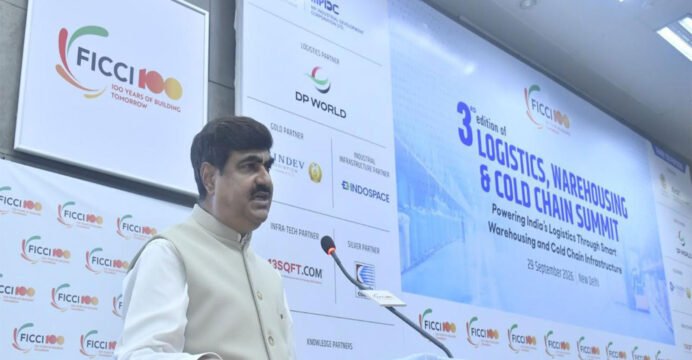
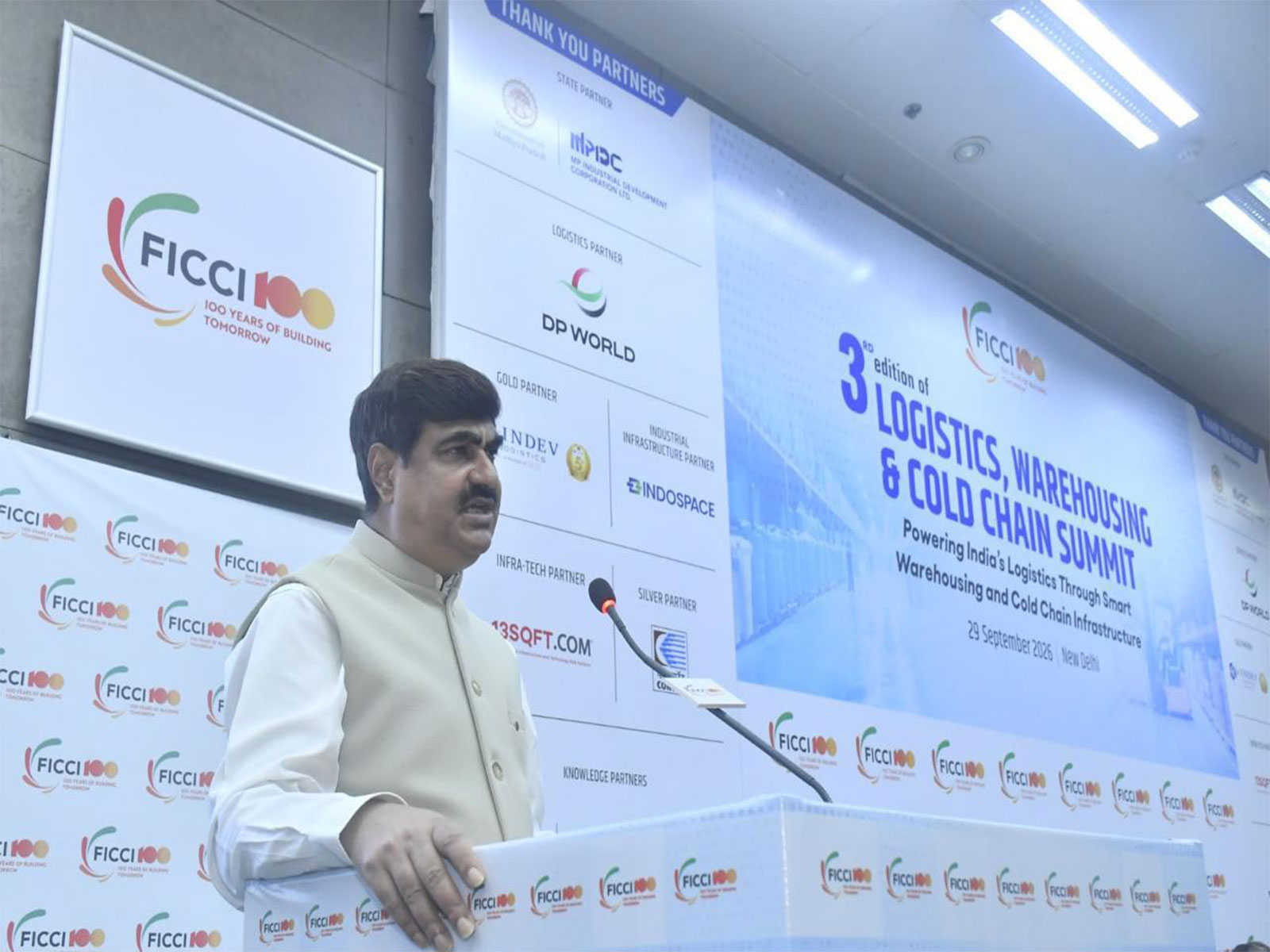
Addressing delegates at the third Logistics, Warehousing and Cold Chain Summit organised by FICCI, Pankaj Kumar, Joint Secretary at the DPIIT, noted that the central government deliberated on the regulatory mechanism governing these ratings.
Officials weighed the operational viability of setting up a formal government oversight body against a model anchored in industry self-regulation, noting that certified units positioned themselves for improved access to state incentives and institutional credit.
The rating blueprint followed two sets of warehouse standards and guidelines circulated by the department. Alongside the nationwide benchmark, the DPIIT’s logistics division drafted dedicated guidelines for multimodal logistics parks (MMLPs).
Warehousing and cold chains take up about 70 per cent of the area in MMLPs, Kumar stated during his address.
Kumar added that the upcoming guidelines aimed to spur value-added on-site interventions, including product labelling, packaging, digital tracking systems, and regional redistribution mechanisms, while assisting states in drafting city-level logistics plans that incorporated dark stores and cold storage.
Commodity-backed financing recorded parallel momentum across regulated platforms, according to data shared by the Warehousing Development and Regulatory Authority (WDRA).
Shanti Lal Jain, a member of the WDRA, stated that agricultural and allied goods worth roughly Rs 12,419 crore were pledged against electronic negotiable warehouse receipts (e-NWRs) in the preceding year, registering a 43 per cent jump.
Corresponding credit lines extended against these instruments expanded by an identical margin to reach nearly Rs 5,700 crore, with early data from the current fiscal year recording pledges beyond Rs 6,000 crore against an annual loan target of Rs 8,000 crore.
Around 7,800 warehouses maintained formal registration with the authority, representing an operational capacity of 6 crore metric tonnes across 246 notified commodities.
"Unregistered storage can never be banked," Jain stated.
Jain stressed that private capital needed to shift into scientifically managed facilities constructed closer to farm gates to leverage public credit guarantee schemes. He underlined that the core objective centred on transitioning primary producers away from forced distress sales toward structured, discretionary marketing choices.
State administrations moved to capture downstream logistics capital. Anisha Shrivastav, Executive Director of the Madhya Pradesh Industrial Development Corporation (MPIDC), outlined provisions under the state’s Logistics Policy 2025, which extended a 30 per cent fiscal grant on fixed capital investments for projects spanning at least 25 acres, paired with up to Rs 5 crore for external trunk infrastructure.
Sachin Bhanushali, Advisor to the FICCI Committee on Logistics and Former Chief Executive Officer of Gateway Rail Freight, pointed out that road transit speeds maintained a modest average of 15 to 20 kilometres per hour, while rail operations faced similar bottlenecks when factoring in first- and last-mile operations.
The summit also saw the launch of two reports: a FICCI-PwC study, “Redefining Warehousing with AI Driven Transformation”, and a FICCI-GT report, “India’s Cold Chain – From Storage to a Chain”. (ANI)
