

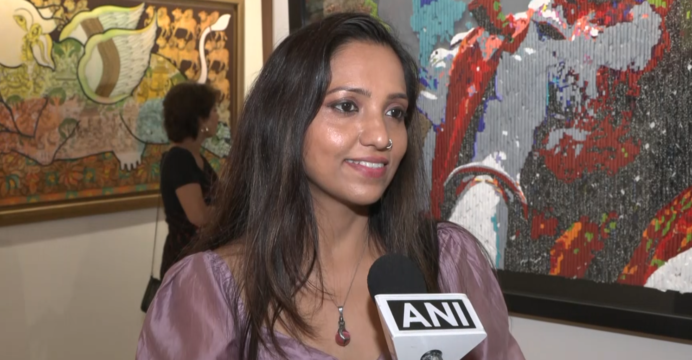
“Giving opportunities to artists is praiseworthy”: Chirag Paswan at Masha Art’s new gallery opening
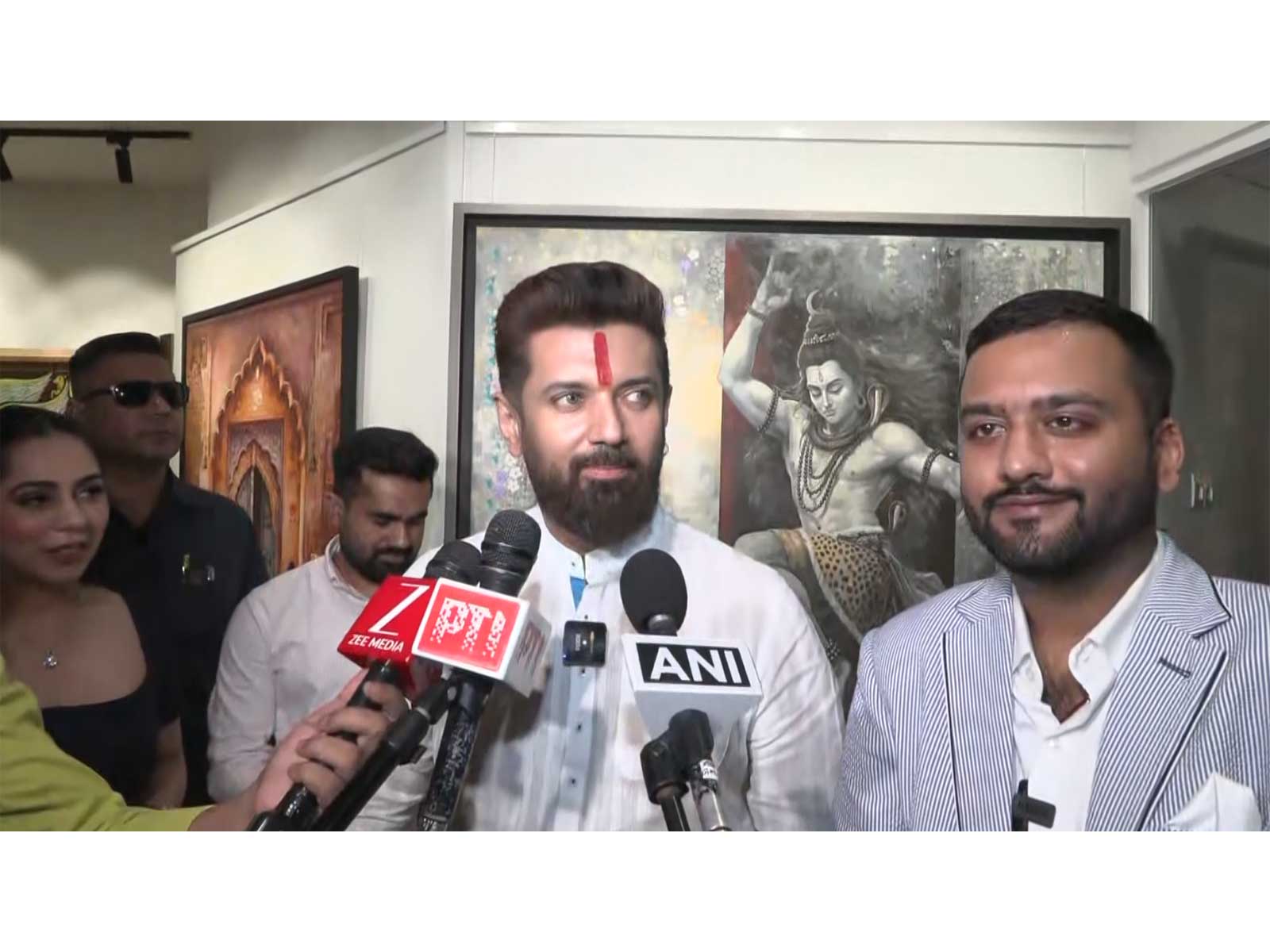
New Delhi [India], September 28 (ANI): Amid vibrant colours, sculptures inspired by movement, spiritual imagery and interpretations of India's diverse cultural traditions, an art exhibition at Masha Art’s new gallery brought together artists with distinct stories and creative journeys.
Union Minister for Tourism and Culture Gajendra Singh Shekhawat and Union Minister for Food Processing Industries Chirag Paswan inaugrated the gallery here.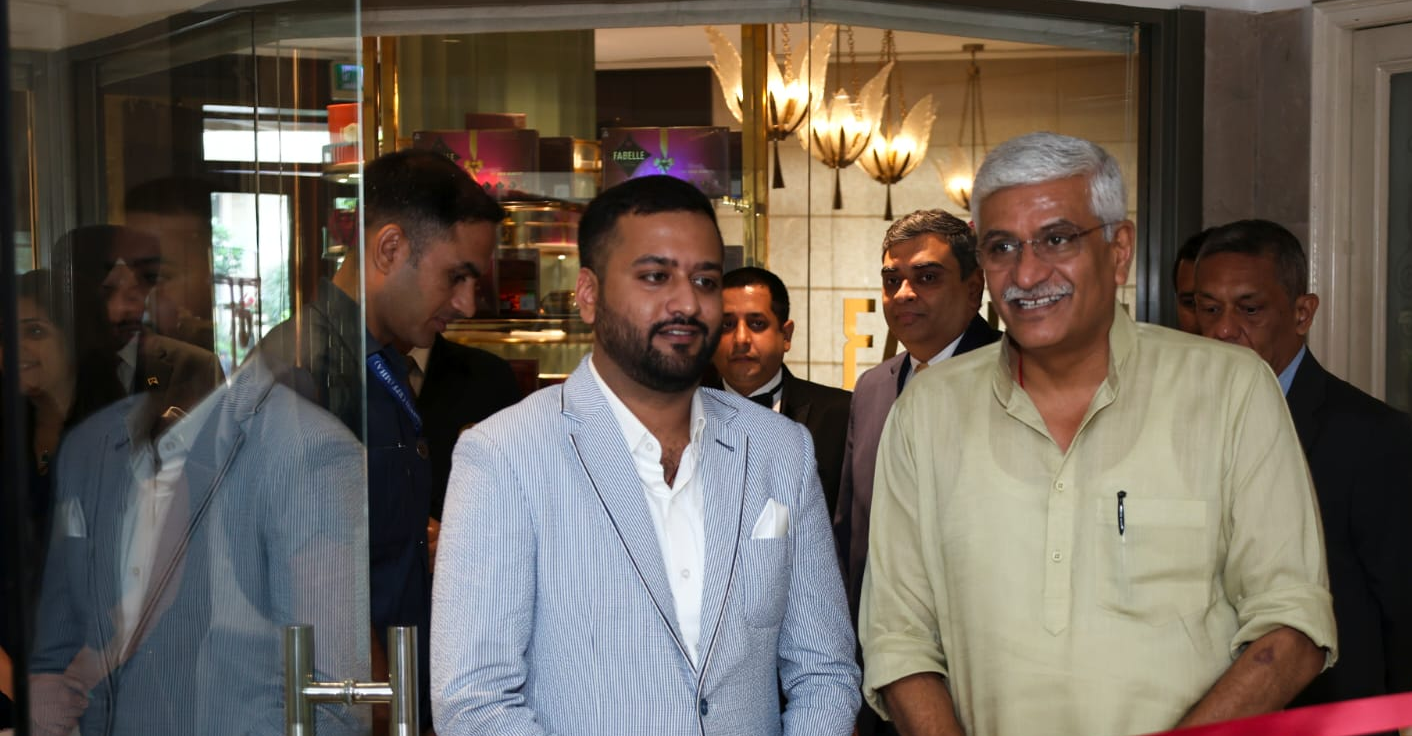
Addressing the media, Paswan congratulated Samarth Mathur, Founder and Managing Director, Masha Art, and said he had attended the exhibition not in his capacity as a Union minister but as an elder brother to extend his love and blessings.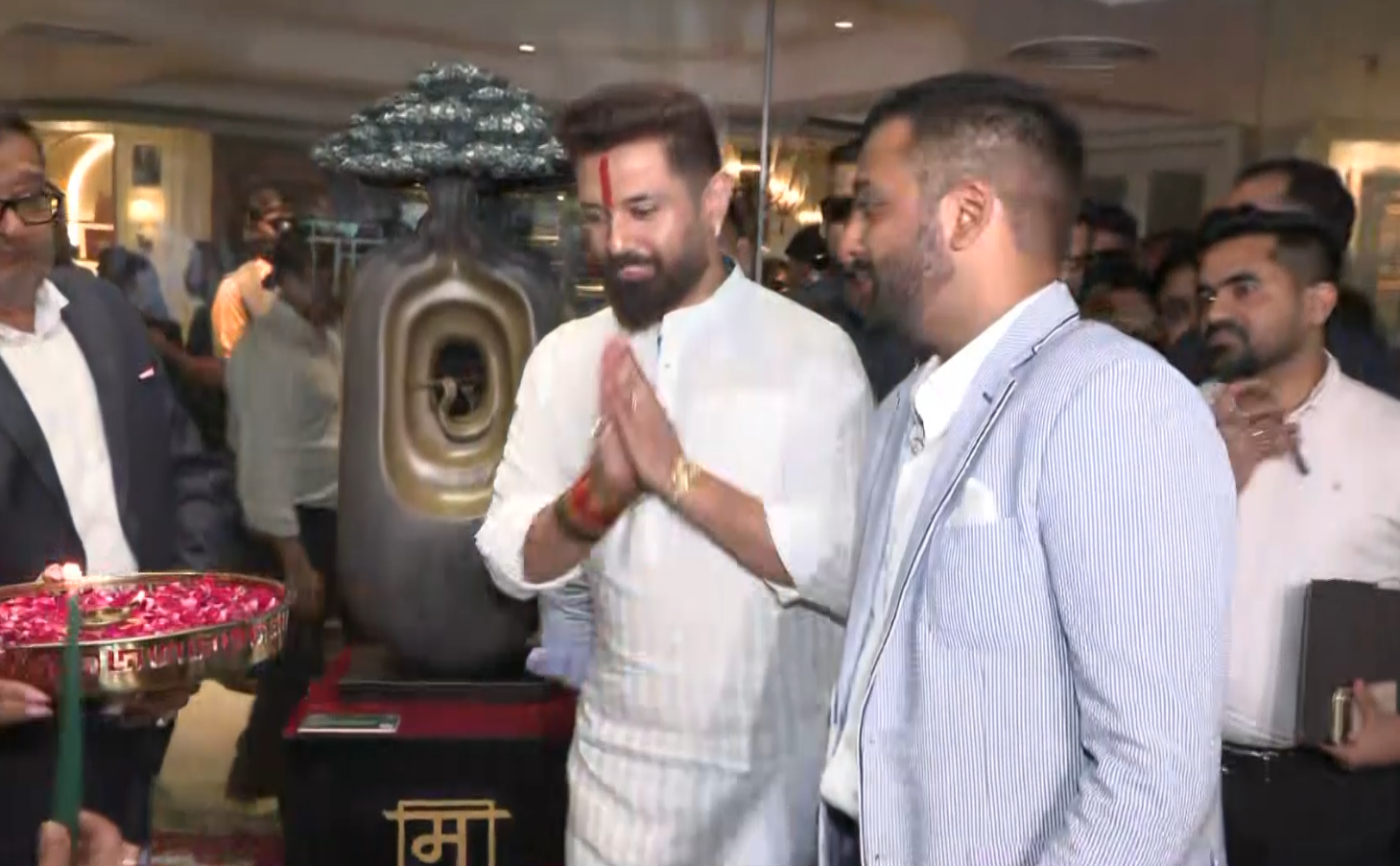
“I extend my heartiest congratulations and best wishes to Masha Art. I have come here today not in the capacity of a Union Minister, but as an elder brother, to offer my love and blessings,” Paswan said.
He praised the platform's approach of providing opportunities to young artists, saying that while established artists are recognised and invited once they have created a name, support at the beginning of their journey can make a significant difference.
“Regarding the idea of giving opportunities to young artists, which has been a priority for our government, and Prime Minister Narendra Modi has also consistently emphasised that the youth should be given as many opportunities as possible.,” he said.
Paswan added that when an artist has not yet established an identity, someone extending a helping hand can do a lot for their journey.
“In this context, the initiative, demonstrating capability and a commitment to the art form, as well as providing opportunities to young artists, is, I believe, truly praiseworthy,” he added.
He also praised the artists whose works were displayed at the exhibition and said each painting carried a different meaning.
The exhibition featured around 18 artworks and four sculptures by approximately 16-17 artists, according to Samarth Mathur.
He said the exhibition was an attempt to showcase India's cultural diversity and give artists representation from across the country.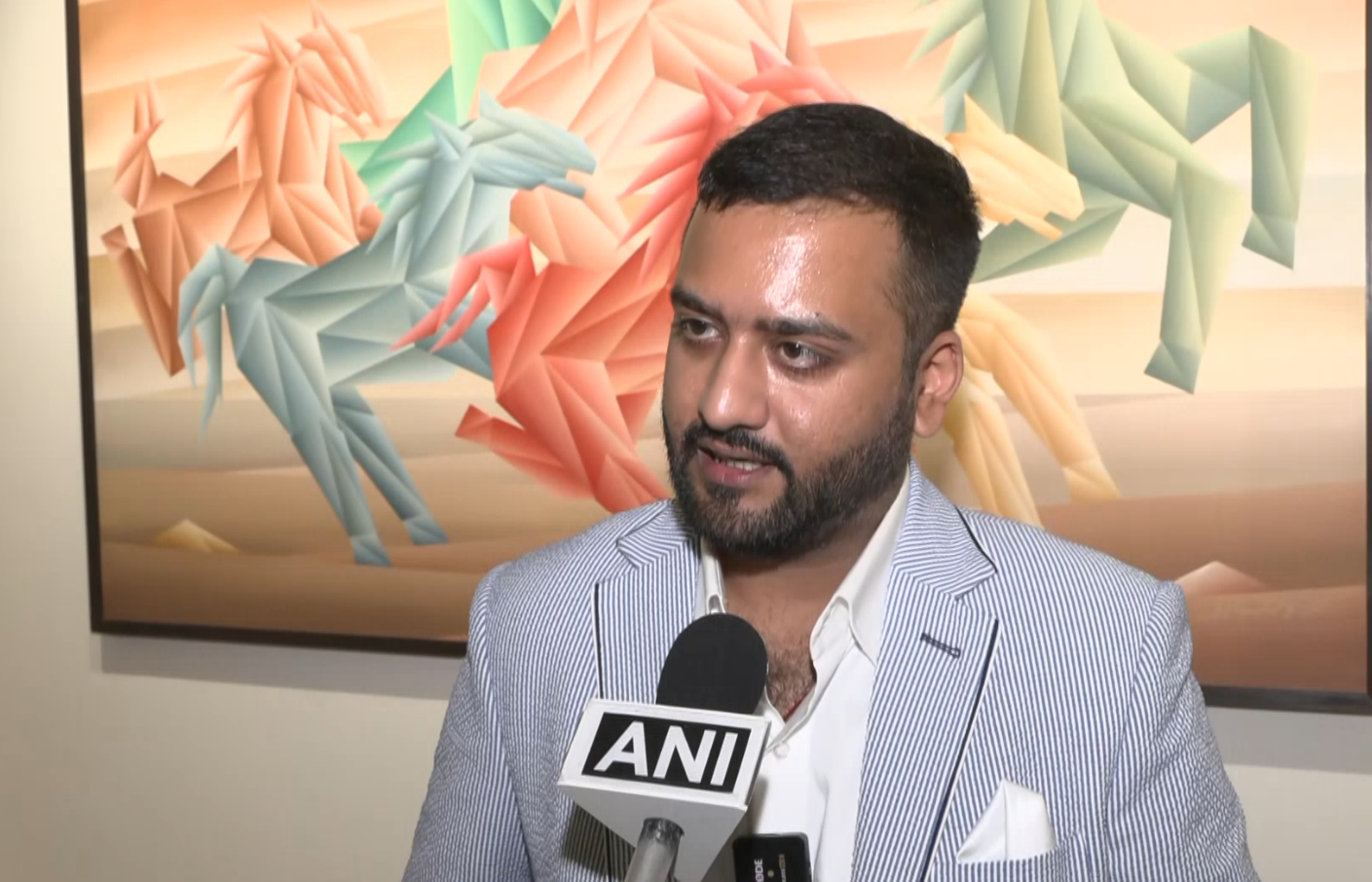
“We've tried to showcase culture throughout the country. As you know, we have 28 states in India and, I think, more than 280 cultures. So we have tried to depict cultures from around the country where we are giving artists representation. Our vision as a brand is to take Indian art to the global map and educate people more about art,” Mathur told ANI.
The visio is to take Indian art to a global audience while making art more accessible to people in India.
He said the platform wanted to break the intimidation often associated with entering an art gallery and encourage people to look at art beyond its traditional association with elite spaces.
He also said the organisation was promoting art as an alternative asset class and sought to educate people about the value and possibilities of collecting art.
He said the platform worked with more than 3,000 artists and wanted to take their work to a global footprint.
Among the artists featured was Delhi-based artist Sanjay Soni, whose portrait captured the dignity and capacity of traditional Indian identity through a striking traditional turban. He has spent 36 years working on different series; however, he pointed out that Rajasthan's culture, its people and the royal character reflected in their faces continued to inspire him.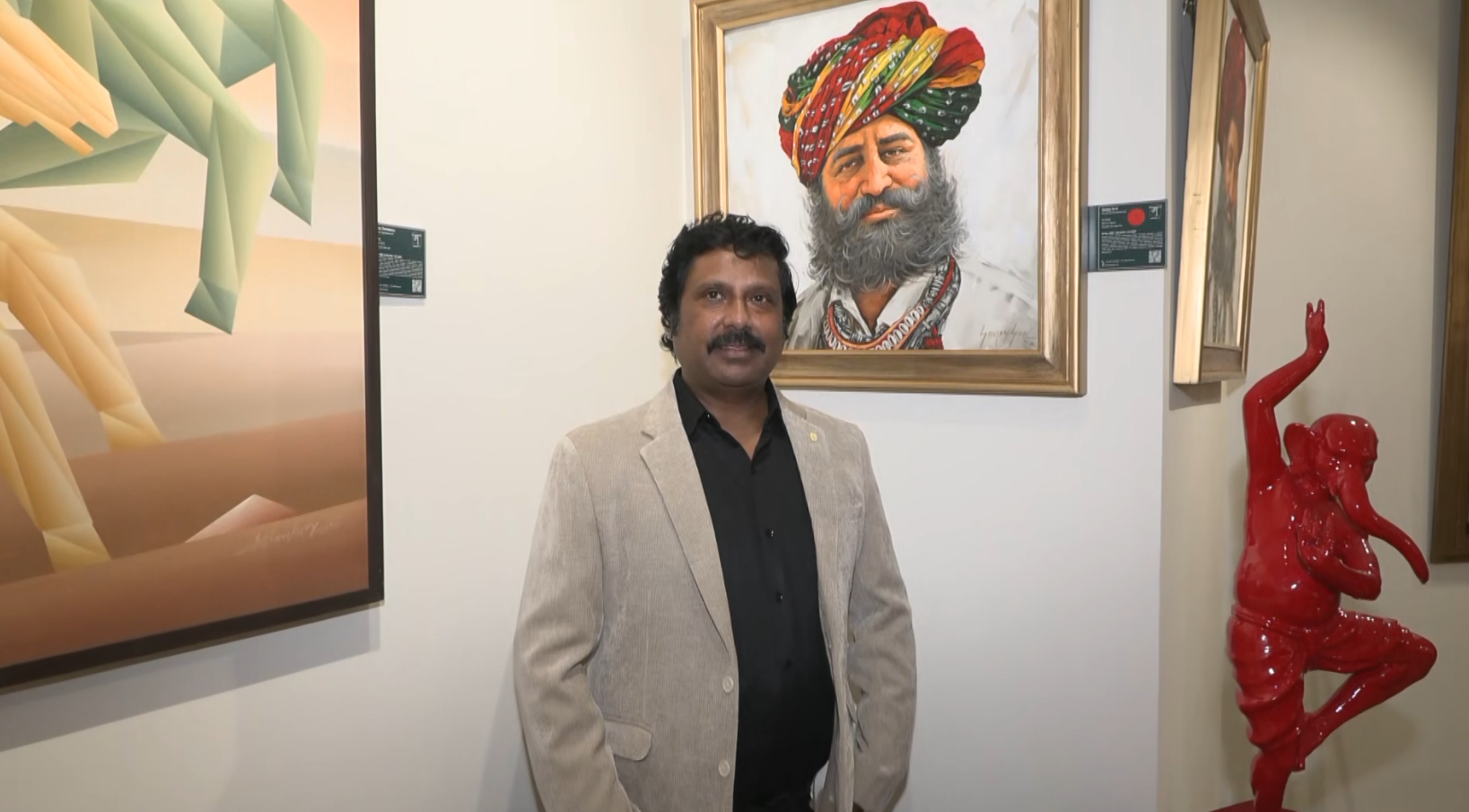
He said he had also worked on series based on Buddha, Banaras Ghats, horse racing and Khajuraho, but his Rajasthani series remained particularly special to him.
“I enjoy this work, this series of mine, so much. From the beginning, I've worked on many series, as I told you. I worked on the Buddha series, Banaras Ghat, and I made a series on horse racing, and I made a series on Khajuraho. But this special Rajasthani theme of mine is special. I mean, I get a lot of energy from here,” added the artist.
Sculptor Vernika Singh showcased a dancing Ganesha, drawing on her broader exploration of movement and dynamism.
“When I thought of making a deity like Ganesha, I didn't simply want to do a seated Ganesha. I wanted the body to have rhythm and capture the essence of dynamism and that's what I've tried to do,” Singh said.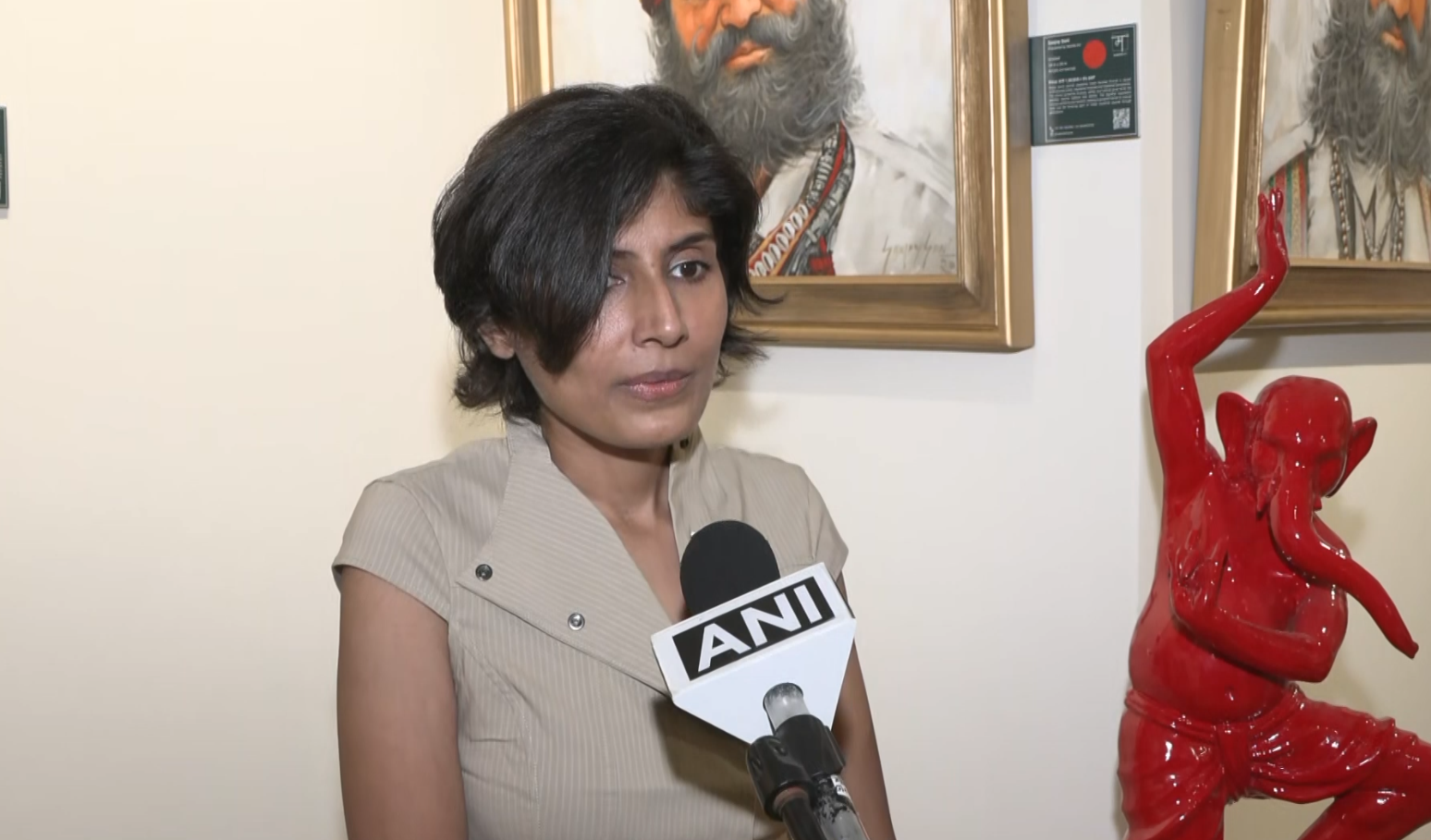
She said the sculpture used painted aluminium for the top and mild steel for the base and took around one-and-a-half months to complete.
Speaking about the challenges faced by emerging artists, Singh said, “Art is a difficult market to crack into, but you have to be just true to yourself and do what you really like doing, and I think you'll make a way for yourself.”
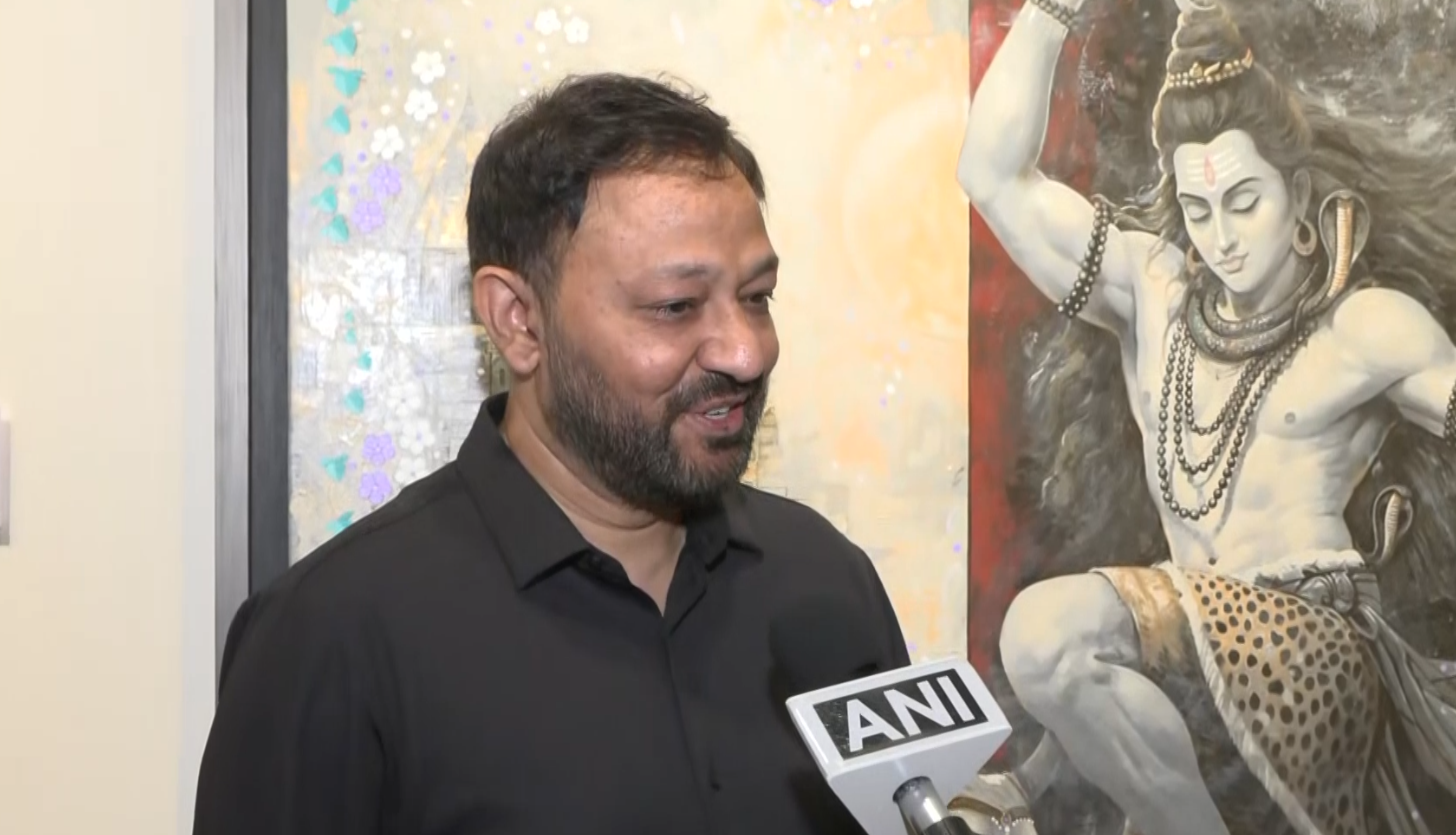
Another artist, Vijay Vansh, whose work ‘Shiva’ is on display at the art gallery, said his work brings together spiritual and conceptual themes. He said one of his works depicted Nandi and Shiva in a dance pose, while his broader work also explores the idea of coexistence through a leopard series.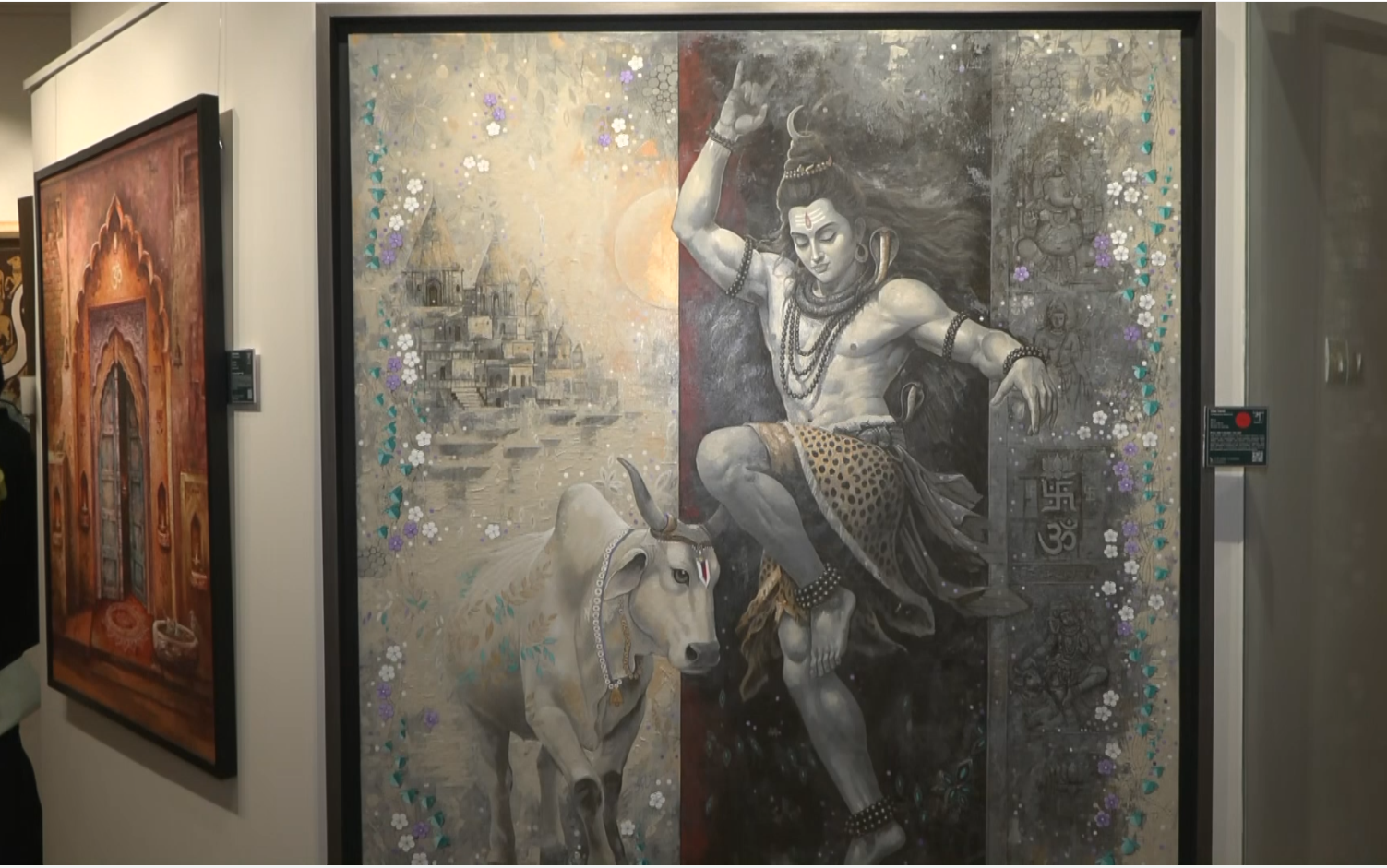
Italian artist Francesca Grimaldi spoke about how her experience of India had influenced her use of colour. She said the strong colours of Indian saris, the sky and the land, particularly red and yellow, had deeply influenced her paintings.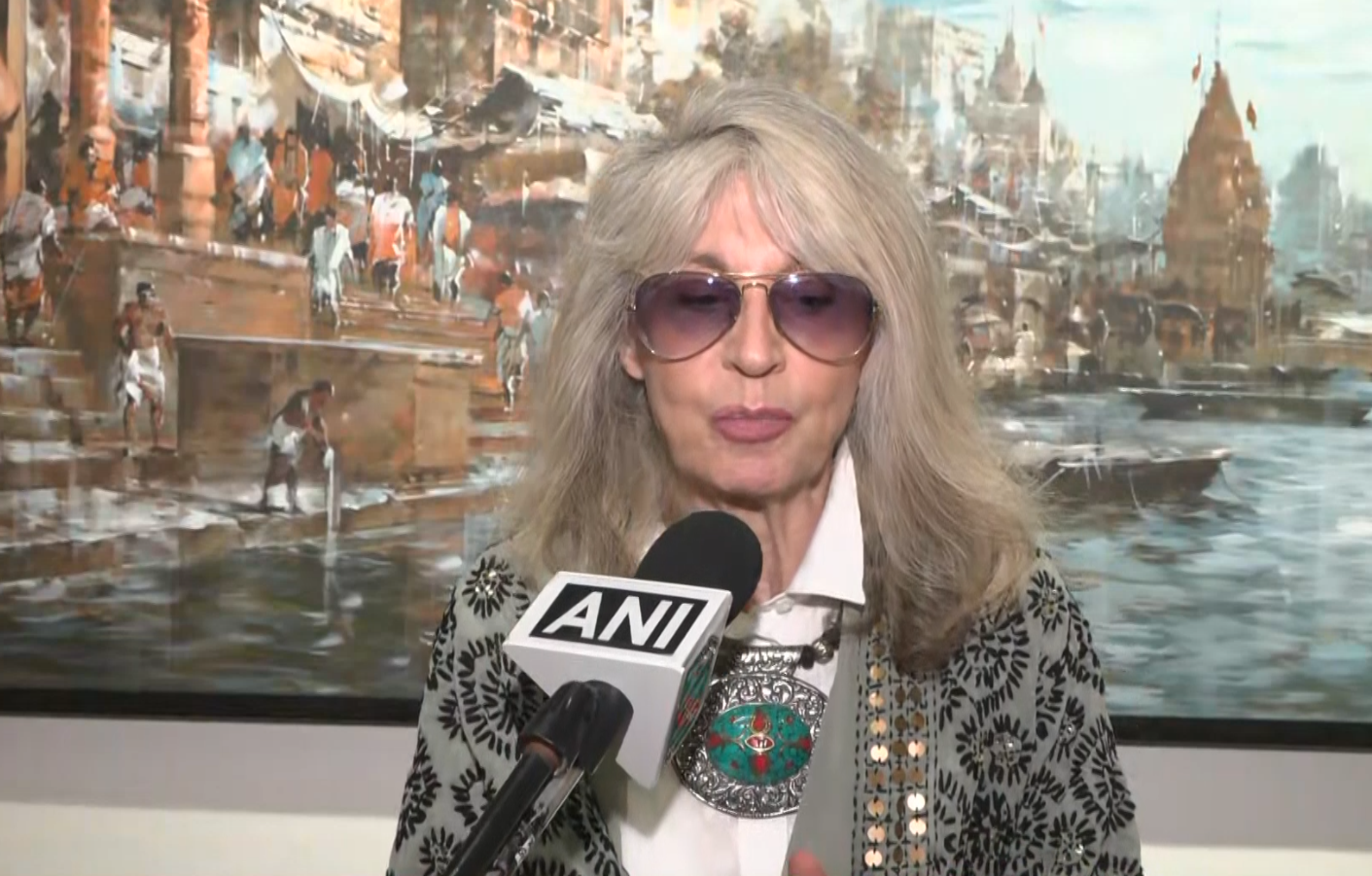
She also said the spirituality she encountered in India, through yoga, religion and people, had found its way into her work.
Artist Divyendu Anand showcased ‘Krishna: The Seed of Creation’, an artwork based on his interpretation of Krishna as a cosmic principle and the source from which creation emanates.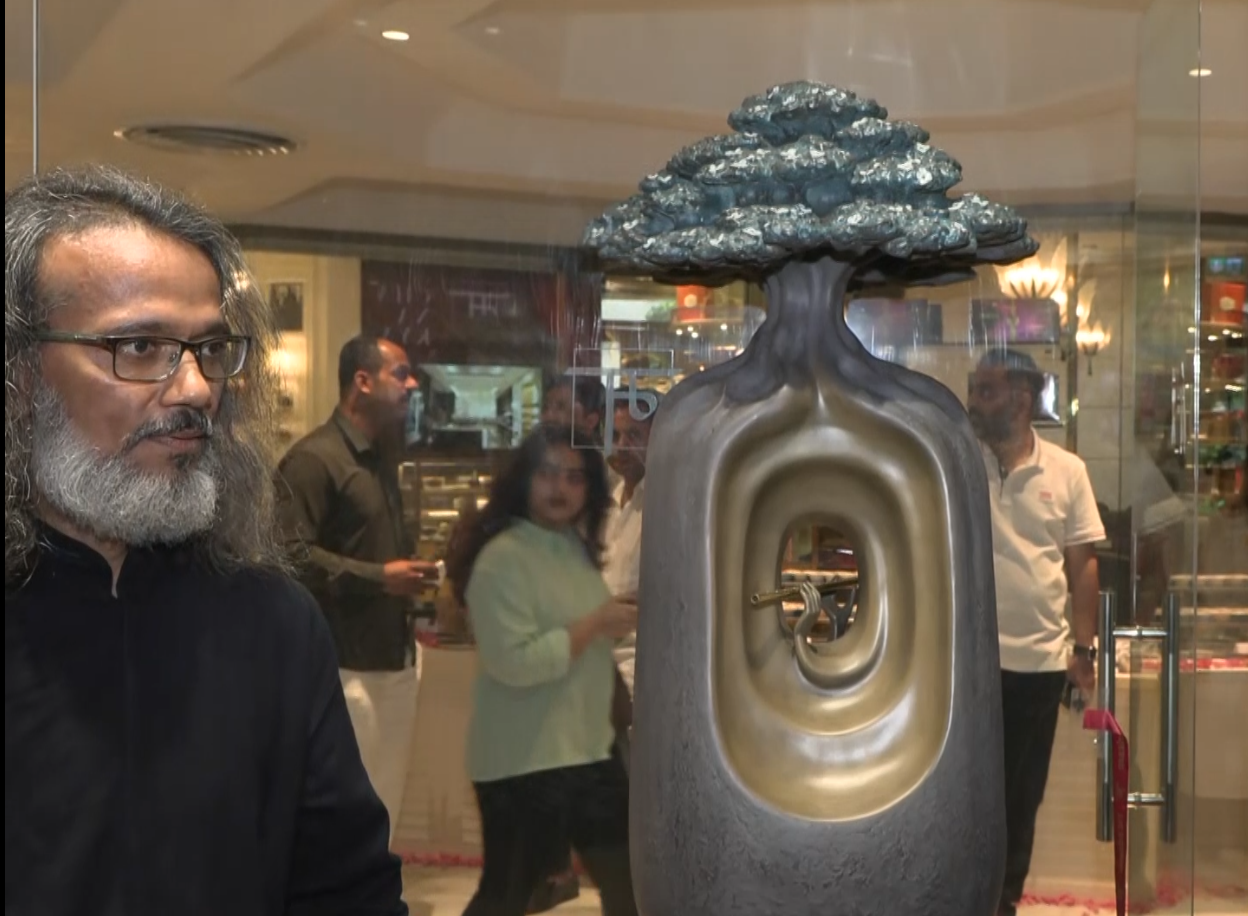
Explaining the work, Anand said the central form represents a seed, with Krishna at its core holding the flute and creation emerging from it.
Anand said his sculptural process begins with clay, which allows him to experiment with form until it evokes the emotion he wants to convey. The work then goes through mold-making, casting and finishing processes.
“So this particular artwork is titled ‘Krishna: The Seed of Creation’. As we know, Krishna is a cosmic principle, it is not limited to any local area. It's like an infinite, eternal entity. When we talk about Krishna as the seed. So he's the largest seed that exists in this universe, and from which creation is emanated. So if you look at the form here, this form is of the seed. And at the core is Krishna, like two hands holding the flute and the creation coming out of it,” he said while explaining the concept of his artwork.
Vineeta Dasgupta, who has been working in the field for around 25 years, said her artistic journey includes sculptures, paintings and installation art.
Dasgupta recalled a 2010-11 residency in Raghurajpur, Odisha, where she learned from folk artists working on intricate Pattachitra art. She later experimented with canvas and developed a technique of rolling canvas in different sizes, painting or printing on it and assembling it on a board.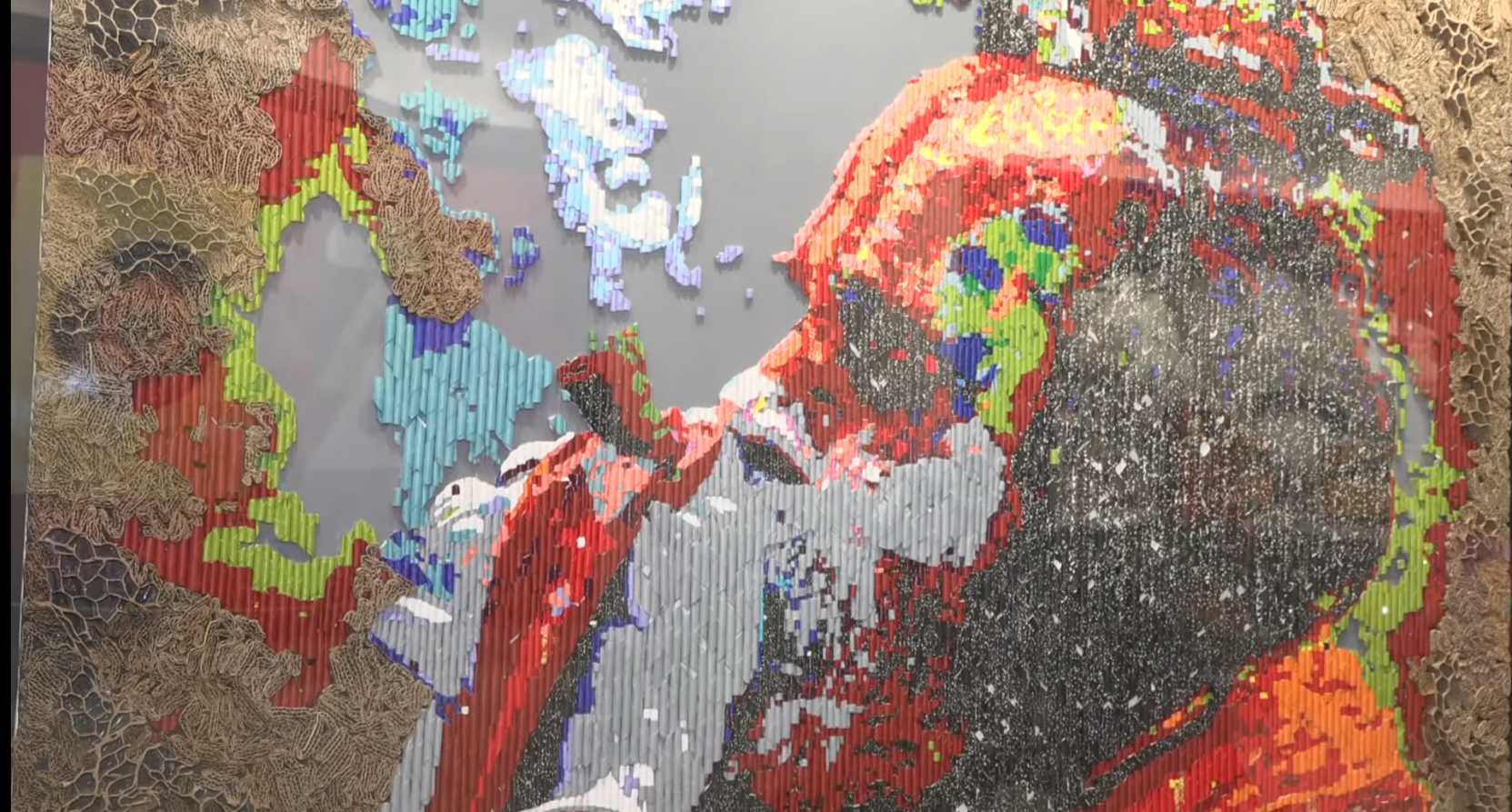
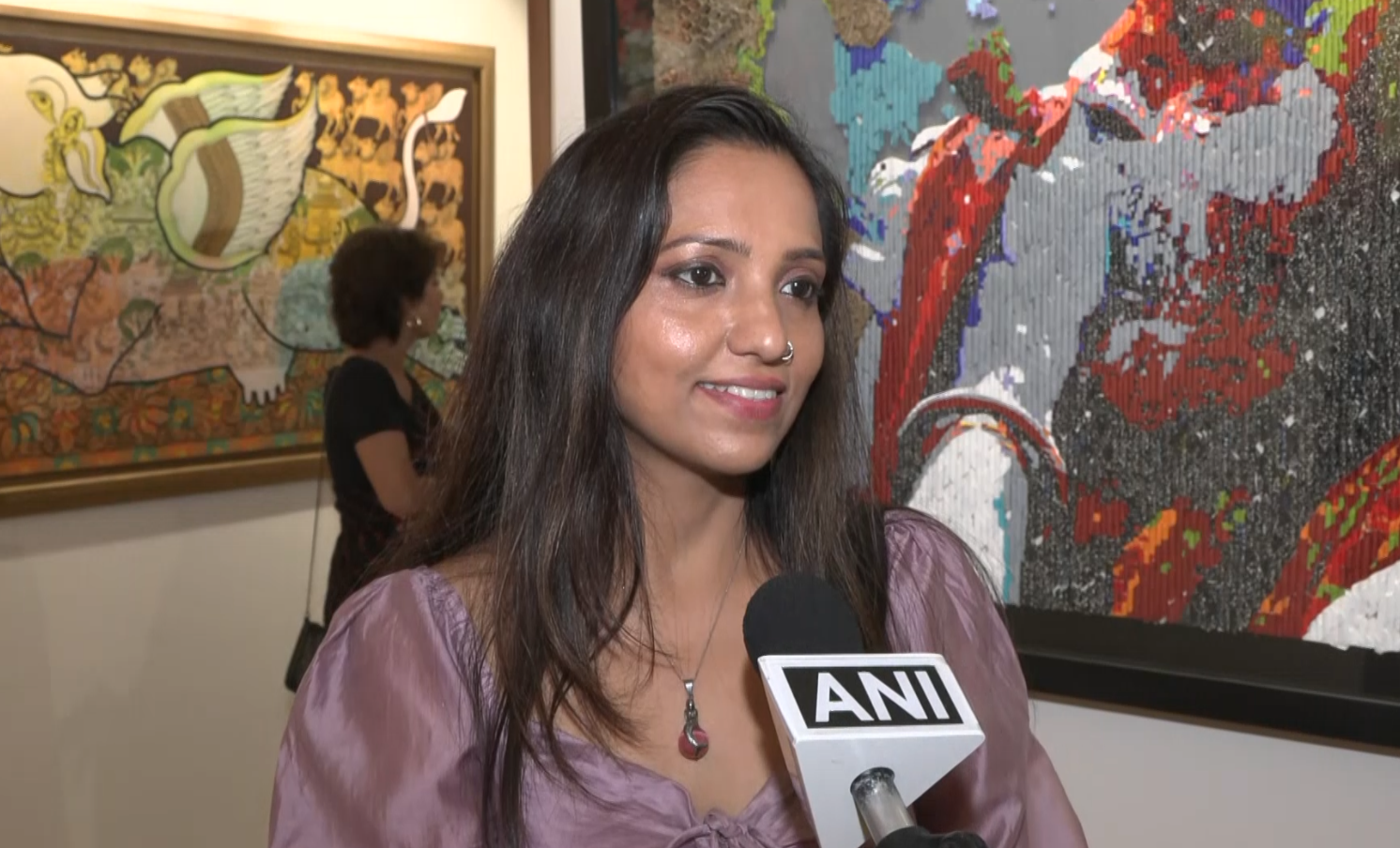
“Back in 2010–11, I went for a residency in Raghurajpur in Odisha, a small village where folk artists create different kinds of Pattachitra works with intricate details. I was very inspired by them. I sat with the artists, learned from them and took that inspiration into my own work. At that time, I was doing normal paintings on canvas. I started rolling the canvas and thinking about different possibilities, and this technique came out of that experimentation. It has now become my unique signature style. I roll each canvas in different sizes, paint or print on it, then paste it on the board and create the image. It takes around four to six months to create one artwork,” she shared.
Her work displayed at the exhibition draws inspiration from the Kumbh Mela and depicts a sadhu with a chillum, reflecting the colours, spirituality and atmosphere she experienced there.
“This particular work is made with canvas cloth on board and colours. I have depicted a sadhu having a chillum at the Kumbh Mela. I visited the Kumbh, and you can see these saffron and green colours there; they are much more vibrant. This work is inspired by the Kumbh, its spirituality, its reality and the different experiences associated with it,” she explained.
Masha Art marked the opening of its new space in the capital with an exhibition bringing together artworks exploring spirituality, folk traditions, Indian culture, and contemporary interpretations of diverse artistic practices. (ANI)
