

Nepal Flash Floods: 163 Indian nationals rescued amid ongoing tunnel rescue operations; death toll reaches 1,050
New Delhi [India], September 1 (ANI): The number of Indian nationals rescued from the disaster-hit regions of Nepal has reached 163, marking the addition of five new individuals since the previous day, the Ministry of External Affairs announced on Tuesday.
In an update posted on X, MEA spokesperson Randhir Jaiswal also noted that 151 Indian nationals left China today.
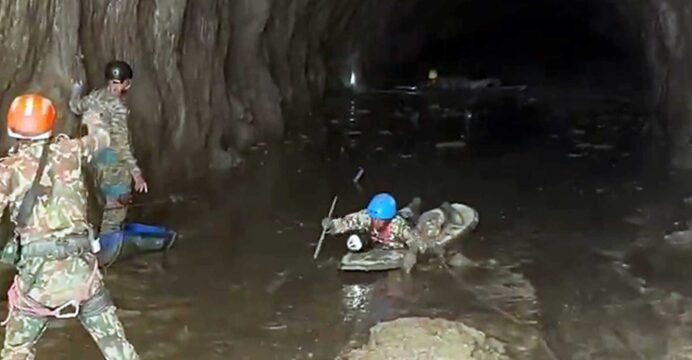
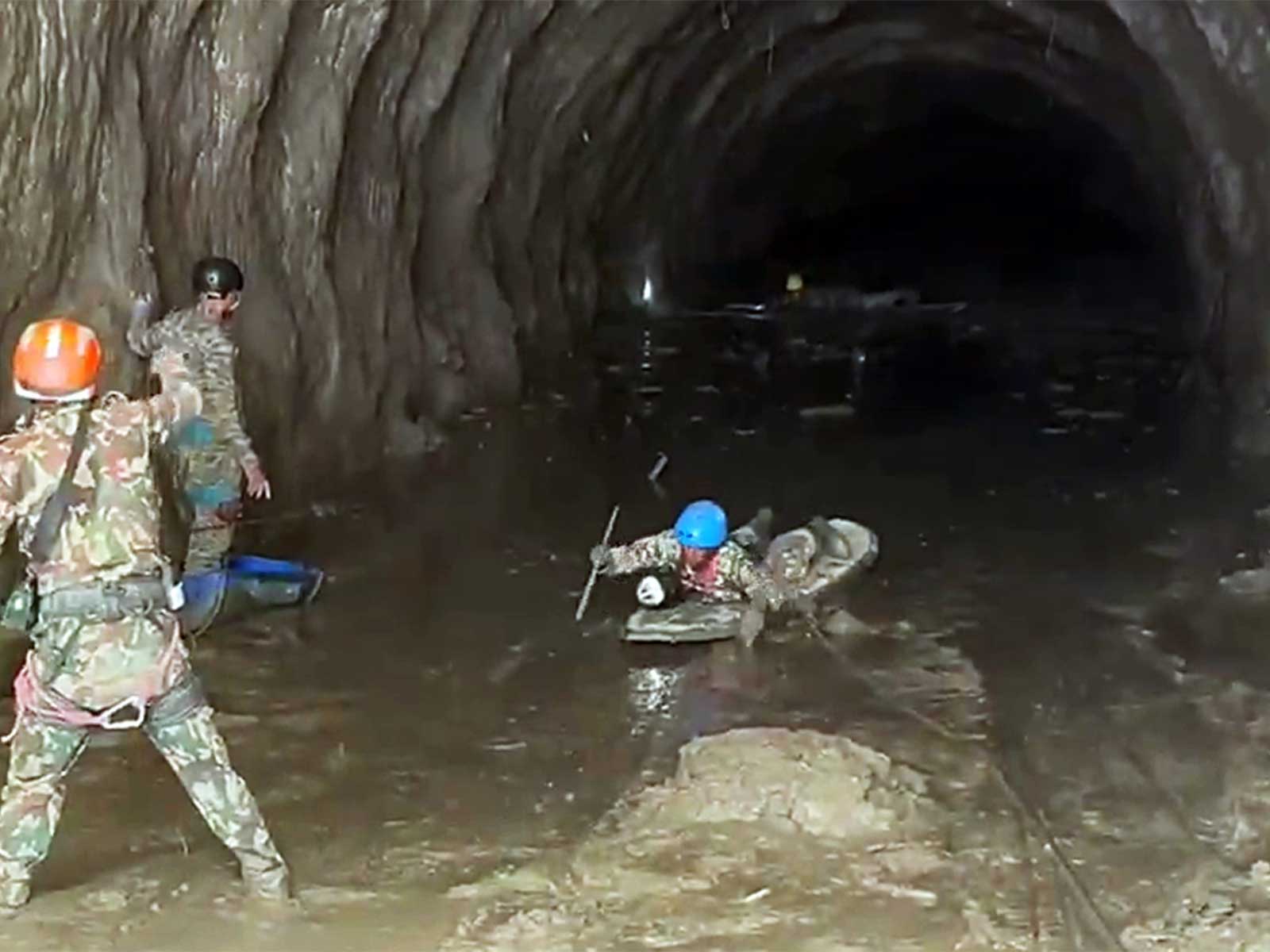
Detailing ongoing field operations, the Ministry outlined the challenging conditions faced by the 24-member Indian tunnel rescue team deployed at hydropower tunnels in Chilime.
Operating in a high-risk environment, the team has had to contend with extremely restricted access space, limitations on the use of heavy specialised equipment due to the difficult terrain, and marshy tunnel floors. By employing innovative methods and improvised floats, rescue personnel were able to advance deeper into the subterranean passages. The MEA confirmed that these efforts will continue tomorrow in a bid to reach any individuals potentially trapped inside.
On the medical and identification front, the Indian forensic team expanded its operations in close coordination with Nepalese counterparts.
According to the MEA, the team is actively undertaking DNA examination and analysis to help expedite the processing of samples and streamline victim identification in Nepal.
Update on Indian nationals & India’s rescue and relief efforts in Nepal ⬇️
— Randhir Jaiswal (@MEAIndia) September 1, 2026
Number of Indians rescued : 163
Number of people who have left China today : 151
🕘 As of 1930 hrs, 01 September 2026 pic.twitter.com/P5QdsocfRK
Highlighting the team's efforts, Indian Ambassador to Nepal Naveen Srivastava wrote on X, "The Tunnel Rescue team from India carried forward its work in Chilime, in coordination with Nepali Army, even in face of extremely restricted access space, terrain limitations including a swamp like marshy tunnel floor. They used improvised floats to explore deep into the tunnel. The team will continue its work tomorrow to try and rescue any individual who may be trapped inside."
He further noted the ongoing DNA sample analysis process being carried out by the Indian Forensic team in collaboration with Nepali counterparts.
"The 19-member Indian Forensic Team began DNA sample analysis in collaboration with their Nepali counterparts at the Nepal Police Central Forensic Science Laboratory and the National Forensic Science Laboratory, Khumaltar, Kathmandu. The team is working to expedite the processing of DNA samples in Nepal for the identification of those affected by the recent flash floods," he wrote in another post.
The 19-member Indian Forensic Team began DNA sample analysis in collaboration with their Nepali counterparts at the Nepal Police Central Forensic Science Laboratory and the National Forensic Science Laboratory, Khumaltar, Kathmandu. The team is working to expedite the processing… https://t.co/tnh3E488HQ
— IndiaInNepal (@IndiaInNepal) September 1, 2026
Earlier in the day, Nepal's Ministry of Foreign Affairs announced that a specialised international tunnel rescue team from India and China have been mobilised alongside the Nepal Army at critical hydropower sites following the catastrophic Bhote Koshi River flash floods.
Speaking at the Ministry's fourth official press briefing in Kathmandu, Spokesperson and Head of the Public Diplomacy Division Lok Bahadur Chhetri highlighted that targeted international technical expertise is being deployed to handle high-risk subterranean operations.
"As we have stated, our immediate national priority remains clear: to save lives, locate those who are missing, rescue survivors, provide urgent relief, and ensure that all affected people, both Nepali and foreign nationals, receive appropriate assistance and support," Chhetri stated.
According to the spokesperson, a 24-member Indian tunnel rescue team operating in two units is working closely with the Nepal Army at the Chilime and Langtang hydropower project sites, while a 9-member Chinese team is deployed in coordination with the military at the Upper Trishuli 3A project site. A specialised team from the Republic of Korea has also been mobilised.
To support nationwide emergency efforts, Nepal has deployed a unified force of over 21,000 security personnel from the Nepal Army, Nepal Police, and Armed Police Force across the disaster-stricken corridors. MoFA reported that more than 11,800 people have been rescued so far, including 324 foreign nationals, five of whom remain in direct contact with authorities.
To manage the high volume of recovered remains, specialised international forensic units have joined local authorities. A 19-member forensic DNA team from India has been operating in Nepal since August 29; a 4-member Chinese forensic team arrived today, and coordination is underway to deploy a Disaster Victim Identification (DVI) team from Singapore.
The Ministry expressed profound gratitude to India, China, Japan, the United States, the UAE, South Korea, and other international partners for providing timely relief supplies and financial solidarity.
Additionally, mass burial started in the capital, Kathmandu, as well, after the morgue ran out of space after one week of the devastating flood in Nepal.
Security forces donned in Personal Protective Equipment (PPE) carried the body bags and buried them in the Gorkarna forest area on the outskirts of Kathmandu.
Amid the rainfall, the security personnel walking through the muddy forest carried the bodies and buried them with markers on top. The big bags contained the tags through which the bodies would be later exhumed and handed over to families after establishing the identities.
DNA of the buried bodies has already been kept for cross-matching with the family. As the bodies of the victims swept away by the Bhotekoshi flood are being dumped downstream, hospitals are struggling to find places to store and identify them.
The Himalayan nation only has a capacity of storing about 350 bodies in the morgues nationwide, which has led to a shortage of space to store the bodies until the family identifies and claims them.
The remains of the victims swept by flood from Rasuwa and Nuwakot are being recovered in different parts of the nation.
With morgues running out of space, the government has engaged in managing unidentified bodies by amending the Unidentified and Unclaimed Body Management Guidelines, 2021.
The developments come as the death toll from the catastrophic flash floods has climbed to 1,050, according to the comprehensive situation report released by Nepal's National Disaster Risk Reduction and Management Authority (NDRRMA) as of 6 PM.
The recovered human remains have been documented across severely and moderately impacted districts, including 321 in Chitwan, 216 in Nawalparasi East, 170 in Nawalparasi West, 142 in Nuwakot, 65 in Gorkha, 57 in Dhading, 41 in Rasuwa, and 38 in Tanahun. Meanwhile, the NDRRMA reported that 3,916 individuals remain unaccounted for, including personnel from security agencies, customs, immigration, hydropower projects, and foreign nationals.
Emergency response efforts have successfully rescued 11,993 people to date. Aerial operations led by the Nepal Army have logged 610 total flights, including 84 flights conducted on September 1 alone, evacuating 4,091 Nepali citizens and 273 foreign nationals. Private sector flights from Kathmandu have contributed an additional 29 rotations, NDRRMA highlighted.
To maintain law and order, secure infrastructure, and drive search efforts, the government has mobilised a unified security force of 21,314 personnel, comprising 7,912 from the Nepal Police, 9,199 from the Army, and 4,203 from the Armed Police Force (APF). Furthermore, 292 individuals have received medical attention or treatment from security forces and local hospitals, with 182 already discharged.
NDRRMA reported a massive scaling up of relief logistics, with 37 trucks and 37 Bolero vehicles dispatching food and materials to affected corridors. The APF alone has completed 77 relief flights to Rasuwa and Nuwakot, complemented by nine helicopter supply drops.
Financial assistance from the Government of Nepal includes NPR 10 million each allocated to Rasuwa and Nuwakot, NPR 5 million to Dhading, and an additional NPR 67.5 million distributed across 15 affected local governments, NDRRMA stated.
To shelter displaced citizens, holding centres currently accommodate 3,453 people, distributed across Nuwakot (2,466), Rasuwa (398), Kathmandu (329), and Dhading (260). Critical public utilities are also recovering; Nepal Telecom has successfully restored all 110 damaged communication towers, while Ncell has brought 75 of its 78 impacted towers back online. Regional fuel stocks stand at 35,000 litres of diesel, 15,000 litres of petrol, and 9,000 litres of aviation fuel. (ANI)
