

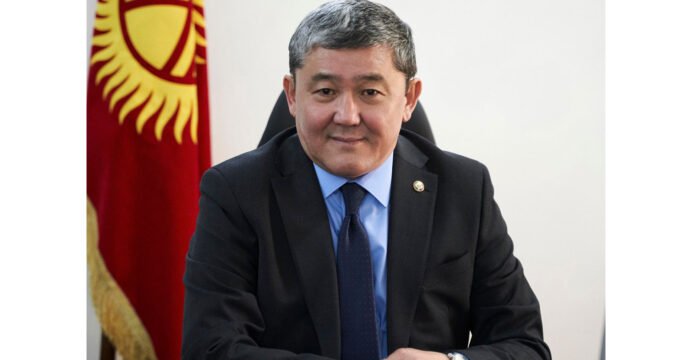
Kyrgyzstan fully supports transport corridors to cut physical distance between India, Central Asia: Envoy Beshimov
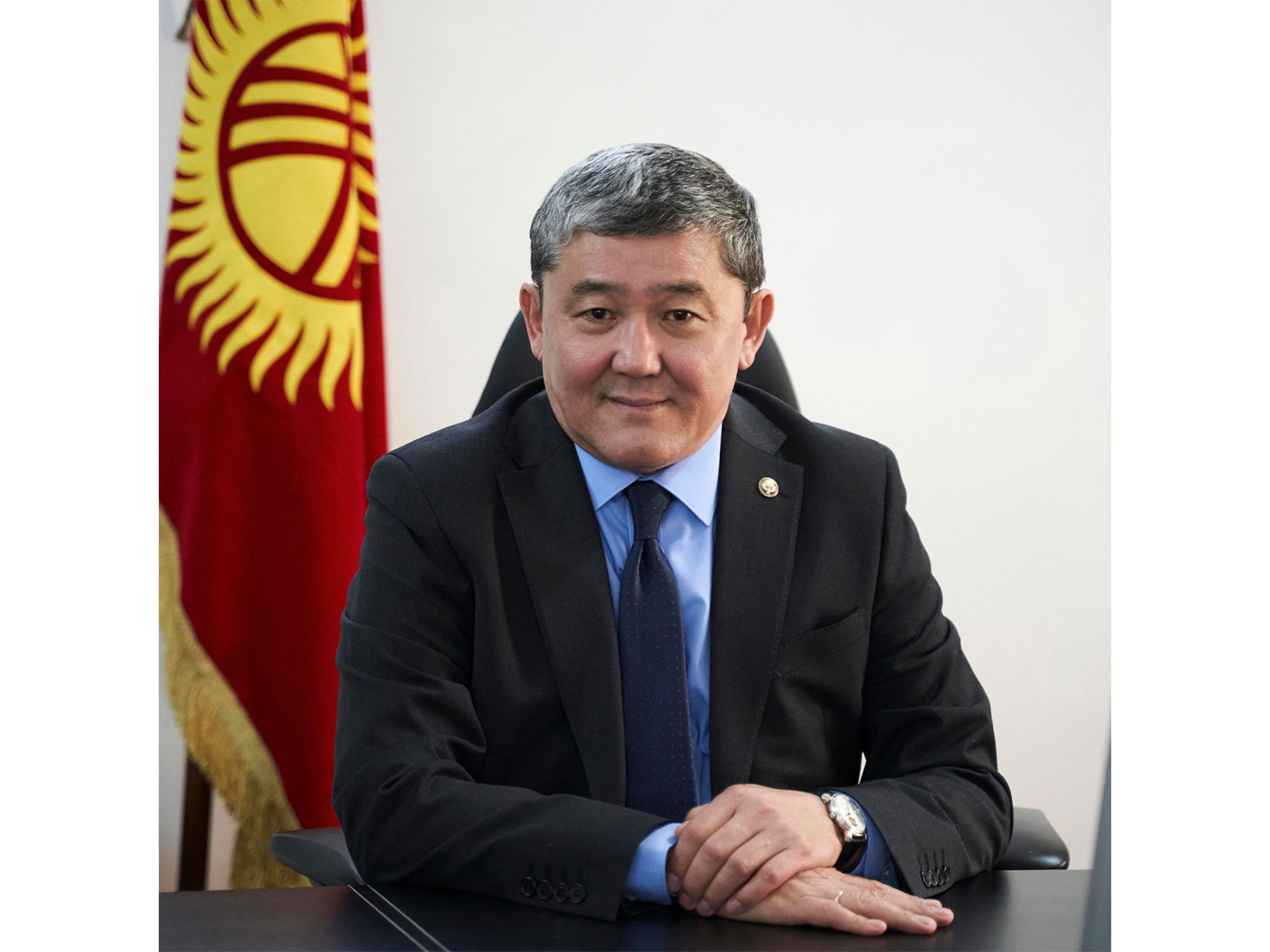
New Delhi [India], August 29 (ANI): Kyrgyzstan fully supports the development of transport corridors that can significantly reduce the physical distance between India and Central Asia, with Bishkek viewing routes such as the Chabahar port and International North-South Transport Corridor (INSTC) as key to expanding regional trade and connectivity, Ambassador of the Kyrgyz Republic to India Askar Beshimov said on Friday.
In an interview with ANI, Beshimov said India's investments in the development of Chabahar port and its participation in the INSTC had already marked important steps towards improving connectivity between India and the landlocked Central Asian region.
"Kyrgyzstan fully supports the development of transport corridors that can significantly reduce the physical distance between India and Central Asia," Beshimov said.
He noted that India had invited Central Asian countries to use the Chabahar port and Shahid Beheshti terminal for maritime trade with India and other global markets.
"This would substantially reduce transit time, distance and, consequently, the cost of transporting goods," the envoy added.
India proposed developing the Chabahar Port in 2003 to create an alternative route for Indian goods to reach landlocked Afghanistan and Central Asia, bypassing Pakistan through road and rail connectivity under the International North-South Transport Corridor.
In May 2024, India and Iran signed a 10-year contract for the operation of the Shahid-Beheshti Terminal at Chabahar, with the project aimed at strengthening connectivity with Afghanistan and expanding India's trade and economic engagement with Central Asia.
For Kyrgyzstan, a landlocked country, Beshimov said improved connectivity would create new opportunities to access the Indian market as well as wider South Asian markets.
He said Bishkek was actively working towards establishing efficient and secure transport corridors, describing the effort as particularly important amid geopolitical volatility and disruptions to traditional logistics routes.
Beshimov said Kyrgyzstan viewed India's expanding engagement with Central Asia "in a highly positive light", describing New Delhi as a natural and strategic partner with shared values of development and democracy, besides deep-rooted cultural ties.
"Kyrgyzstan views India's growing engagement in Central Asia in a highly positive light. We regard India as a natural and strategic partner, bound to us by shared values - development, democracy and deep-rooted cultural ties," he said.
He said Kyrgyzstan, which will be a non-permanent member of the UN Security Council in 2027, considers India a reliable partner in advancing Central Asian interests on the global stage.
The envoy also highlighted the India-Central Asia Dialogue as an important platform for coordinating positions on regional and international issues.
"The India-Central Asia Dialogue serves as a vital platform for coordinating positions on regional and international matters," Beshimov said, adding that Bishkek looked forward to expanding cooperation in security, economic development and cultural-humanitarian exchanges.
While describing political ties between India and Kyrgyzstan as traditionally warm, Beshimov identified the economic relationship as the area with the greatest untapped potential.
According to the envoy, bilateral trade turnover reached approximately USD 120 million by the end of 2025, but remains well below the potential of the two economies.
Beshimov said Kyrgyzstan was keen to attract Indian investment and technology, particularly in mining, information technology and renewable energy.
He also pointed to the entry into force of the Agreement on Promotion and Mutual Protection of Investments as providing legal safeguards for Indian investors.
Pharmaceuticals were another area where Bishkek sees considerable scope for greater cooperation, with Beshimov noting India's position as a major producer of affordable and high-quality medicines.
The envoy also highlighted tourism as an emerging area of cooperation, particularly niche tourism linked to Kyrgyzstan's natural and cultural attractions.
He pointed to ecotourism around Lake Issyk-Kul and the Tien Shan mountains, the "Great Silk Road 2.0" initiative featuring digital guides in Hindi, as well as yoga- and Ayurveda-focused tourism.
"We are also working on simplifying visa procedures for group tours," Beshimov said.
Education and research also offer opportunities for deeper bilateral engagement, he said, including a proposed Kyrgyz-Indian Centre for Educational Innovation at the IT Park in Bishkek.
Beshimov said the two countries could also explore joint dual-degree programmes in information technology, medicine and mining engineering, further expanding people-to-people and institutional links.
The remarks come ahead of Prime Minister Narendra Modi's scheduled visit to Uzbekistan from August 29-30, followed by his visit to Bishkek, Kyrgyz Republic, from August 31 to September 1 to attend the 26th Shanghai Cooperation Organisation (SCO) Summit. (ANI)
