
Dalai Lama photo lands Chinese activist in jail, son questions ‘Inciting Separatism’ charge
Dharamshala (Himachal Pradesh) [India], August 19 (ANI): The son of imprisoned Chinese pro-democracy activist Zhang Yi has questioned the legal basis of the "inciting separatism" charge brought against his father, saying he cannot understand how showing a photograph of Tibetan spiritual leader His Holiness the 14th Dalai Lama could be treated as a political offence.
As cited by Phayul in a report, Zhang Yi's son, Zhang Hongyuan, raised the concerns in testimony submitted to New York-based human rights organisation Human Rights in China (HRIC). He said his father's arrest was the culmination of a long-standing fear he had carried since leaving China. Zhang Hongyuan currently lives in the Netherlands.
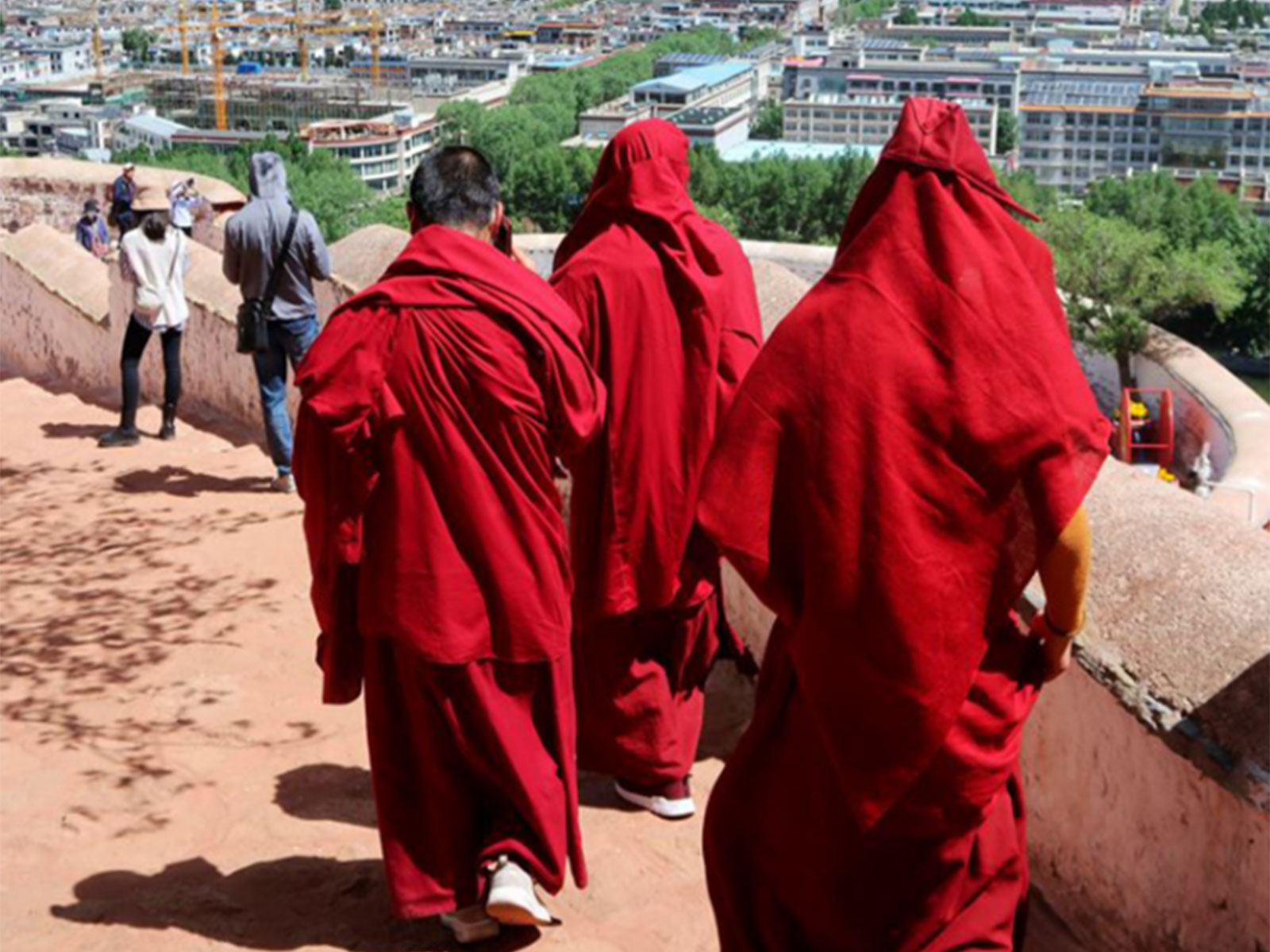
According to the Phayul report, Zhang Yi, a retired resident of Wuhan, was detained by police in Lhasa on July 1 after showing a photograph of the Dalai Lama to a Tibetan woman at Sera Monastery.
He was subsequently placed under criminal detention and formally arrested on suspicion of "inciting separatism" under Article 103 of China's Criminal Law.
The report said Zhang Yi was transferred from administrative detention to criminal detention at the Lhasa Detention Centre on July 18. Around 12 days later, Chinese authorities approved his formal arrest.
Article 103 of China's Criminal Law criminalises acts that authorities interpret as encouraging the separation of Chinese territory. However, according to Zhang Yi's family, his actions did not involve political activism.
Zhang Hongyuan said his father did not organise a protest, make political speeches, distribute political material, or call for Tibetan independence. Instead, he said, Zhang Yi simply showed an old photograph while attempting to communicate with a Tibetan woman who did not speak Mandarin.
The photograph of the Dalai Lama, however, remains highly politically sensitive in Tibet. Chinese authorities have long accused the Tibetan spiritual leader of separatism, while the Dalai Lama has maintained that he seeks genuine autonomy for Tibet through dialogue with Beijing within the framework of the Chinese Constitution.
According to Phayul, possession or display of the Dalai Lama's photograph can itself be treated as a politically sensitive act in Tibet and can result in serious consequences.
Questioning the basis of the charge against his father, Zhang Hongyuan said the authorities had failed to explain what exactly constituted "inciting separatism" in the encounter at Sera Monastery.
"A tourist in Lhasa showed a photo of the Dalai Lama to someone who didn't even share his language, someone who was too frightened even to look at it, and they say he incited separatism," he said, as cited by Phayul.
"What did he incite? And what did he secede?" he asked, questioning what precisely Chinese authorities believed had been incited during the incident.
Zhang Hongyuan said the case demonstrates how ordinary objects can acquire political significance under China's restrictions in Tibet. According to him, a photograph can be interpreted as a political act depending on the political context imposed by authorities.
He also said the Tibetan woman at Sera Monastery appeared too frightened to engage with the photograph, yet the incident was still considered serious enough to result in his father's criminal detention and subsequent arrest.
Reflecting on his efforts to secure his father's release, Zhang Hongyuan said the situation had reversed the usual relationship between parents and children when dealing with police authorities.
"Usually, it's fathers who go to the police station to collect their sons. For me, it was a son going to the police station to collect his father," he said, according to the Phayul report.
Zhang Hongyuan has urged international observers to continue raising his father's case and maintain scrutiny of the Chinese authorities.
He said international attention may not immediately lead to his father's release, but the campaign has already resulted in Chinese authorities questioning relatives about reports being published outside China.
According to Zhang Hongyuan, this indicates that international scrutiny of the case is being noticed by Chinese authorities.
"I am campaigning, I am not running away, and I will absolutely not back down," he said, as cited by Phayul.
The case has renewed concerns among rights advocates over the treatment of individuals accused of political or separatist activity in Tibet and the extent to which expressions or symbols associated with the Dalai Lama can attract criminal action under China's legal framework. (ANI)
