

“Wording has a meaning”: Palestinian envoy Shawesh rejects labelling Gaza proposal a ‘peace plan’
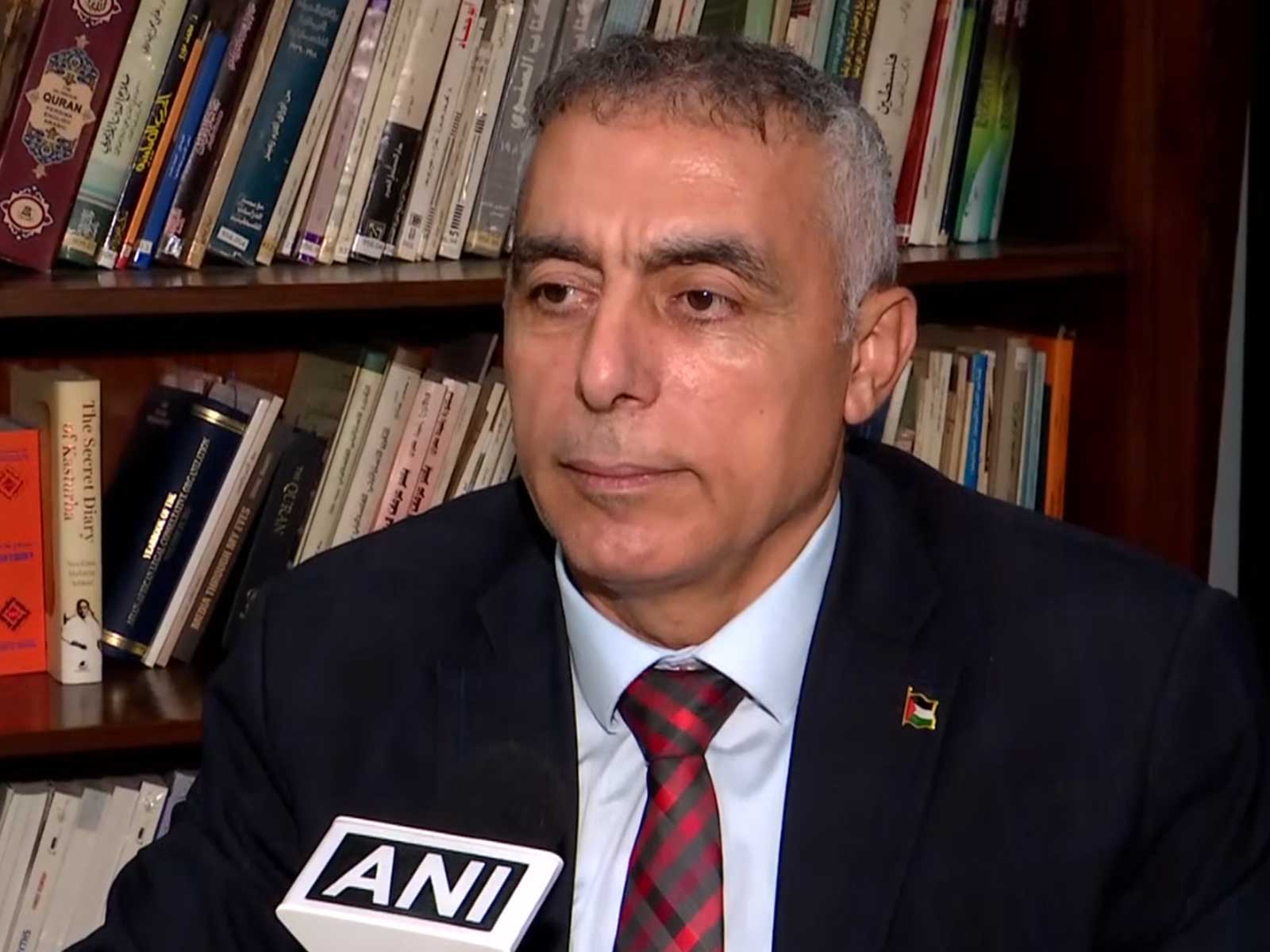
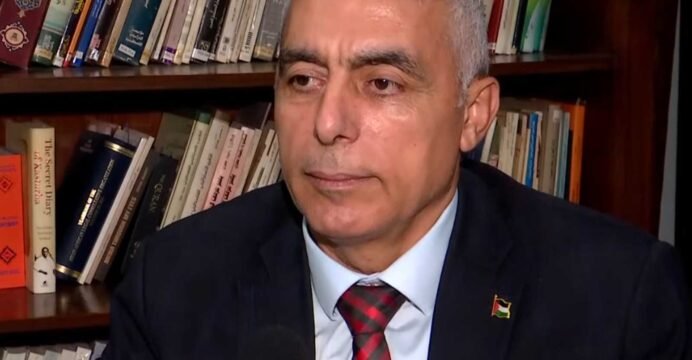
New Delhi [India], August 13 (ANI): Palestinian Ambassador to India Abdullah M Abu Shawesh on Thursday asserted that the 15-point proposal for Gaza should not be called a "peace plan," explaining that it is merely an operational stage intended to facilitate a broader framework and the entry of international envoy Nikolay Mladenov into Gaza.
In an interview with ANI, Abu Shawesh said, "First and foremost, because wording has a meaning," explaining that he had learnt the significance of the phrase from an Indian colleague at the United Nations (UN).
"When you say that Trump peace plan, no, Mr Trump did not propose a peace plan. Peace plan is completely different," he said.
Abu Shawesh said Trump had already proposed a broader 20-point plan to end the Gaza conflict. "He already proposed a 20-point plan to end the conflict in Gaza, which is the comprehensive plan to end the conflict in Gaza," he said.
He said the 15-point proposal was introduced as part of a later stage of the broader plan, to facilitate its implementation and the entry of Nikolay Mladenov [High Representative and Gaza envoy for the international Board of Peace] into Gaza.
"In one of these stages, of course, he proposed another 15-point plan to facilitate his plan and to facilitate Mr. Mladenov's entrance to Gaza," the envoy said.
Abu Shawesh stressed that Israel was the side that rejected the proposal, saying, "Israel rejected it. It's not us; Israel is rejecting it."
Highlighting that Israel rejected the proposal, Abu Shawesh noted that both government and opposition leaders have staged public demonstrations at the Gaza border against the plan, driven by domestic political manoeuvring ahead of upcoming elections.
"Because Israel is on the brink of another round of elections, everyone is now trying to say that I'm here, I'm the champion, I'm the boss, I'm the one who can harm the Palestinians more," he said.
"Even the opposition leaders came today to the border of Gaza to refuse the Trump plan itself. It's not only the government, but even the opposition leaders," Abu Shawesh added.
Describing the plight of Gaza's health sector, the envoy reported that out of 34 hospitals, only 19 remain partially operational. He cited a recent targeted attack on a medical storage facility supplying equipment for kidney-failure patients, alongside thousands of preventable deaths due to severe medicine shortages and blocked medical evacuations.
"Just less than one week ago, the Israelis deliberately attacked one of the storage facilities that contained or served the kidney failure patients and all the equipment, machines, and the filters and all of this stuff that is used for the kidney failure patient. They destroyed it. This is just to show how the Israeli targeting the health sector. Out of 34 hospitals in Gaza, only 19 of it is still partially operating," he said.
The envoy said thousands of patients were waiting to leave Gaza for medical treatment. "The situation is very devastating. Thousands of Palestinian patients in Gaza are still waiting to be evacuated outside Gaza to be medically treated because they are in desperate need of medical treatment," he said.
He further said that Palestinians with injuries and chronic diseases had died due to medicine shortages. "Thousands of Palestinians who endured injuries or some chronic diseases already lost their lives because of the shortage of medicine," Abu Shawesh said.
He also expressed concern that Palestinians had not been able to adequately present their account of the situation. "It's a fact that everyone knows it, but unfortunately, again...we did not have the chance to speak for ourselves. We did not have the chance to face the camera and to be on the screen to tell what happened in Palestine," he said.
Earlier on August 9, Israel rejected US President Donald Trump's 15-point Gaza peace plan and will not withdraw its forces from the enclave until Hamas is "genuinely" disarmed, Prime Minister Benjamin Netanyahu.
"Israel rejects the 15-point document," Netanyahu said, referring to a proposal endorsed in late July by Hamas, according to Israeli media.
Speaking at a cabinet meeting, Netanyahu emphasised that the Israeli military "will not carry out any withdrawal until Hamas is genuinely disarmed, and will continue to thwart threats against our forces and our citizens."
Trump's 15-point framework outlines a phased strategy aimed at terminating the Gaza conflict, disarming armed factions, withdrawing Israeli troops, and transitioning governance of the strip to a Palestinian technocratic body, the National Committee for the Administration of Gaza.
Under the roadmap, heavy weaponry, arms depots, military sites, and tunnels would be placed under the committee's control, while an international stabilisation force would be deployed to separate Israeli troops from Palestinian-administered areas.
Israeli forces would then withdraw in stages, paving the way for reconstruction and a longer-term political process towards Palestinian self-determination.
However, a core impasse remains: while Trump previously stated that both sides accepted the framework and that Hamas agreed to lay down its arms, Israel insists full demilitarisation of Hamas must precede any troop pullout, even as it continues military strikes despite the ceasefire established last October. (ANI)
