

Netanyahu’s remarks ‘gratuitous’ as India not backing war against Iran: Former diplomat on PM Modi-Netanyahu call
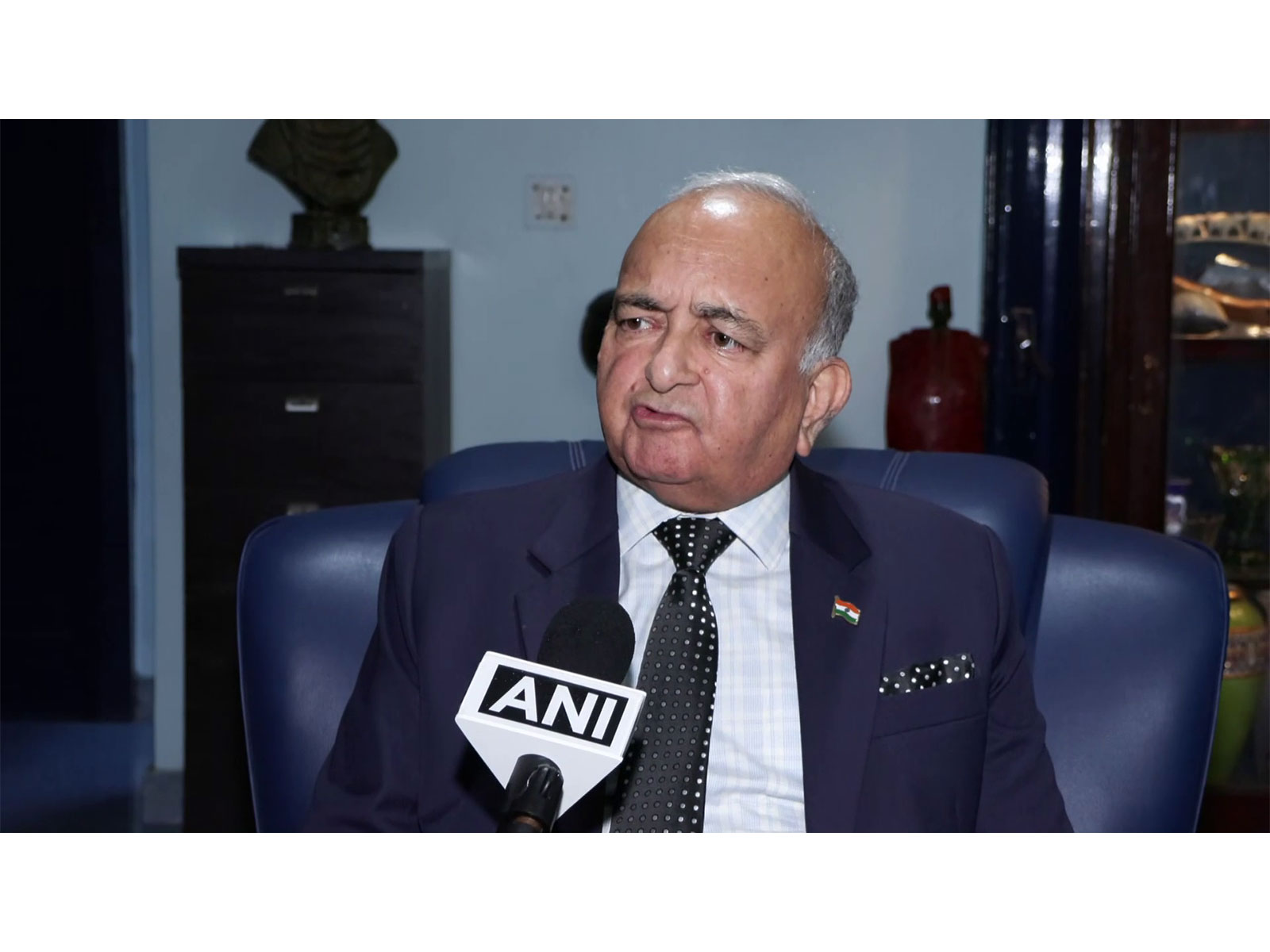
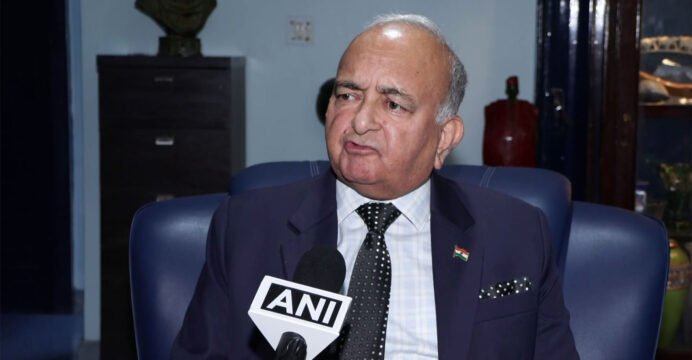
New Delhi [India], August 8 (ANI): Former diplomat Mahesh Sachdeva on Friday said that Israel's priorities in West Asia currently differ from those of the United States, while asserting that India has not supported the military campaign against Iran, while commenting on the significance of the recent telephonic conversation between Prime Minister Narendra Modi and his Israeli counterpart Benjamin Netanyahu.
Speaking to ANI, Sachdeva said the ongoing West Asia crisis has reached a "fork point", with stakeholders now facing a choice between further escalation and pursuing negotiations.
"The West Asia crisis has reached a fork point. The choices between various stakeholders are to continue with escalation or to taper it down and negotiate a settlement. For the moment, it appears that the escalation ladder is broken. Hopefully, the negotiations between Oman and Iran over the terms of reference for navigational matters through the Strait of Hormuz are nearing finalisation," he said.
Referring to Netanyahu's remarks highlighting India's support for Israel, Sachdeva said such comments did not accurately reflect New Delhi's position.
"Mr Netanyahu has cited support of India, saying that a country of 1.4 billion is with us. That was gratuitous because India is not supporting the war situation that Israel and the United States have launched against Iran," he said.
He noted that any understanding between Iran and Oman would require wider regional and international support, particularly from Gulf Cooperation Council (GCC) countries, Iraq and the United States, to evolve into a durable settlement.
According to Sachdeva, Washington may eventually have to reconsider sanctions on Iran, including restrictions on Iranian oil exports and ports, to consolidate any broader agreement.
Describing the negotiations as a prelude to a wider understanding, Sachdeva referred to a memorandum of understanding signed between Iran and the United States earlier this year, while observing that domestic political considerations in the US and Iran make it difficult for both sides to claim victory.
Speaking on Israel's role, the former diplomat said the United States appears to have gradually separated its diplomatic engagement with Iran from Israel's approach.
"You'd recall that the aggression on Iran was launched jointly by Israel and the United States. Subsequently, the United States seems to have realised that Israel was not a part of the solution to the Iranian issue but a part of the problem. That is where Mr Trump decided to detach his own pursuit of a deal with Iran away from Israel," he said.
Sachdeva added that Israel continues to view Iran's nuclear programme as an existential threat, unlike the United States, whose immediate concerns also include ensuring freedom of navigation through key maritime routes.
"It is not so important for Israel to have freedom of navigation in the Strait of Hormuz or even Bab-el-Mandeb. So the priorities of Israel are very different from the priorities of the United States at the moment," he said.
Sachdeva said the Modi-Netanyahu conversation remained significant because both countries continue to share a strong Special Strategic Partnership despite differences over the Iran issue.
"They would have allowed the two sides to discuss their bilateral issues insulated from the West Asian situation to the extent possible. We regard each other as special strategic partners. The two sides are collaborating across a vast spectrum of strategic issues beginning with defence, high technology, diamond processing and other sectors," he said.
He noted that while both leaders discussed developments in West Asia, the Indian readout did not indicate any convergence of positions on the conflict.
"Apparently, the two sides remain at variance, with India asking for a diplomatic solution while Israel advocating a more aggressive posture towards Iran. But the fact that the two have spoken with each other, the fact that Mr Netanyahu initiated the call and Prime Minister Modi responded, are important. We may get to know later what substantive specifics were discussed," Sachdeva added.
Israeli Prime Minister Benjamin Netanyahu on Friday said India and Israel would continue to strengthen bilateral ties. In a post on X, resharing Prime Minister Modi's message about their conversation, Netanyahu wrote, "Thank you, my friend, Prime Minister of India Narendra Modi. Together we continue to strengthen the bond between Israel and India."
Prime Minister Modi and Netanyahu held a telephonic conversation on Thursday to review and expand bilateral cooperation while also exchanging views on the evolving situation in West Asia.
Ministry of External Affairs spokesperson Randhir Jaiswal said the call was initiated by the Israeli side and focused on strengthening the India-Israel Special Strategic Partnership across multiple sectors.
According to the Prime Minister's Office, the two leaders reviewed progress in bilateral relations, reaffirmed their commitment to expanding cooperation for mutual benefit and agreed to remain in close contact. (ANI)
