

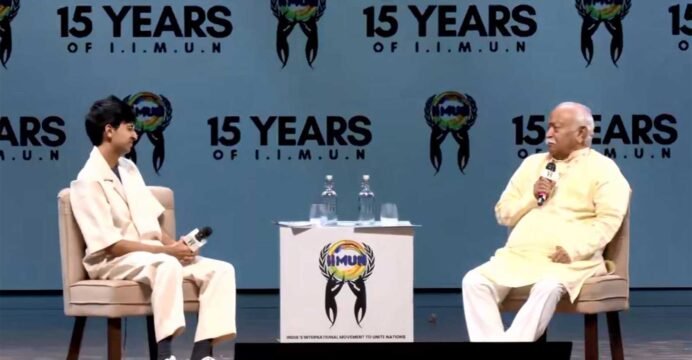
“In times of conflict, we have to go with whatever our Govt does”: RSS Chief Mohan Bhagwat
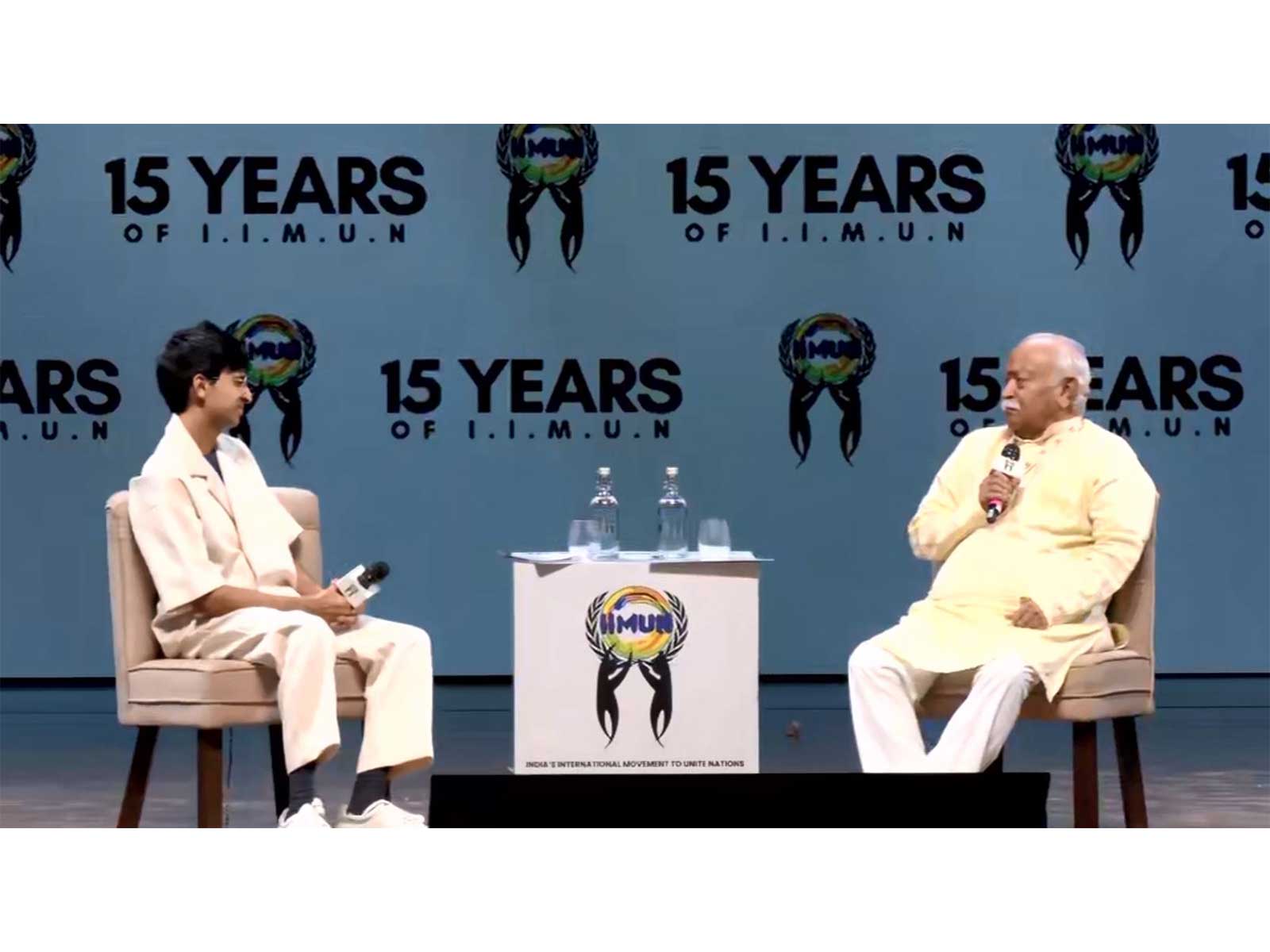
Mumbai (Maharashtra) [India], August 6 (ANI): Rashtriya Swayamsevak Sangh (RSS) chief Mohan Bhagwat on Thursday focused on a fundamental dilemma of modern nation-states: how to balance unyielding loyalty to one's country during times of crisis with a broader, civilisational vision of shared humanity and eventual peace.
Gathered in Mumbai, a diverse audience of thinkers, public figures, and citizens listened intently as Rashtriya Swayamsevak Sangh (RSS) Chief Mohan Bhagwat addressed the delicate balance between national security and enduring people-to-people connections.
Against the backdrop of complex geopolitical realities with neighbours like Pakistan and China, the speech focused on how a nation must handle active conflict while preserving the possibility of future peace.
Beginning his address, Bhagwat directly addressed the instinct of civic duty when a nation faces external hostility. He underscored that political differences and domestic debates must take a backseat when national sovereignty is tested.
"In times of conflict, we have to go with whatever our Govt does. But states, politics and international borders are also there--that is also the fight of life. So, during conflict, we are with our Govt and our Military," he said.
The message was clear and resolute: when the nation calls, citizens stand shoulder-to-shoulder with the government and the armed forces, presenting a united front against external threats.
Transitioning from immediate geopolitical defence to a long-term perspective, Bhagwat urged the gathering not to let temporary state conflicts erase deep historical and cultural connections between peoples. Bhagwat explained that the national ethos rejects expansionism or permanent hostility in favour of harmony and integration through communication.
"China's people say that for 2000 years, Bharat gave them some values; and Pakistan was Bharat, 100 years ago. This should not be forgotten; these ties cannot be severed, they can be put on hold till there is conflict," the RSS chief said.
Delving deeper into India's philosophical roots, Bhagwat contrasted the traditional civilisational approach of the subcontinent with conventional models of conquest and subjugation. He emphasised that conflict must be viewed as an aberration rather than a permanent state of affairs.
"The Bharatiya solution is not conquering or obliterating others, but to form that harmonious, assimilating process. That requires dialogue. So, conflicts may halt all these relations, but they cannot sever them; they should not," he stated.
He noted that political friction should not breed permanent animosity between ordinary citizens across borders, as political borders do not dictate the entirety of human connection.
"Sometimes, after the resolution of conflict, we have to pick up from where we have left it and we have to continue. So, permanent hatred and permanent enmity are not the solution. When there is some trouble, we have to look after it, and there is a way to look after it. We have to be all for that way. But that is a temporary thing; it comes due to politics. It is not that Pakistanis are wholeheartedly the enemies of Indians, or Indians are like that," Bhagwat added.
The RSS Chief acknowledged the realities of statecraft, borders, and political friction as part of the struggle of life, but reminded the audience of a higher, unifying truth, "But states, politics, international borders are also there--that is also the fight of life. So, during conflict, we are with our Govt and our Military."
As the RSS Chief concluded his remarks, he brought the focus back to the ultimate unity of mankind, reminding the audience that while states must fight their battles and protect their borders, the ultimate goal of humanity remains reconciliation, dialogue, and enduring peace.
"We know that sometimes it has to cease, and we have to be one. Because humanity is one," he said. (ANI)
