

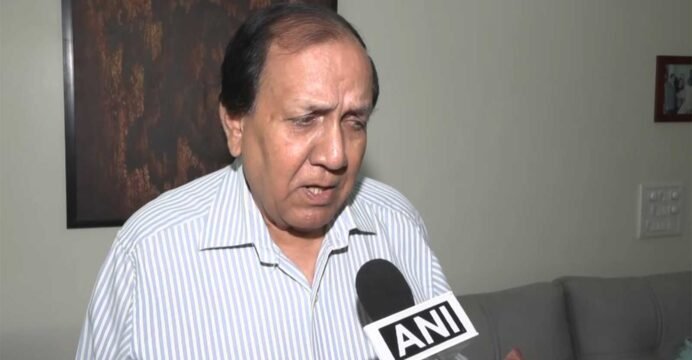
“It is becoming like a comedy”: Former diplomat Surendra Kumar criticises unpredictable US-Iran decisions amid West Asia crisis
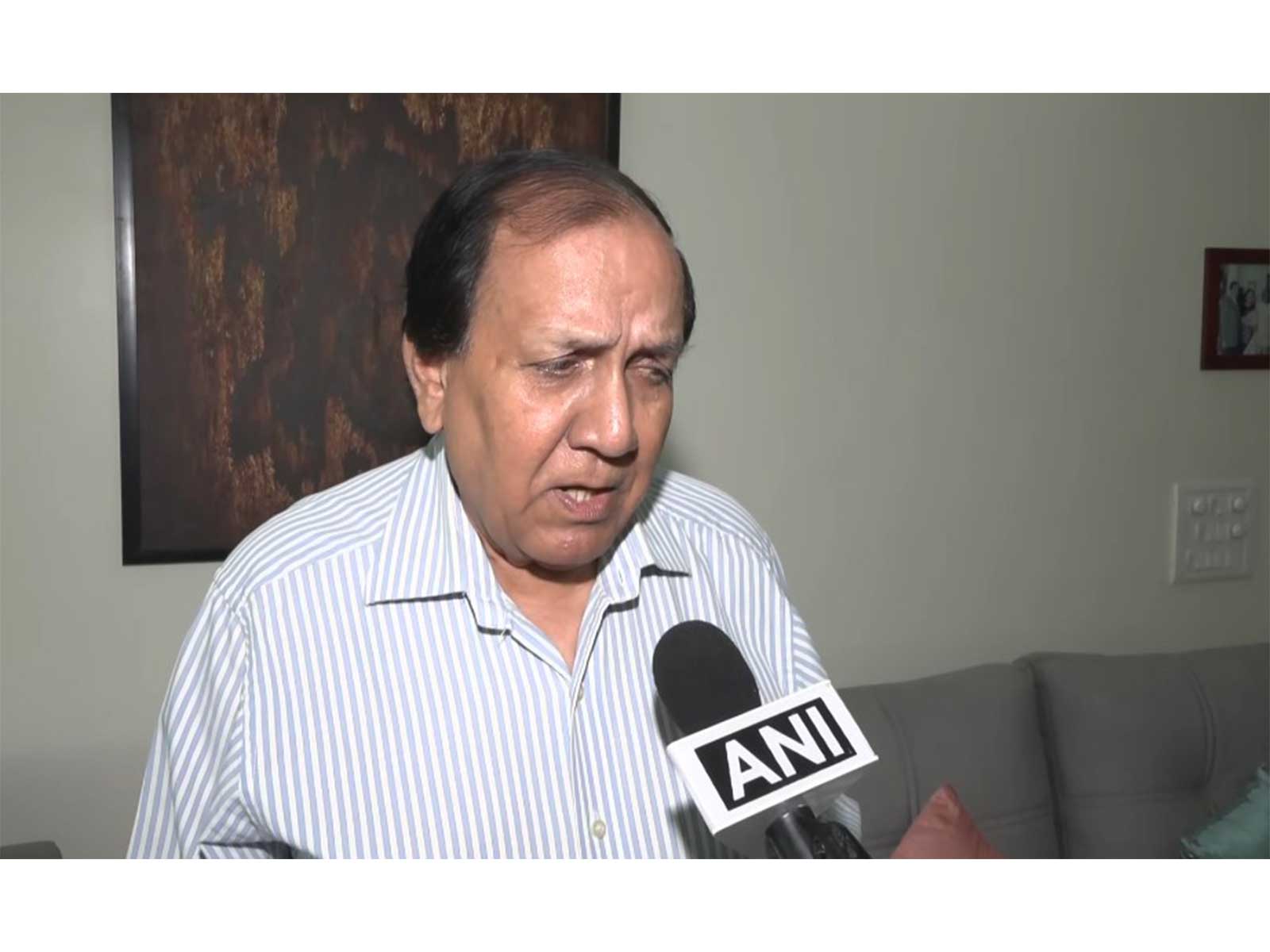
New Delhi [India], August 3 (ANI): Senior former diplomat Surendra Kumar on Monday criticised the rapidly shifting military and diplomatic stances between the United States and Iran, remarking that the lack of predictability in decisions carrying global consequences has made the ongoing West Asia crisis "like a comedy."
Speaking to ANI, Kumar emphasised that while any shift that lowers regional hostilities and leads to the reopening of the vital Strait of Hormuz should be welcomed, both Washington and Tehran are caught in a complex struggle to end the conflict without losing face domestically.
Addressing the frequent swings between threats of military action and sudden calls for talks, Kumar criticised the lack of consistency in handling high-stakes international conflict.
"It is becoming like a comedy. I mean decisions which impact the whole world should have some kind of more predictability, more certainty. If you go on changing it every 24 hours every week, it impacts so many people," said Kumar.
"On the whole, whatever happens if you really bring down the temperature, it results in the opening of the State [Strait] of Hormuz, and if we find that there is a little less hostility, less tension, we should welcome it. But we don't know how long it will last," he added.
Kumar highlighted that while exhaustion has set in on both sides, the core diplomatic dilemma is enabling both leaders to claim victory to their home audiences:
"Now, thing is that there are many, both sides, first is both sides are really tired of this. Second, both sides want to end it. Third is both sides want to project to their respective people that they have won. Now that is the whole problem. You want to stop it but claiming to your people you have won."
Commenting on US President Donald Trump's decision to shelve a planned military strike and claims that Tehran had pleaded for restraint, Kumar expressed scepticism.
"Now, even President Trump, when he stopped, what he said? Iran said 'please please please.' Now Iran will say 'we never said.' We didn't even try to convey the message. In fact, to assume that Iranians would have begged in this fashion is very unbelievable," he said.
Kumar outlined three primary factors that likely forced Washington to pause its military escalation-- panic among Gulf allies. Regional allies fear direct Iranian retaliation on critical infrastructure.
"There are quite a few reasons behind it. One is Gulf countries are very scared. You can bomb Iranian oil installations, bridges, railway lines, and whatever it is. Immediately, Iran will hit your oil, gas, desalination plants. And I understand that Qatar, UAE, Saudi... Saudi Prince himself phoned Trump, according to some reports. He phoned and urged him, 'please don't do it' because Iran will definitely take action against us and we are impacted; our people are impacted," he said.
The former diplomat also said about US public sentiment and midterm elections."Secondly, the popularity of this kind of experiment, you can call it or handling of Iran, has no backing in the USA. More than 66 per cent of Americans don't want what is happening. They don't really believe what action has been taken. The midterm elections are coming in November, so there is consideration whether it will impact the party negatively."
Kumar also touched down on depletion of critical munitions stockpiles. "Third is army generals, others are talking about. You are using many more missiles than the Iranians have used those drones. And your stockpile of missiles is depleting. They are talking about Patriot missiles have depleted a lot. These are all considerations, and they think that perhaps after all this destruction of their infrastructure and other areas, Iranians will be much more sort of amenable to agree. Maybe there is some truth," he said.
The former diplomat pointed out that political fragmentation within Iran makes establishing a unified diplomatic stance challenging. "In Iran, also there is a division in the leadership. While the President and Foreign Minister want a diplomatic solution and have agreed to some kind of compromise. But there are hardline Islamic Revolutionary Guard. They want 'we must continue fighting Americans, teach them a lesson.' So they have to figure out somehow a common position; otherwise they can't negotiate."
Navigational freedom through the Strait of Hormuz remains a non-negotiable priority for global markets, India, and European nations, but remains Tehran's primary bargaining chip:
"I personally feel there has to be some compromise. Iranians must realize Strait of Hormuz has to be open because this is one issue on which the entire Gulf countries, Europe, including India, nobody is supporting them. But their problem is that if they do not attack the Gulf countries, they have no other leverage to use against the USA. So Iran has to find some way, whatever terms and conditions, to open this Strait foremost. Then Americans have to really give them an incentive to do this," added the former diplomat.
Calling on international mediators to push both capitals toward realistic expectations, Kumar concluded with a hopeful outlook for a negotiated solution. "I personally feel, yes, a solution can be reached provided both sides lower their expectation. Both sides come to compromise, okay, you can go ahead and project whatever you say to your people, but there should be something which the other side can also project to their people."
"I personally hope that this time, maybe these mediators might be more serious to put this thing in their brain, both sides, that look, you people have been fighting for so long, it is affecting the whole world. Please come to some solution, bring it to an end, and we will see what happens," he added. (ANI)
