


Union Minister JP Nadda to launch Aarogya Setu 2.0, other digital initiatives for health sector on June 29
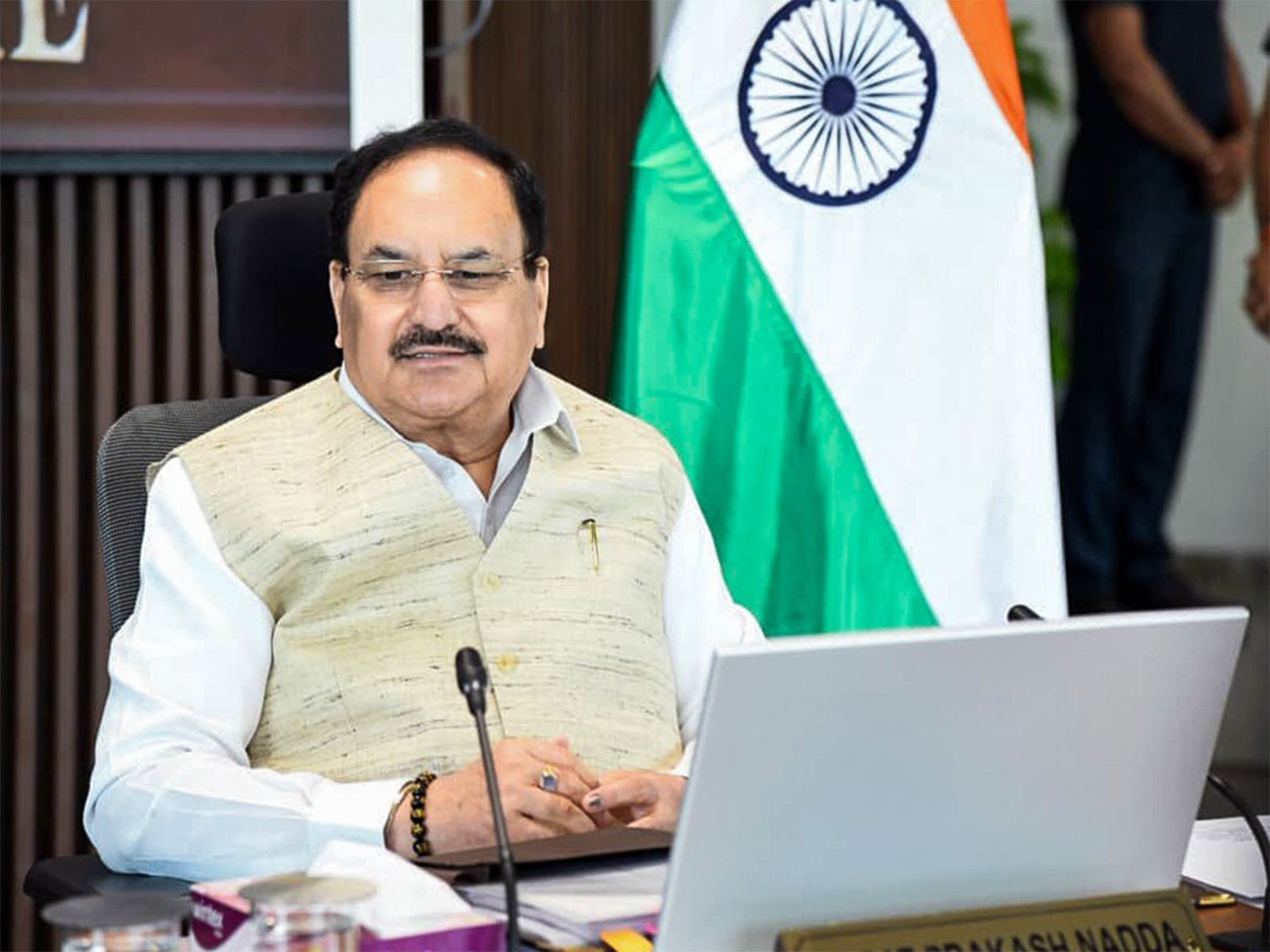
New Delhi [India], June 27 (ANI): In a significant step towards strengthening India's digital health ecosystem, Union Minister for Health & Family Welfare and Chemicals & Fertilisers JP Nadda will launch a series of digital initiatives for the health sector on June 29.
Developed under the aegis of the National Health Authority (NHA) and the National Resource Centre for EHR Standards (NRCeS), these initiatives are aimed at expanding access to healthcare services, strengthening interoperability and accelerating the adoption of Digital Public Infrastructure for Health across the country, according to a release from the Ministry of Health and Family Welfare.
The launch event will bring together state representatives, senior government officials, healthcare leaders, technology partners, industry representatives and key stakeholders from across the healthcare ecosystem to mark another milestone in India's journey towards building a connected and interoperable healthcare ecosystem.
The initiatives being launched include citizen-facing applications, provider-focused solutions, interoperability frameworks, registries and data standards. They are expected to enhance accessibility, efficiency and interoperability across the healthcare ecosystem while benefiting citizens, healthcare providers, insurers, technology innovators and policymakers alike.
Among the key initiatives to be launched is Aarogya Setu 2.0, a comprehensive Personal Health Record Application (PHR) for citizens.
Building on the trust and reach established during the COVID-19 pandemic, the revamped application provides a gateway to multiple digital health services through a single platform, the release said.
The application enables creation and management of ABHA (Ayushman Bharat Health Account), access to and sharing of digital health records, consent-based health information exchange, AI-powered health insights and smart health reports, wearable device integration, OPD registration through Scan & Register, hospital payments through Scan & Pay, medication reminders and family health management.
It also facilitates the discovery of nearby healthcare facilities and doctors, ambulance services, blood banks with blood unit availability, and Jan Aushadhi Kendras.
In addition, the application provides access to PM-JAY services, including search for PM-JAY empanelled hospitals, access to AB PM-JAY wallet and Ayushman CAPF policy details, along with seamless access to other healthcare services.
The release further noted that the enhanced Ayushman App will also serve as a one-stop digital platform for the beneficiaries of Ayushman Bharat Pradhan Mantri Jan Arogya Yojana (AB PM-JAY).
The upgraded application will enable beneficiaries to access essential scheme-related services, including eligibility verification, Ayushman Card services, treatment history, hospital discovery, grievance redressal and beneficiary support.
Another key initiative is Ayushman Sarathi, a WhatsApp chatbot for beneficiaries of Ayushman Bharat PM-JAY. Designed to deliver PM-JAY services through a simple conversational interface, Ayushman Sarathi will enable citizens to access key scheme-related services, thereby improving accessibility and strengthening last-mile service delivery.
Beyond citizen-facing applications, a series of digital health and interoperability initiatives aimed at strengthening healthcare delivery, claims processing, standardisation, and innovation across the healthcare ecosystem will also be dedicated to the nation by Union Minister JP Nadda, the release said.
The National Health Claims Exchange (NHCX), a digital public infrastructure for seamless health claims processing, will enable standardized exchange of health claims information between providers and payers across public and private health insurance programmes, thereby reducing administrative burden and facilitating faster and more efficient claims processing.
To strengthen interoperability within the health claims ecosystem, NHA will introduce a utility that enables the conversion of payers' insurance plans into standardised FHIR bundles. The utility will facilitate uniform and error-free creation of insurance plan information across payers, improving consistency, reducing manual effort and supporting more efficient processing of health claims.
Further strengthening healthcare accessibility through an open and interoperable network, the Unified Health Interface (UHI) is also being dedicated to the nation. UHI enables digital applications to connect citizens with healthcare service providers through a common interoperable framework, facilitating easier discovery and access to healthcare services, according to a release.
Supporting the adoption of digital health technologies at the provider level, e-Sushrut Clinic will be unveiled as a plug-and-play clinic management solution that enables healthcare providers to digitise clinical workflows, maintain electronic health records and seamlessly integrate with the Ayushman Bharat Digital Mission ecosystem. The platform is expected to support healthcare facilities in adopting digital health technologies and delivering more efficient patient care.
The Drug Registry will also be launched with the aim of standardising medicine-related information across the healthcare ecosystem. By enabling uniform coding of medicines across digital health applications, the registry will strengthen prescribing, dispensing and healthcare data exchange while improving interoperability across healthcare systems.
Recognising that interoperability is built upon common standards and shared vocabularies, the Government will launch the Common LOINC Codes for India (CLCI), a nationally curated subset of international laboratory standards tailored for Indian healthcare needs, developed by NRCeS. By enabling standardised representation of laboratory observations and diagnostic information, CLCI will support seamless exchange of laboratory data across hospitals, laboratories and digital health platforms, while improving consistency, data quality and clinical decision-making, the release said.
Complementing these efforts, the Bharat Health Terminology Service (BHTS), also developed by NRCeS, will provide access to standardised healthcare terminologies, code systems and value sets to support semantic interoperability across digital health systems by enabling consistent interpretation and exchange of health information.
The release said that these initiatives are expected to strengthen India's Digital Public Infrastructure for Health through enhanced interoperability, standardisation, and seamless exchange of health information across stakeholders. By enabling more connected, efficient and interoperable healthcare delivery, they will support the Government's vision of accessible, affordable and inclusive healthcare for all.
The Ayushman Bharat Digital Mission aims to create the backbone necessary to support the integrated digital health infrastructure of the country. ABDM seeks to bridge existing gaps among stakeholders of the healthcare ecosystem through digital highways, enabling accessible, affordable and efficient healthcare services for all citizens. (ANI)
