

HRFP-TFD event on abductions, forced conversions and forced marriages of minority girls in Pakistan
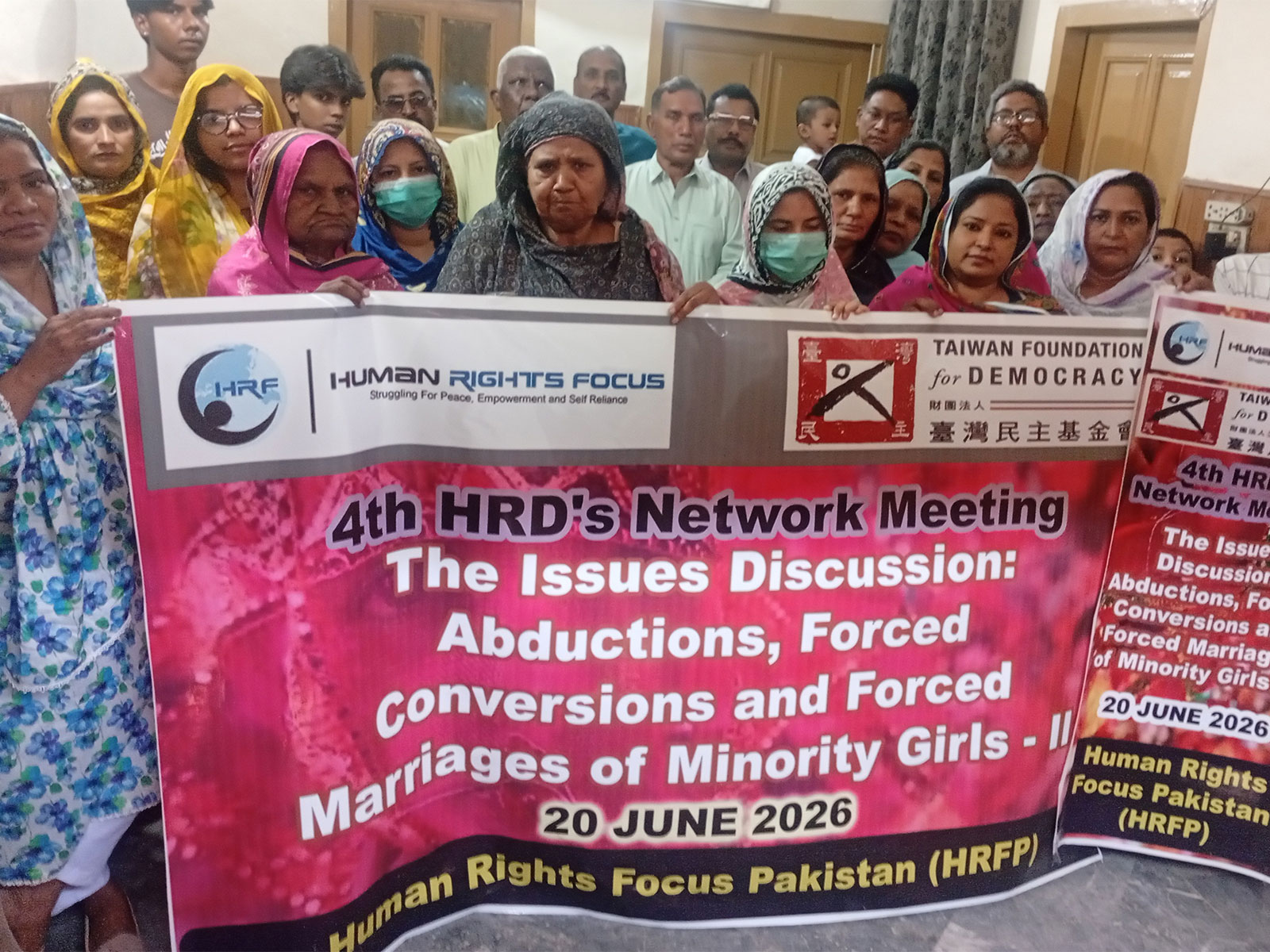
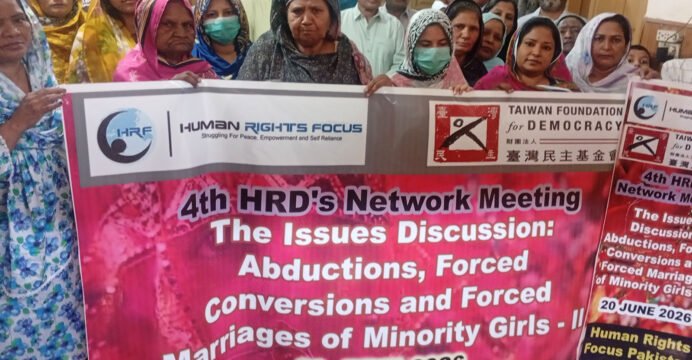
Faisalabad [Pakistan], June 20 (ANI): Human Rights Focus Pakistan (HRFP), in collaboration with the Taiwan Foundation for Democracy (TFD), organised an event on abductions, forced conversions, and forced marriages of minority girls in Pakistan.
The event is part of the HRFP-TFD initiative, along with activities of the HRDs Network, launched through a project aimed at strengthening human rights advocacy across Pakistan to promote human rights, democratic values, and the rule of law, a release said.
During the event, participants discussed the issues of abductions, forced conversions, and forced marriages of minority girls, with particular focus on cases involving women and girls belonging to religious minority communities.
Some women survivors from the Christian minority participated and shared their personal experiences, describing how they faced harassment in workplaces and pressure as Christian employees to convert to Islam and enter into marriages with Muslim co-workers or employers. A case was also shared involving a minor girl subjected to child marriage, who was allegedly victimised by Pakistani and Chinese men who deceived, abducted, forcibly converted, and married her.
HRFP's Fact-Finding Team and Advocacy Group also shared field experiences, highlighting ongoing challenges and documented cases. Success stories and obstacles encountered during investigations and advocacy work were also presented. Participants, both in-person and online, unanimously agreed on the need to develop a coordinated strategy to reach more affected cases and strengthen response and resolution mechanisms, the release further said.
Naveed Walter, President of Human Rights Focus Pakistan (HRFP), stated that Christian and Hindu girls are particularly targeted for abductions, forced conversions, and forced marriages. He noted that while new legislation is a welcome step, existing laws must be effectively implemented. He further emphasized that these practices raise serious concerns under Pakistan's legal framework, including relevant provisions of the Pakistan Penal Code (PPC), such as Section 365-B PPC (kidnapping or abducting a woman to compel marriage or for illicit purposes), Section 366 PPC (kidnapping or abducting a woman to compel marriage), and Section 498-B PPC (forced marriage), along with applicable child protection and child marriage restraint laws and other legal safeguards for minors.
He added that abduction, forced conversion, forced marriage, and child marriage violate the rights, dignity, safety, and freedom of minority girls and require effective prevention, protection, and accountability mechanisms.
Naveed Walter further stated that as a signatory to the global development framework, Pakistan has also committed to implementing the 17 Sustainable Development Goals (SDGs) and the United Nations 2030 Agenda. He said the United Nations Agenda 2030 is grounded in the principle of "leaving no one behind," which requires that vulnerable groups, including religious minorities, women, and children, receive equal protection, opportunities, and access to justice. According to him, abduction and forced marriage of minority girls directly undermine this principle by restricting freedom, education, identity, and equal participation in society.
HRFP emphasized that protecting minority girls from abduction, forced conversion, and forced marriage is essential for achieving the commitments of Agenda 2030, strengthening the rule of law, and ensuring that every individual regardless of religion or gender can live with dignity, equality, and freedom.
Members of the HRDs Network, including Sohail Emmanuel, Naseem Haroon, Nusrat Samuel, James Lal, Bushra Younas, and Sana Yousaf, expressed their commitment to collaborative action. They emphasized the need to strengthen democratic practices and condemned human rights violations and undemocratic tendencies that undermine the rule of law.
HRFP Administrator Lawrence Thomas, HRFP Program Coordinator Shadman John, and HRFP Research Officer Nadeem Walter highlighted the organization's ongoing efforts to support religious minorities through its 24/7 REAT Helpline, operational since 2013 at the Faisalabad office. The toll-free service (0800-0-9494) handles a significant number of cases annually as the calls received just in 2025 were more than 1200. (ANI)
