
Oppn calls PM Modi’s ‘seven’ appeals “economic failure repackaged as moral advice”; BJP defends it as “right call” amid West Asia crisis
New Delhi [India], May 11 (ANI): A fierce political row has broken out following Prime Minister Narendra Modi's "seven appeals" to the nation, aimed at insulating the Indian economy from the escalating West Asia crisis. While the BJP hails the move as a masterstroke of "economic self-defence," the Opposition has dismissed the directives as a "repackaged admission of economic failure."
This comes a day after PM Modi urged Indians to reduce fuel consumption, avoid foreign travel, postpone gold purchases, embrace work from home, use public transport, consume less edible oil, and shift towards natural farming.
The Opposition, led by Congress leader Rahul Gandhi, was quick to sharpen its knives. Gandhi characterised the appeals not as moral guidance, but as "proof of a compromised PM" who has lost control over the economy.
In a strongly worded post on X, Rahul Gandhi said, "These aren't sermons -- these are proofs of failure," alleging that after "12 years" of governance, the government was now instructing people "what to buy, what not to buy, where to go, where not to go." Reiterating his "Compromised PM" jibe, the Congress MP claimed that "running the country is no longer within the reach" of the Prime Minister.
Congress president Mallikarjun Kharge also mounted a blistering attack, accusing the Centre of failing to control inflation and economic distress. "When poverty's flour is getting soaked, Modi ji is lecturing the country on saving," Kharge said, while alleging that the government ignored warnings about the West Asia crisis and remained focused on election campaigning. He questioned why the Prime Minister was conducting roadshows and claiming that "sab changa si" while, according to the Congress, the economy was under pressure from rising fuel costs, weakening rupee value, and supply chain disruptions.
Congress MP Manickam Tagore said the appeals reflected "economic failure being repackaged as moral advice." He accused the government of asking citizens to "lower their standard of living" after years of promises of "Achhe Din." Tagore further said that if sacrifices were necessary, the government should begin by cutting "PR spending," "luxury convoys," and "self-promotion campaigns."
Senior Congress leader Jairam Ramesh suggested that PM Modi's speech could be a precursor to harsh economic measures. "The economic situation is far more serious than what official numbers suggest," he said, warning that fuel price hikes and austerity measures could soon follow. He argued that stagnating wages, rising household debt, and weak job creation contradicted the government's narrative of economic stability.
Congress MP Karti Chidambaram described the Prime Minister's appeal as "dramatic," saying it hinted that "something is not normal." He demanded that Parliament be convened to explain the actual economic and geopolitical situation facing the country.
Congress leader Sachin Pilot similarly asked the government to disclose India's real position regarding the West Asia conflict and explain why commodity prices were rising after elections had concluded. "The position we are in should be disclosed. Prices are rising after the elections are over. You will have to explain with data what India's situation is. Oil prices are also stable, so what exactly happened?" he asked.
Adding to the Opposition offensive, former Delhi Chief Minister and AAP national convenor Arvind Kejriwal questioned whether the country was facing an "economic emergency." "The Prime Minister should lay the truth bare before the nation," Kejriwal said, asking what the "real state" of the economy was.
Samajwadi Party chief Akhilesh Yadav called the Prime Minister's remarks an "admission of failure" and alleged that the BJP government had lost control of the economy. "As soon as the elections ended, the crisis came to mind," Yadav wrote on X, sarcastically referring to the BJP's "five trillion-dollar economy" ambition while questioning why restrictions were not discussed during election campaigns. He also accused the BJP of hypocrisy over foreign travel and fuel consumption during its own poll campaigns.
DMK spokesperson TKS Elangovan alleged that the government was preparing to increase petrol prices and linked the current situation to India's decision to reduce crude purchases from Russia under pressure from US President Donald Trump.
CPI MP P Sandosh Kumar claimed the Prime Minister's appeal itself was proof that the government had "failed on all fronts" and warned of difficult days ahead.
Congress MLA BK Hariprasad launched one of the sharpest attacks, accusing PM Modi of neglecting governance during elections and claiming that the RSS had come to dominate governance institutions. He also alleged that despite warnings from Rahul Gandhi regarding the West Asia crisis, the BJP government failed to act in time. He also referred to PM Modi as "Mahishasura" while accusing the BJP of weakening regional parties and sidelining leaders within its own organisation.
The BJP has mounted a vigorous defence, accusing the Congress of being "detached from the national pulse." Union Minister Giriraj Singh and BJP IT Cell head Amit Malviya countered the criticism by invoking historical precedents.
Malviya shared archival footage of Jawaharlal Nehru explaining how global wars (like the Korean War) inevitably caused inflation in India, asking if Nehru was also a "compromised PM" for telling the truth.
The ruling party argued that just as the nation united during the COVID-19 lockdowns, the current "economic self-defence" requires collective action to prevent the $1,000$ crore-a-day losses currently being absorbed by oil companies from crashing the economy.
Maharashtra Chief Minister Devendra Fadnavis said global oil and gas supplies had already been disrupted because of the conflict involving America, Israel, and Iran, and warned that irresponsible fuel usage could eventually lead to shortages in India as well. "The Prime Minister has ensured that our supply is not affected on a large scale," Fadnavis said, urging citizens to follow the PM's guidance.
Union Minister Ashwini Vaishnaw echoed the Prime Minister's concerns while addressing the CII Annual Business Summit in New Delhi. Vaishnaw urged both citizens and businesses to reduce expenditure requiring foreign exchange while simultaneously increasing forex earnings through exports and services. "The truce is still far away," he said, referring to the continuing West Asia conflict.
Union Minister Giriraj Singh defended PM Modi by comparing the current appeal to the public cooperation witnessed during the COVID-19 pandemic. "Whenever such a call to action has been issued, the nation has stepped forward," Singh said, while accusing Rahul Gandhi of failing to understand the "pulse" of the country.
Union Minister of State for Defence Sanjay Seth also backed the Prime Minister, arguing that despite major global conflicts, India had managed to avoid fuel shortages. He urged people to use public transport and reduce unnecessary consumption to strengthen the country's foreign exchange reserves.
BJP leader Sanjay Saraogi said PM Modi had made the "right call," particularly regarding fuel conservation and postponing gold purchases, calling the measures essential in the national interest.
Among NDA allies, Andhra Pradesh Chief Minister N Chandrababu Naidu strongly endorsed the Prime Minister's "national mission" and asked industrialists and citizens alike to treat the appeals as a collective responsibility. Naidu said the current geopolitical turmoil had made self-reliance and resource conservation more important than ever.
Uttarakhand Chief Minister Pushkar Singh Dhami said conserving resources while keeping national interest paramount was the "collective responsibility" of every citizen and described PM Modi's appeal as a major step toward building a self-reliant India.
Amid the political slugfest, the Centre also moved to calm fears of shortages and panic buying. Information and Broadcasting Ministry Joint Secretary C Senthil Rajan said the Prime Minister's remarks were aimed at "efficient utilisation" of resources and not because of shortages. He insisted that the government had made adequate arrangements to handle disruptions caused by global conflicts.
The Ministry of Petroleum and Natural Gas also assured the public that fuel stocks remained stable and there were no shortages across the country. Petroleum Ministry Joint Secretary Sujata Sharma said refineries were operating at optimum levels and there had been no "dry-outs" at fuel stations or LPG distributorships.
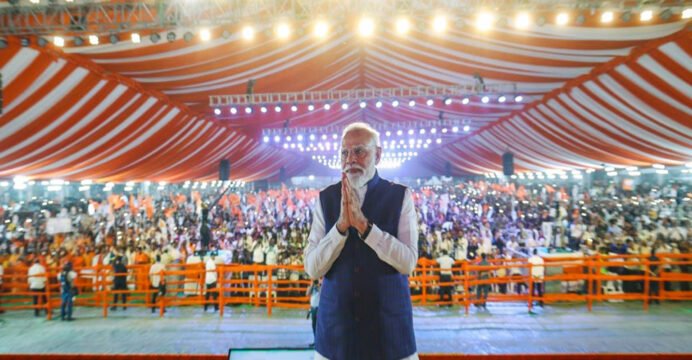
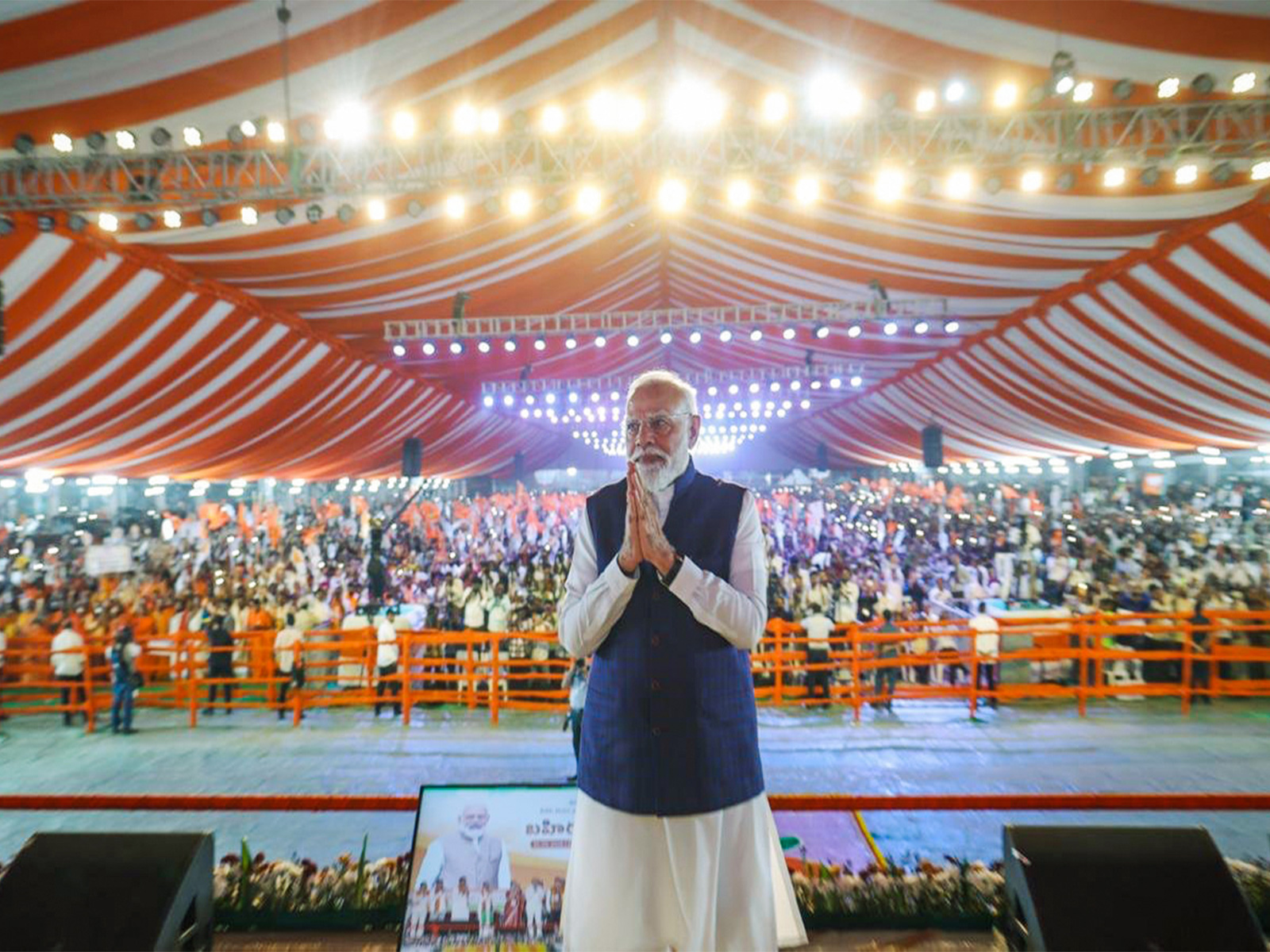
The controversy erupted after PM Modi, speaking in Hyderabad and later in Secunderabad on Sunday, framed responsible consumption as a new form of patriotism amid growing geopolitical tensions and supply-chain disruptions. Stressing that patriotism was not limited to sacrificing one's life at the border, the Prime Minister said citizens could also contribute through "micro-efforts" in daily life -- from reducing fuel usage and avoiding unnecessary imports to supporting domestic products and conserving foreign exchange reserves.
But what the BJP projected as a national call for resilience quickly transformed into a nationwide political confrontation, with the Opposition portraying it as a sign of deepening economic stress and the ruling alliance presenting it as a responsible response to an increasingly unstable global order. (ANI)
