

Trump projects himself as peacemaker, but acts are opposite, says expert
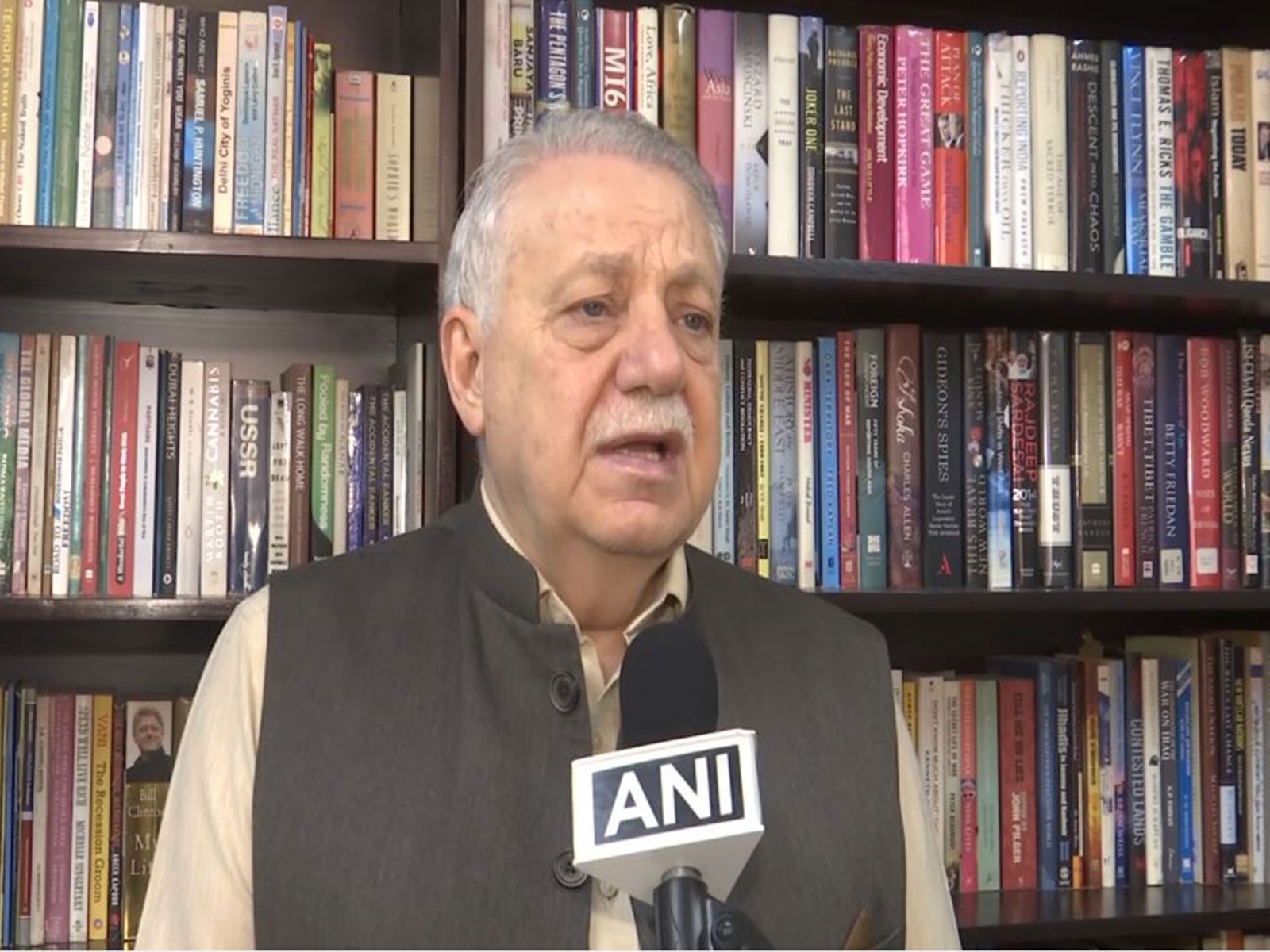
New Delhi [India], April 30 (ANI): Foreign Affairs expert Waiel Awwad said on Thursday that US President Donald Trump's claims of being a peacemaker sharply contrast with his actions on the ground.
Awwad, in a conversation with ANI, said that his actions in Venezuela, Iran, and laxity in the Ukraine-Russia war have cost many lives.
"While he presents himself as a man of peace who opposes the regime-change policies of his predecessors, his actions since taking office tell a different story. We have seen significant uproar, including the situation in Venezuela, two attacks on Iran with threats of a third, and the continued conflict in Ukraine. Many lives have been lost; if he were serious about ending these wars, he would use the supreme power of the United States to bring all parties to the negotiating table. The president promotes himself as a potential Nobel Prize winner and frequently calls for peace talks, but his perception of "peace" is problematic. His mindset is rooted in "America First" and the MAGA movement, which does not translate well to a multipolar world," he said.
Awwad said that Trump has two options- one is to end the war and blockade on the Strait of Hormuz, and the other is to continue the bombing.
"The United States president has put forward three scenarios discussed with his defense advisors. The first scenario is to end the war and the blockade on Iran, leading Iran to reciprocate by removing its own blockage of the Strait of Hormuz and bringing a permanent end to the conflict. The second option involves the continuous bombardment of vital infrastructure and installations, including civilian ones, to cause enough pain that the Iranian government is forced to the negotiating table," he said.
However, Trump continues to favour the blockade on Iran. But if the blockade continues, Iran may retaliate with military action.
"The third scenario, which the president currently favors, is to continue the blockade against Iranian ships outside the Strait of Hormuz. This is unlikely to work, as Iran has warned that if the blockade continues, there will be no chance of maintaining the current state of affairs. This increases the risk that Iran may retaliate with military action against the American blockade, leading to a significant escalation. It appears the president is being given poor advice by his advisors, which is aggravating the global crisis," he said.
Awwad also said that External Affairs Minister S Jaishankar's conversation with Iran's Foreign Minister Abbas Araghchi is vital as India has a lot at stake in the region.
"On the diplomatic front, the Indian government recently spoke with Iranian counterpart Abbas Araghchi. They agreed to remain in close contact amid the volatile regional situation and stalled US-Iran talks. This telephone discussion is vital, as the Iranians are apprising India of the status of negotiations and the current scenario in the Strait of Hormuz. India has a significant interest in ensuring its ships can pass through the Strait due to its ongoing energy crisis. Continued dialogue between India and Iran is essential to navigate these challenges," he said.
Meanwhile, Iran's President Masoud Pezeshkian on Thursday highlighted that the Persian Gulf is not an arena for imposing foreign wills, taking a jibe at the United States amid the stand-off regarding the Strait of Hormuz. (ANI)
