

LPG under-recoveries may hit Rs 80,000 crore in FY2027 amid West Asia disruptions: ICRA
New Delhi [India], April 29 (ANI): LPG under-recoveries of oil marketing companies (OMCs) are likely to surge to around Rs 80,000 crore in FY2027 if current trends persist, as supply disruptions and elevated global prices linked to the West Asia conflict continue to strain India's downstream energy sector, ICRA noted in a webinar.
"The stable pump prices for auto fuels amid elevated crude oil prices are impacting the profitability of oil marketing companies (OMCs), despite the recent reduction in excise duty," Prashant Vasisht, Senior Vice President and Co-Group Head, ICRA, said during an online meeting with the media on the West Asia crisis--impact and outlook--held on Wednesday.
He further said that ICRA estimates LPG under-recoveries at Rs 80,000 crore for the full year FY2027 if the current trend continues.
At crude prices of $120-125 per barrel and long-term average crack spreads, the marketing margins on petrol and diesel are estimated to be negative Rs 14 per litre and Rs 18 per litre, respectively, Vasisht added.
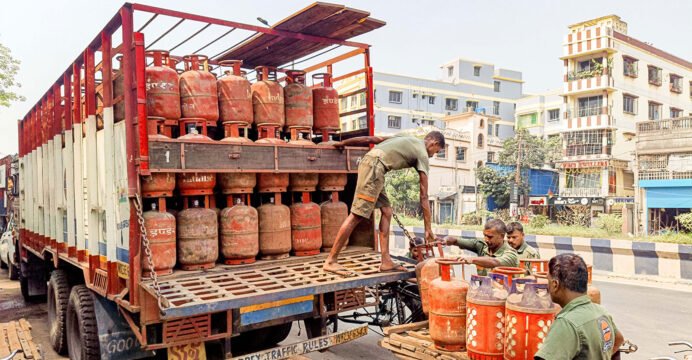
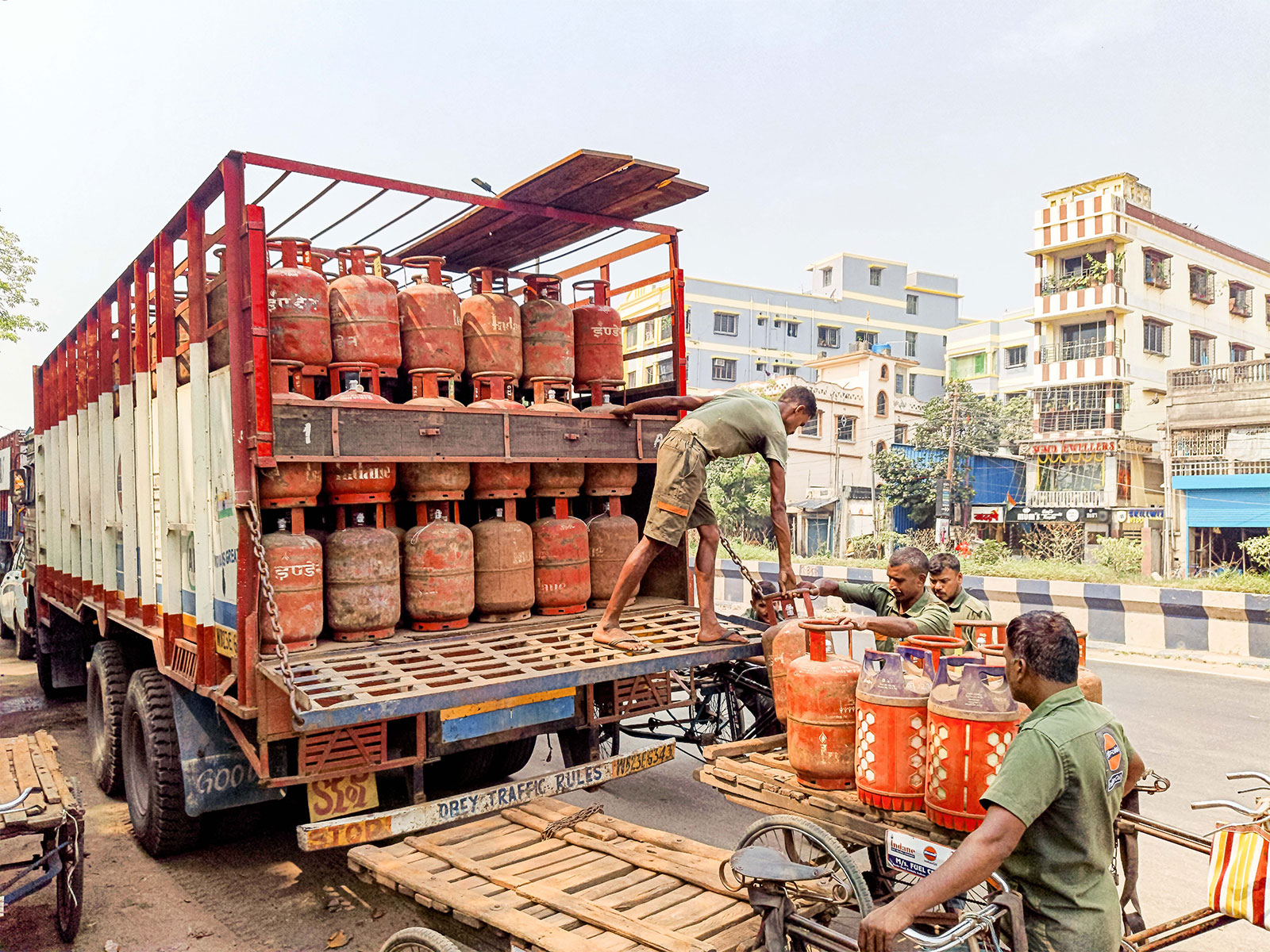
With supplies of LPG disrupted from West Asia, international LPG prices have surged. While LPG production has been increased by Indian refining companies and cargoes have been procured from the US and Australia--addressing supply-side issues to an extent--under-recoveries on the sale of domestic LPG remain high for OMCs, he added.
The rating agency noted that disruptions in the Strait of Hormuz have led to a broad-based increase in input costs across downstream industries, including oil marketing, fertilisers, chemicals, and city gas distribution (CGD).
In the fertiliser sector, rising prices of key inputs such as ammonia and sulphur have significantly increased production costs. The pooled price of gas for urea has risen sharply to around $19 per mmbtu in April 2026 from $13 per mmbtu (Metric Million British Thermal Unit) before the crisis.
The agency expects the profitability of phosphatic and potassium (P&K) fertiliser players to moderate due to inadequate subsidy revisions, with only partial cost pass-through through retail price hikes, except for di-ammonium phosphate (DAP).
"Significant raw material price inflation coupled with inadequate subsidy revision is set to moderate the profitability of P&K fertiliser players vis-a-vis FY2026 levels," Vasisht said.
With sharp raw material price inflation in both urea and non-urea fertiliser segments, ICRA estimates the subsidy requirement for FY2027 at Rs 2.05 trillion to Rs 2.25 trillion, with an upward bias.
"We expect the Government of India to enhance the allocation towards fertiliser subsidy during FY2027 from the budgeted Rs 1.71 trillion," Vasisht added.
Girishkumar Kadam, Senior Vice President and Group Head, Corporate Ratings, ICRA Limited, said that with a sudden jump in input commodity prices, most players benefited in March. However, these high prices are expected to be passed on to end users eventually, and the possibility of demand moderation cannot be ruled out in the current quarter.
"Helium prices have risen sharply due to the West Asia crisis, and the US is an alternative source. Helium is a key requirement in fibre optics. However, whether supply can be ramped up quickly to address the shortage remains uncertain. It is also used in the manufacturing of drones," he said.
Helium supply gaps can be met entirely by the US, but prices have already increased significantly, he added.
Chemical and polymer prices have also risen due to supply disruptions and higher fuel costs. While short-term demand has been supported by stockpiling, ICRA expects demand to moderate once inventories stabilise. However, the impact is likely to vary across segments, with specialty chemical players having lower exposure to West Asia expected to remain relatively resilient.
The CGD sector is also facing margin pressures, particularly in the compressed natural gas (CNG) segment, due to rising gas prices and currency depreciation.
However, profitability in the piped natural gas (PNG)-domestic segment is expected to remain stable, owing to preferential allocation of Administered Price Mechanism (APM) gas.
Overall, ICRA expects elevated energy and input costs to weigh on the profitability and credit profiles of several downstream sectors in FY2027. While the outlook for the refining segment remains stable due to healthy crack spreads, the outlook for fuel retailing, fertilisers, and basic chemicals remains negative amid persistent cost pressures and limited pricing flexibility. (ANI)
