

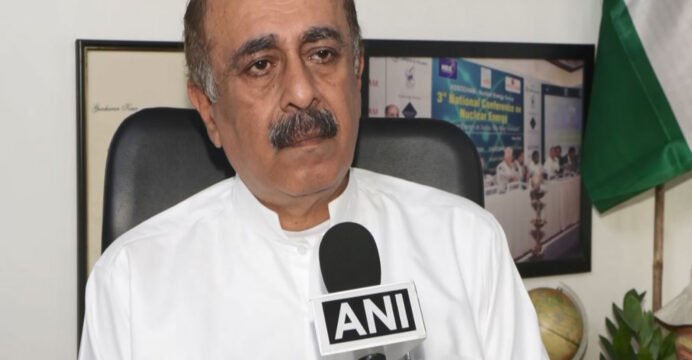
“Collateral damage in the war”: Foreign affairs expert Robinder Sachdev on US strike at Mashhad Airport
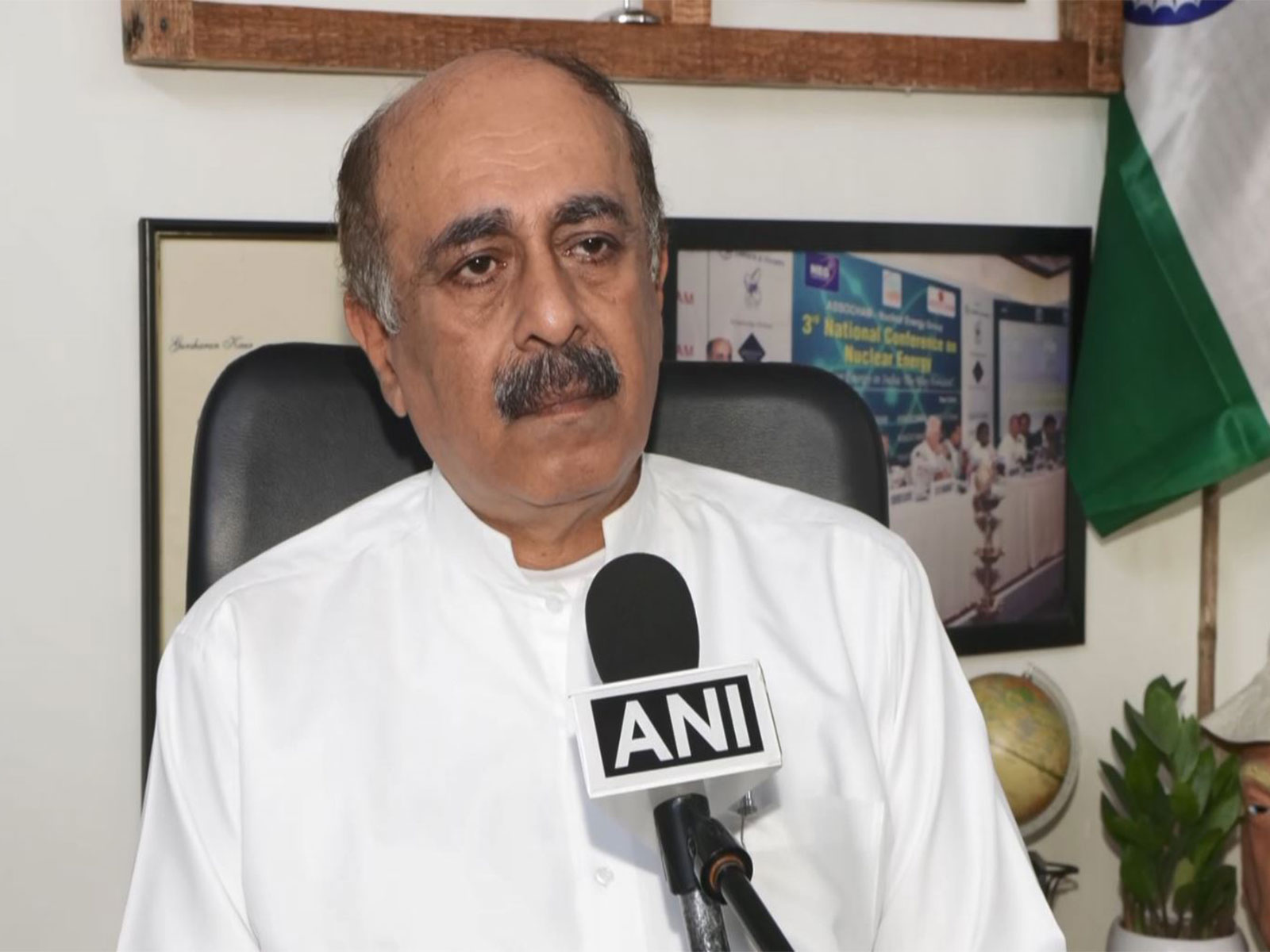
New Delhi [India], April 1 (ANI): Foreign affairs expert Robinder Sachdev has weighed in on the recent US airstrike at Mashhad Airport that struck a Mahan Air aircraft, suggesting the incident was likely a case of "collateral damage" rather than a targeted strike on a humanitarian mission.
While speaking to ANI, Sachdev addressed the complexities of striking infrastructure during active hostilities, noting that while airports are strategic, the distinction between military and civilian sites is critical.
"In situations of war, I do think that airports are normally logical targets, but typically those should be military airports, not civilian airports. It depends on where this plane was parked, but this is collateral damage in the war," Sachdev stated.
The aircraft in question was reportedly scheduled to fly to Delhi to collect humanitarian supplies. However, Sachdev dismissed the idea that the flight's destination influenced the strike, clarifying that "it has nothing to do with the fact that this aircraft was supposed to come to India to pick up humanitarian aid. That is just coincidental."
According to Iranian sources, the Mahan Air aircraft was stationed at Mashhad International Airport and was prepared to fly to New Delhi as part of a broader humanitarian aid operation. "Mahan Air aircraft was hit by the US in an airstrike at Mashhad Airport. The plane was reportedly scheduled to fly to Delhi for humanitarian aid," sources said.
Reports indicate that the aircraft was expected to arrive in the Indian capital in the coming days to facilitate the transport of essential supplies, including medicines. This disruption has raised fresh concerns over the safety of civilian and aid-linked aviation operations in the region amid escalating geopolitical tensions.
The incident comes at a time when Iran has been coordinating humanitarian shipments with India. Earlier this month, India dispatched aid consignments to Iran, underlining what New Delhi described as long-standing civilisational and humanitarian ties between the two countries.
Mahan Air, the carrier involved in the Mashhad incident, has frequently been at the centre of international scrutiny and has been under US sanctions for years. Washington has previously alleged links between the airline and the Islamic Revolutionary Guard Corps (IRGC), accusing it of transporting personnel and equipment linked to regional conflicts.
The reported strike at Mashhad adds to a series of incidents targeting aviation infrastructure in Iran during ongoing regional hostilities. Earlier conflicts have also seen damage to aircraft at Iranian airports, raising alarm over the vulnerability of civilian aviation assets in such environments.
Turning his attention to the broader rhetoric coming from Washington, Sachdev analysed the aggressive posture adopted by the White House. On US President Donald Trump's statement, he observed, "Trump is playing multiple cards at the same time. As far as obliterating is concerned, this seems to be a new favourite word with Trump and his administration."
This shift in rhetoric was underscored by US President Donald Trump's recent threat to target Iran's civilian energy infrastructure, including power plants, oil wells, and Kharg Island, if Tehran does not reopen the Strait of Hormuz.
In a social media post, Trump said, "Great progress has been made but, if for any reason a deal is not shortly reached, which it probably will be, and if the Hormuz Strait is not immediately 'Open for Business,' we will conclude our lovely 'stay' in Iran by blowing up and completely obliterating all of their Electric Generating Plants, Oil Wells and Kharg Island."
The president urged Iran to ensure that the waterway is "Open for Business," tying the resumption of maritime traffic directly to progress in talks aimed at ending hostilities. Trump wrote on Truth Social that Washington is in discussions with a "NEW, AND MORE REASONABLE, REGIME" to end military operations, adding that the potential destruction of infrastructure would be "in retribution for our many soldiers, and others, that Iran has butchered and killed."
Despite these threats, Trump has claimed that indirect negotiations between the United States and Iran, facilitated by Pakistani intermediaries, are making "positive progress." Speaking about the ongoing backchannel diplomacy, Trump said talks are underway through Pakistani "emissaries", though he declined to provide specific details on a potential ceasefire.
Trump recently noted he is optimistic about a deal, citing "very good negotiations" and Iran allowing 20 oil tankers to pass through the Strait of Hormuz as a "sign of respect". Addressing reporters aboard Air Force One, he said, "I do see a deal in Iran, yeah. Could be soon."
However, Sachdev remained doubtful that the US would move against Iran's primary economic lifeline. "I am sceptical that they will take action on Kharg Island," he noted, highlighting the global economic stakes involved. "Iran's oil can only come out into the world through the terminals on Kharg Island."
Kharg Island serves as Iran's main oil export hub, handling the vast majority of the country's crude shipments. Following Trump's post, the global energy market reacted sharply, with oil prices surging amid fears of further disruptions in the Strait of Hormuz.
While there has been no immediate official confirmation from the United States regarding the reported strike at Mashhad, the development is likely to further strain already tense relations between Washington and Tehran. Details continue to emerge in a fluid situation that carries significant potential for diplomatic fallout. (ANI)
