

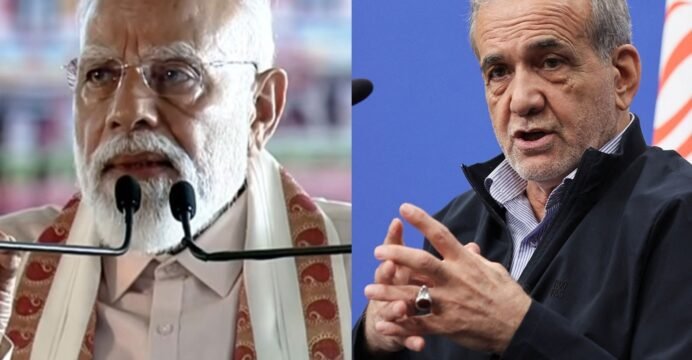
Iranian President calls for constructive role of BRICS to halt West Asia conflict during talks with PM Modi
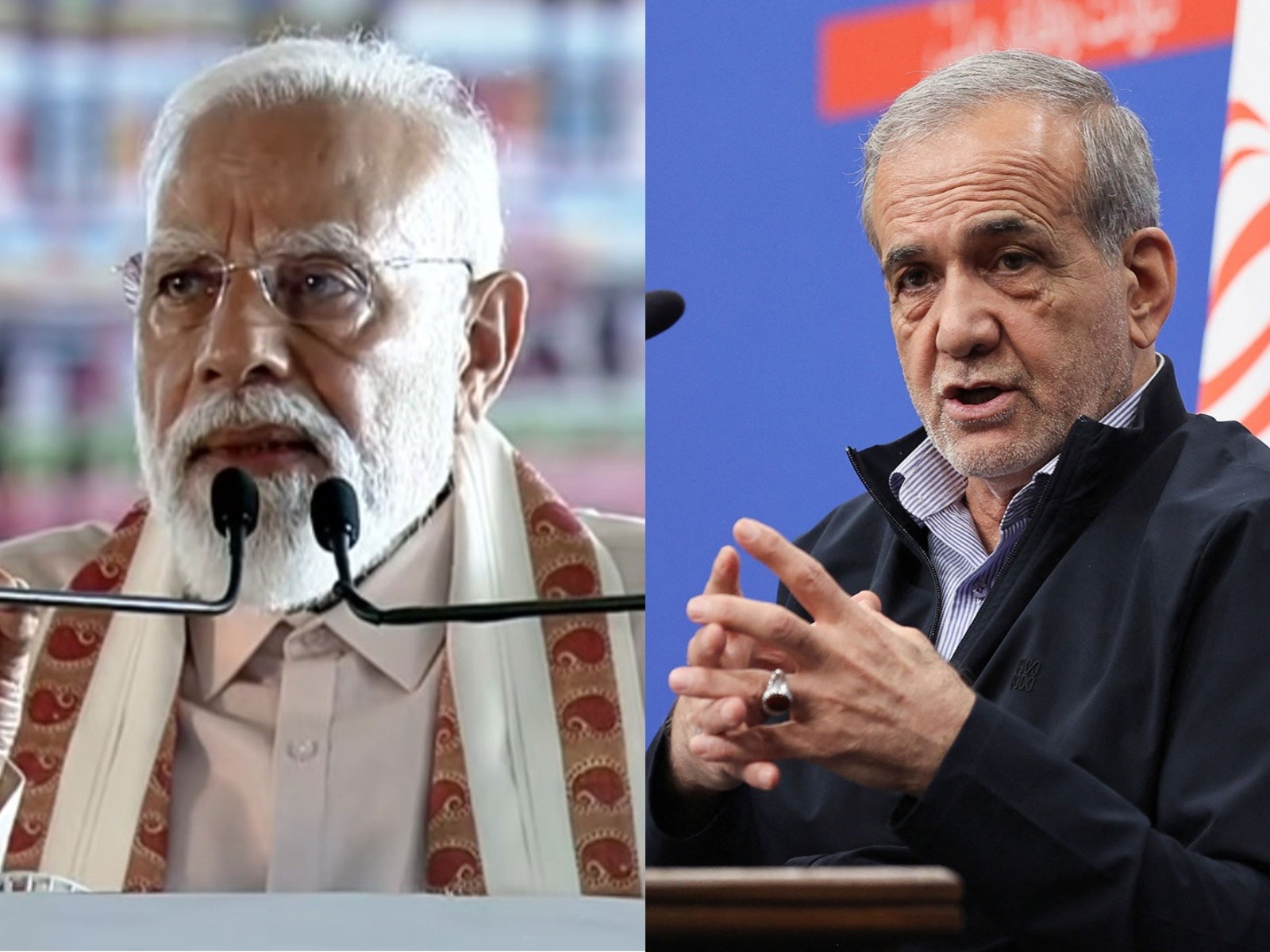
Tehran [Iran], March 21 (ANI): Iranian President Masoud Pezeshkian on Saturday called for a more proactive and independent role of BRICS in addressing the ongoing conflict in West Asia during a telephone conversation with Prime Minister Narendra Modi.
During the discussion, Pezeshkian emphasised the need for BRICS to contribute towards halting ongoing hostilities and ensuring regional and global stability, referring to New Delhi's chairmanship for this year and urged member nations to play a constructive role in de-escalating tensions. Iran is the part of BRICS.
"Referring to India's rotating presidency of BRICS, Pezeshkian called for the group to play an independent role in halting aggressions against Iran and in safeguarding regional and international peace and stability," the statement from the Iranian Embassy in India read.
The Iranian President briefed Prime Minister Modi on the current situation in the region, including recent military developments, and reiterated Iran's position on the conflict. He underscored the importance of ending hostilities and preventing further escalation.
Pezeshkian also highlighted the need for a regional security framework led by countries of West Asia, aimed at ensuring peace and stability without external interference.
"President also proposed the establishment of a regional security framework composed of countries of West Asia, aimed at ensuring peace and stability in the region through regional cooperation without foreign interference. He further underscored that a prerequisite for ending the war and conflict in the region is the immediate cessation of aggressions by the US and Israel, along with guarantees against their recurrence in the future," the statement read.
Pezeshkian further outlined what he described as aggression, unlawful attacks, and crimes committed by the United States and Israel, asserting that Iran did not initiate the conflict and stating that military strikes were launched against Iran during ongoing nuclear negotiations without "justification, logic, or legal basis", leading to the deaths of senior leadership, military commanders, and civilians, including schoolchildren, as well as damage to public infrastructure.
"President Pezeshkian further stated that the US targeted the school in Minab from bases located in neighboring countries hosting US military installations, leading to the tragic martyrdom of 168 innocent schoolchildren," the statement read.
Rejecting claims by the US President that the strikes were aimed at preventing Iran from acquiring nuclear weapons, Pezeshkian said that Iran's leadership had consistently opposed such weapons and noted that in multiple meetings attended by the Supreme Leader, firm administrative and religious directives had been issued prohibiting any move toward nuclear weapons development.
He also dismissed US allegations portraying Iran as a source of regional instability, asserting instead that Israel has carried out attacks and assassinations across countries, including Lebanon, Gaza, Iran, Iraq and Qatar, under the pretext of maintaining security, while in reality fuelling unrest.
Meawhile, Prime Minister Narendra Modi extended greetings to the Iranian President on the occasion of Eid and Nowruz, while also expressing concerns over recent developments affecting regional stability amid the ongoing conflict.
In a post on X, the Prime Minister said he conveyed his wishes for peace, stability and prosperity in West Asia during the festive season as the conflict escalates, with the US and Israel on one side and Iran on the other.
"Spoke with President Dr. Masoud Pezeshkian and conveyed Eid and Nowruz greetings. We expressed hope that this festive season brings peace, stability and prosperity to West Asia," the post read.
The Prime Minister also strongly condemned attacks on critical infrastructure in the region, noting that such actions pose a serious threat to regional stability and disrupt global supply chains.
He also highlighted the importance of maritime security, particularly commercial vessel traffic through the Strait of Hormuz, reiterating India's stance on safeguarding freedom of navigation and ensuring that the shipping routes remain open and secure amid the tensions.
"Condemned attacks on critical infrastructure in the region, which threaten regional stability and disrupt global supply chains. Reiterated the importance of safeguarding freedom of navigation and ensuring that shipping lanes remain open and secure," the PM wrote in his post.
He further appreciated Iran's continued support in ensuring the safety and security of Indian nationals residing in the country.
The conversation comes against the escalating tensions and conflict that began on February 28 with the killing of 86-year-old Iran's Supreme Leader, Ayatollah Ali Khamenei, in joint military strikes by the US and Israel, after which Iran, in its retaliation, targeted Israeli and US assets in several Gulf countries and Israel, causing disruption in the waterway and affecting international energy markets and global economic stability.
Due to the conflict in the region, Iran has virtually closed the Strait of Hormuz, a critical transit route for global energy supply.
Following the death of Ali Khamenei, Mojtaba Khamenei, son of the former leader, was appointed as the new Supreme Leader of the Islamic Republic.
Earlier today, the US and Israel jointly launched an attack on Iran's key uranium-enrichment facility in Natanz.
The strike targeted the Natanz Nuclear Facility, one of Iran's most significant nuclear sites; however, no radioactive leaks had been detected following the attack, and residents living near the facility were not at risk. (ANI)
