


India to lead global 6G standardisation, says Union Minister Jyotiraditya Scindia
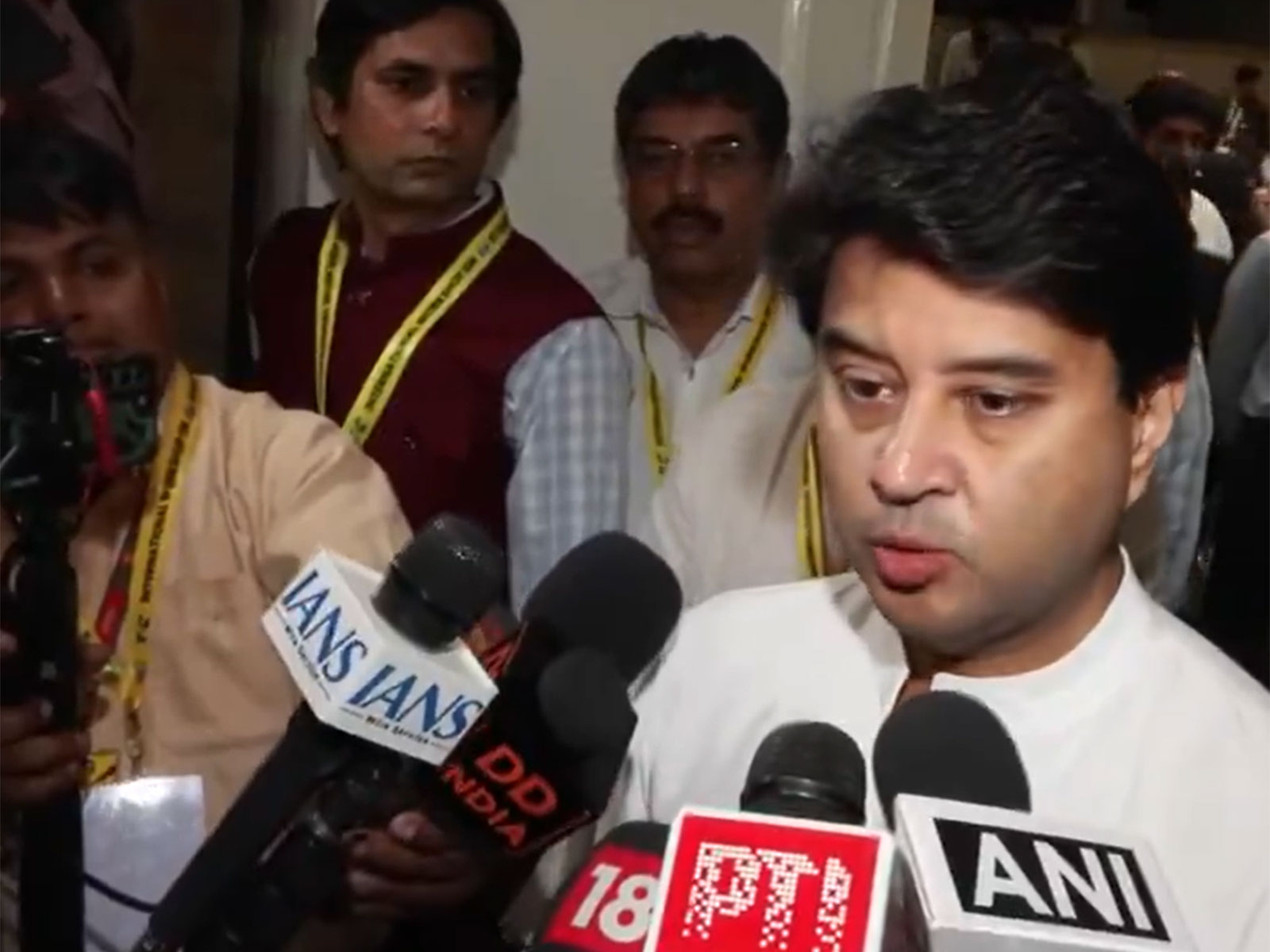
New Delhi [India], March 18 (ANI): Union Minister for Communications Jyotiraditya M. Scindia stated that India is positioned to take a leading role in defining global 6G standards through the Bharat 6G Alliance.
Speaking to the media at the sidelines of the International Workshop on 6G Standardisation, Scindia said, "We have a commitment that the Bharat 6G Alliance will work steadfastly across its seven working groups to show India's participation in setting standards on 6G. This technology has exponential possibilities."
He also noted that "it will not only bridge the digital divide but provide tremendous opportunities" for the country. This focus on future technology follows a period of expansion in the domestic telecom infrastructure.
Earlier in the day, replying to the questions asked by members during Question Hour in Lok Sabha regarding Mobile Tower Connectivity in Border Villages, Scindia said, "I would like to inform that in the 12 years, under Prime Minister Narendra Modi's guidance, India's telecom sector has been established on a pedestal on the world stage. The average cost of data that was Rs 290 has now dropped to only Rs 8 today, which is almost 97% reduction in cost."
Speaking about the infrastructure growth supporting this affordability Scindia stated that the number of Base Transreceiver Stations across the country rose from 6 lakhs in 2014 to 32 lakhs today. "The fastest 5G connectivity in the country, today there is 5G connectivity in 99.9% of the districts. And out of our 120 crore 40 crore users have 5G today."
The minister also detailed improvements in connectivity for remote areas during recent parliamentary sessions. He stated that telecom availability in border regions stood at 42 per cent in 2014. Under the current leadership, connectivity reached 17,222 out of 17,600 border villages, representing 98 per cent coverage. Scindia attributed these milestones to consistent infrastructure investment and a focus on regional accessibility.
Regarding BSNL, Scindia reported a financial turnaround for the state-run telecom service provider. For the first time in 18 years, the company recorded a net profit of Rs 280 crore for a quarter in the 2024-25 financial year.
"For the first time after 18 years, quarterly profit of the year, 2024-25, has increased to Rs 280 crore net profit, not even operational profit, net profit. Our users were 8.5 crore earlier in June 2024 and now it has increased to 9.27 crore users. And along with that, our uptime, our BTS uptime, which was 92% in Rajasthan, has increased to 97% Rajasthan," the Minister said.
Scindia further noted that India operates the largest digital communication system globally, supported by high volumes of digital transactions. He explained that rather than purchasing 4G equipment from international vendors, India chose to develop its own technology.
"Earlier BSNL had two options during the era of 4G. One, like other international companies buying equipment from South Korea, Finland, Sweden or China and making the 4G network. But the PM took a tough decision and said that we will not only provide services, we will also manufacture equipments. In the whole world, there are only four countries that manufacture telecom equipments. And for the first time, under the PM's decision, our 4G digital stack has entered the world's equipment manufacturing stage. This was a difficult path, not an easy path, but through that difficult path, we are winning the trust of our users again," he noted. (ANI)
